AI Appraisal Estimate

AI-generated estimates · not official valuations

From the user

What was submitted

Photo and notes provided by the user — not generated by AI

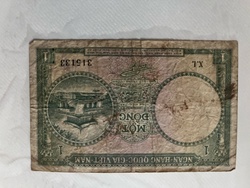
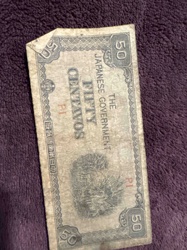
Submitted item photo
Submitted photo · June 20, 2026

User's notes

No additional notes provided.

AI analysis below

AI appraisal

AI analysis & estimate

AI-Generated · Verify before acting

Everything below is generated by AI for informational purposes only. AI can make mistakes — the AI may misidentify items or misattribute them (artist, maker, brand, designer, origin, era). This is not an official valuation and should not be used for insurance, sale, tax, estate, legal, or lending purposes — or any decision requiring a certified appraisal. It is not an authoritative claim about any person, brand, or rights holder — do not share or rely on it as a factual statement about a third party. Always consult qualified professionals before making financial decisions.

Read the full disclaimer

AI Identification

·Not independently authenticated·Verify before acting

Kuwaiti Half Dinar Banknote (Second or Third Series)

Numismatics / World Paper Money

AI Estimated Value

·Not an official valuation·Verify before acting

$10.00 - $18.00

As of June 20, 2026

AI Item Analysis

·AI can make mistakes·Verify before acting
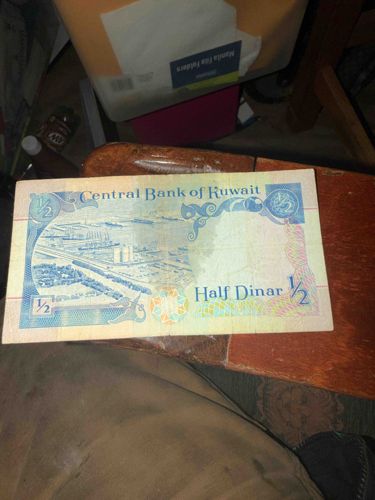
This item is a 1/2 Dinar banknote issued by the Central Bank of Kuwait, likely from the late 1980s or early 1990s. The banknote features a predominantly blue and multi-colored ink design on a specialized fibrous paper substrate. The reverse side, visible here, showcases an illustration of an industrial oil refinery or port facility, emphasizing Kuwait's economic reliance on petroleum. The text 'Central Bank of Kuwait' and the denomination 'Half Dinar' are clearly printed in English. Intricate guilloche patterns, wavy lines, and a geometric floral seal in shades of orange and green provide security against counterfeiting. In terms of condition, the note exhibits signs of handling, including a visible vertical center fold line, softened corners, and slight edge wear. There appears to be a light stain or discoloration on the lower right quadrant. The presence of multi-colored latent security features and micro-printing is indicative of high-quality state-level craftsmanship typical of the era. This specific design was prominent before the Gulf War, with subsequent series often updated with new security features or commemorative elements.
AI Appraisal Report

·AI can make mistakes·Verify before acting
I have examined the digital image of the Kuwaiti Half Dinar banknote, specifically the Third Series design issued starting in 1980 by the Central Bank of Kuwait. The reverse features the Shuaiba Industrial Area (oil refinery). This series remained in circulation until the Iraqi invasion, after which those without certain security features were demonetized, though they remain popular among collectors for their aesthetic and historical significance. Condition Assessment: This specimen is in 'Very Fine' (VF) condition. I observe a distinct vertical center fold and evidence of secondary light handling. The corners show slight blunting, and there is a noted discoloration in the lower-right quadrant which may be a mild oxidation or environmental stain. These signs of circulation are standard for this denomination, which was a high-velocity transactional note. Market Analysis: The Third Series 1/2 Dinar is not rare; millions were printed. Demand is driven primarily by world paper money collectors and those interested in Middle Eastern economic history. Comparable sales for circulated VF specimens consistently fall in the $10-$18 range. Uncirculated (UNC) examples fetch a premium, often doubling this value. Limitations: This appraisal is based on a high-resolution visual scan. Authenticity is tentatively confirmed by the presence of intricate guilloche patterns and micro-printing characteristic of Thomas De La Rue security printing. However, a physical inspection is required to verify the 'feel' of the intaglio ink, the watermark (Dhow), and the security thread. I would also need to check for UV fluorescence and the presence of any pinholes or prior mounting traces not visible in the image. Provenance documentation from a reputable numismatic dealer would further support its history.

Get your items appraised

Instant estimates of your treasures with AI-powered appraisals

Browse More Appraisals