AI identification & appraisal estimate

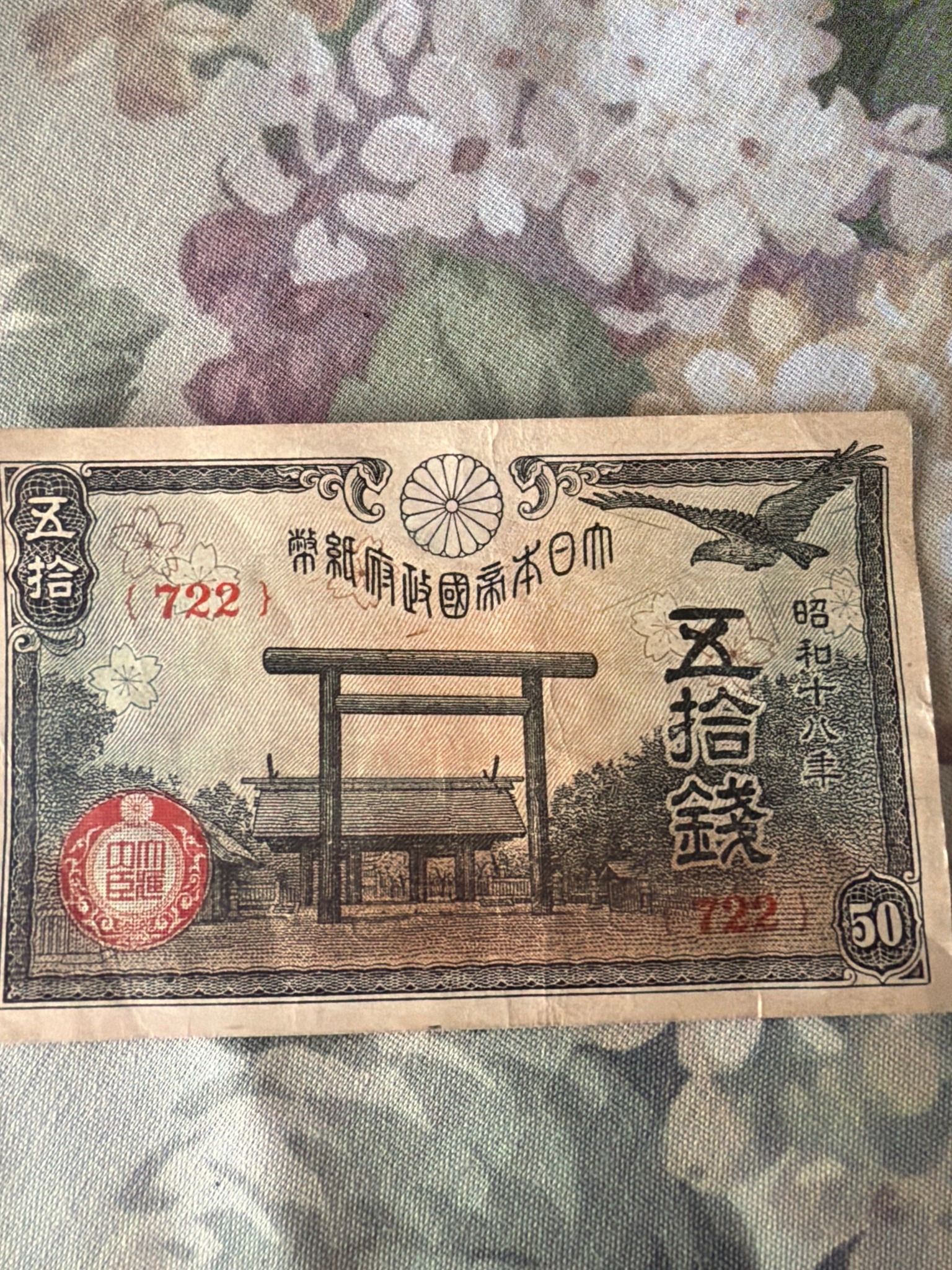
Japanese 50 Sen Banknote (not authenticated)

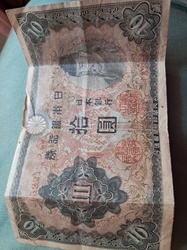
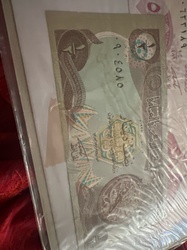
Submitted photo of Japanese 50 Sen Banknote (not authenticated)
Photo submitted by the user — not generated by AI

AI Estimated Value

Not an official valuation

$15-30

AI estimate as of September 26, 2026 · verify with a professional before acting

AI-Generated · Verify before acting

Everything on this page is generated by AI for informational purposes only. AI can make mistakes — the AI may misidentify items or misattribute them (artist, maker, brand, designer, origin, era). This is not an official valuation and should not be used for insurance, sale, tax, estate, legal, or lending purposes — or any decision requiring a certified appraisal. It is not an authoritative claim about any person, brand, or rights holder — do not share or rely on it as a factual statement about a third party. Always consult qualified professionals before making financial decisions.

Read the full disclaimer

AI Item Analysis

This rectangular paper banknote features a sepia-toned printed design on thin paper stock. The central imagery depicts a traditional Japanese Shinto shrine gate, known as a torii, set amongst foliage. At the top center, the banknote displays the Imperial Chrysanthemum Seal flanked by ornate scrollwork. Above the central gate, Japanese text reads from right to left, which translates to 'Great Japan Imperial Government Banknote'. To the right side, vertical text states a date corresponding to the Showa era, specifically Showa 18 (1943). Additional text and numbers appear throughout the design, including the number '50' enclosed in a decorative corner frame, the red circular seal stamp on the lower left, and the red serial number '722' printed in multiple locations. The paper shows moderate signs of age, including yellowing, edge wear, slight corner rounding, and minor creasing across the surface. The identification is based on the visual layout, visible text, and imagery consistent with Japanese currency issued during World War II, but the piece remains unauthenticated and its current preservation state has not been professionally evaluated.
AI Appraisal Report

Based on what I can see in the provided image, the item visually corresponds to a Japanese 50 Sen banknote issued during the Showa era, specifically around 1943. The paper features the characteristic Imperial Chrysanthemum Seal, torii gate imagery, serial numbers, and Showa 18 dating. However, I cannot verify material composition, paper quality, or true age from a photograph alone. Condition-wise, the visible moderate yellowing, edge wear, corner rounding, and surface creasing negatively impact the potential collector grade. Assuming the visual layout and markings are consistent with an actual World War II-era Japanese government issue, comparable notes in circulated condition typically trade within a modest collector market range of $15 to $30. Demand for such historical currency is generally niche, driven primarily by WWII memorabilia and world paper money collectors. A physical inspection by a professional paper money expert would be needed to evaluate the physical integrity and help rule out modern reproduction or counterfeit copies. If physical examination reveals this piece to be a modern replica, facsimile, or fantasy copy rather than period-issued currency, the market value would drop to near zero, likely only retaining nominal novelty value.

Keep exploring

More paper money appraisals

Get your items appraised

Instant AI-powered appraisal estimates from a photo

Browse More Appraisals