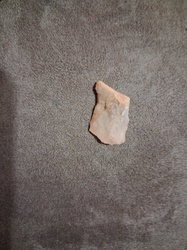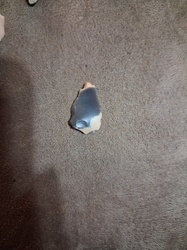
AI identification & appraisal estimate

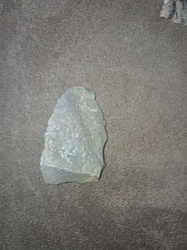
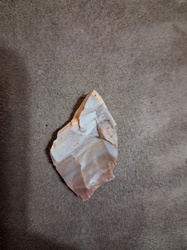
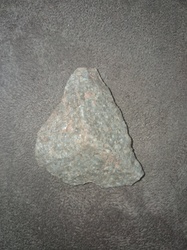
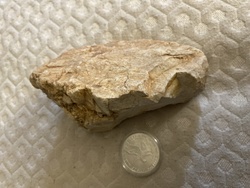
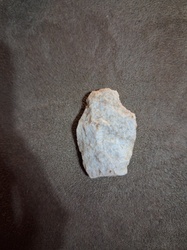
Knapped stone projectile point fragment

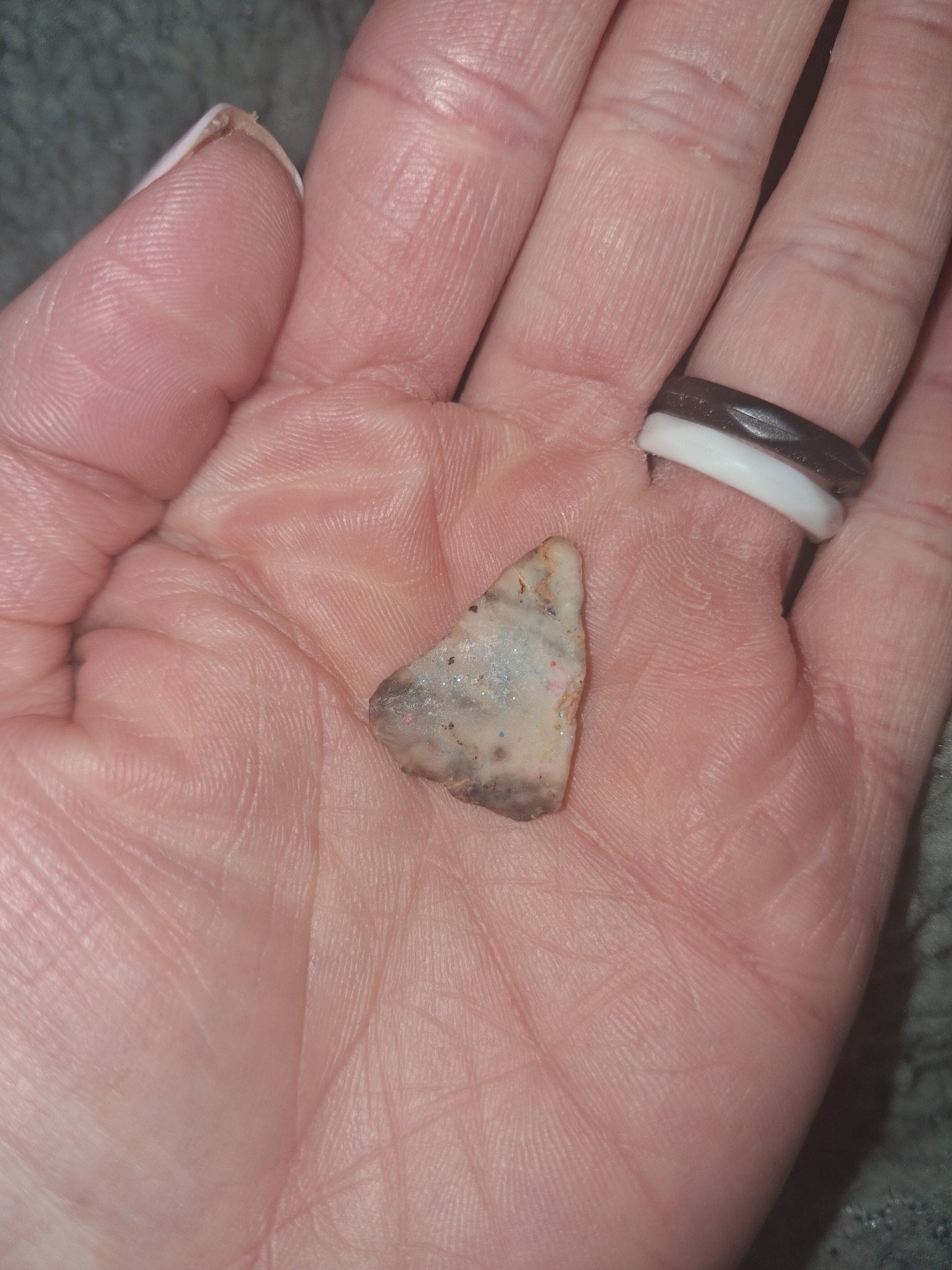
Submitted photo of Knapped stone projectile point fragment
Photo submitted by the user — not generated by AI

AI Estimated Value

Not an official valuation

$25-50

AI estimate as of September 20, 2026 · verify with a professional before acting

AI-Generated · Verify before acting

Everything on this page is generated by AI for informational purposes only. AI can make mistakes — the AI may misidentify items or misattribute them (artist, maker, brand, designer, origin, era). This is not an official valuation and should not be used for insurance, sale, tax, estate, legal, or lending purposes — or any decision requiring a certified appraisal. It is not an authoritative claim about any person, brand, or rights holder — do not share or rely on it as a factual statement about a third party. Always consult qualified professionals before making financial decisions.

Read the full disclaimer

AI Item Analysis

The featured item is a small, triangular fragment of chipped or knapped stone, held in the palm of a hand to demonstrate scale. The artifact exhibits an irregular triangular geometry, measuring roughly an inch across, consistent with the broken base or tip of a prehistoric lithic tool such as a projectile point or biface. The material appears to be a form of chert, flint, or similar cryptocrystalline silicate stone, displaying a mottled coloration with pale beige, off-white, and darker grey-brown patches, alongside subtle pinkish and bluish inclusions. The surface texture shows signs of worked edges with micro-flaking scars along the perimeters, though the fracture patterns also indicate potential modern or ancient breakage. There are no visible maker's marks, signatures, or stamped inscriptions present on the surface. The item displays natural weathering, minor surface dirt within the flake scars, and structural flaws typical of unauthenticated archaeological surface finds. Due to the lack of contextual stratigraphy, controlled excavation data, and the fragmentary nature of the piece, any specific cultural period, geographic origin, or tribal attribution remains entirely unverified. The identification is based purely on the visible lithic reduction techniques and general morphology, suggesting a possible prehistoric stone tool fragment.
AI Appraisal Report

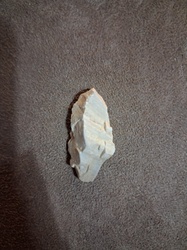
Based on what I can see in the photograph, the featured item appears to be a small, irregular fragment of chipped or knapped stone, exhibiting a triangular geometry and mottled coloration consistent with cryptocrystalline silicate materials like chert or flint. Micro-flaking scars along the perimeter suggest potential lithic reduction techniques associated with prehistoric stone tool fragments, such as a broken projectile point or biface. However, I can't verify from a photo alone whether the piece is an ancient artifact or a modern replica, as surface weathering and fracture patterns can be difficult to assess without tactile and microscopic analysis. I would need physical inspection to confirm the presence of use-wear, ancient patina, and manufacturing characteristics. Assuming the hypothetical identification as a genuine prehistoric surface find, items of this fragmentary nature and unprovenanced status typically trade in the $25 to $50 range in the current antiquities and lithics market, driven largely by casual collector interest rather than institutional demand. Because this piece lacks controlled excavation data, contextual stratigraphy, and formal provenance, its market value is heavily constrained. If the item were determined to be a modern reproduction, replica, or knapping practice piece, the value would drop significantly to nominal study-piece or souvenir levels, likely under $10. To better understand the item's nature, an in-person examination by a qualified lithic specialist or archaeologist would be necessary.

Keep exploring

More archaeological artifacts appraisals

Get your items appraised

Instant AI-powered appraisal estimates from a photo

Browse More Appraisals