AI Appraisal Estimate

AI-generated estimates · not official valuations

From the user

What was submitted

Photo and notes provided by the user — not generated by AI

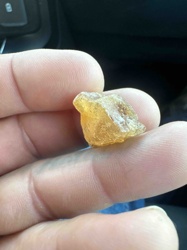
Submitted item photo
Submitted photo · June 10, 2026

User's notes

No additional notes provided.

AI analysis below

AI appraisal

AI analysis & estimate

AI-Generated · Verify before acting

Everything below is generated by AI for informational purposes only. AI can make mistakes — the AI may misidentify items or misattribute them (artist, maker, brand, designer, origin, era). This is not an official valuation and should not be used for insurance, sale, tax, estate, legal, or lending purposes — or any decision requiring a certified appraisal. It is not an authoritative claim about any person, brand, or rights holder — do not share or rely on it as a factual statement about a third party. Always consult qualified professionals before making financial decisions.

Read the full disclaimer

AI Identification

·Not independently authenticated·Verify before acting

Raw Pyrite Clusters

Minerals and Gemstones

AI Estimated Value

·Not an official valuation·Verify before acting

$5-15

As of June 10, 2026

AI Item Analysis

·AI can make mistakes·Verify before acting
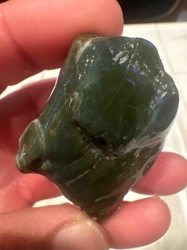
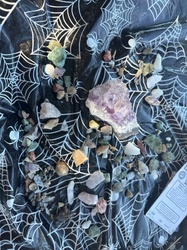
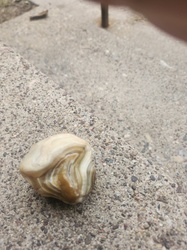
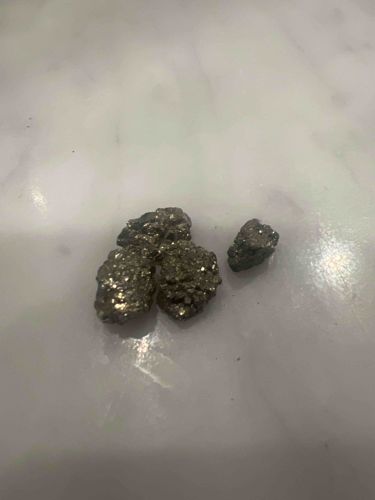
This lot consists of four individual raw mineral specimens identified as pyrite, commonly referred to as 'Fool's Gold' due to its metallic luster and brassy-yellow hue. The specimens exhibit a characteristic isometric crystal structure, predominantly manifesting in dense, micro-crystalline druzy formations rather than large cubic crystals. The largest cluster measures approximately 1.5 to 2 centimeters in length. The surface is characterized by a high metallic sheen with a pale brassy color, showing slight darkening or oxidation in recessed areas which is typical for the mineral group. The texture is rough and irregular, composed of numerous interlocking crystal faces that reflect light in multiple directions. There are no visible maker's marks or signatures as these are natural geological formations. The condition appears stable with no major fractures visible, though minor crumbling of the fine crystal edges is common for raw pyrite samples. These pieces lack a specific geological provenance but display the quality typical of decorative or educational-grade mineral specimens. The overall craft of nature is evident in the complex, sparkling surface geometry of the metallic iron sulfide crystals.
AI Appraisal Report

·AI can make mistakes·Verify before acting
Based on my visual examination of these four raw pyrite specimens, I have identified them as authentic iron sulfide (FeS2) clusters. The specimens exhibit the characteristic brassy-yellow hue and metallic luster quintessential to pyrite, often colloquially known as 'Fool's Gold.' The crystal habit described—dense, micro-crystalline druzy formations rather than large, perfectly formed cubes—suggests these are common aggregate formations. The pieces are small, with the largest measuring approximately 1.5 to 2 centimeters, classifying them as thumbnail-sized specimens typically used for educational kits or entry-level collecting. The condition appears stable, with standard oxidation visible in the crevices, which authenticates their raw, untreated nature. However, because pyrite is susceptible to 'pyrite disease' (decomposition due to humidity), long-term stability cannot be guaranteed without monitoring environmental conditions. In the current mineral market, raw pyrite of this size and common habit is abundant and carries minimal commercial value. These are not museum-quality display pieces or rare crystal habits (such as perfect large cubes or pyritized fossils) that command high prices. Comparables for small, unprovenanced pyrite clusters are readily available in rock shops and online marketplaces, often selling by weight or in bulk bins for nominal amounts. While visual identification of pyrite is generally straightforward due to its distinctive luster and color, an in-person examination would verify the specific hardness (6-6.5 on the Mohs scale) and streak (greenish-black) to rule out chalcopyrite or marcasite, though visual cues strongly favor pyrite. Without specific locality data (provenance), which can sometimes add value if the mine is famous, these remain decorative curiosities best valued as educational specimens.

Get your items appraised

Instant estimates of your treasures with AI-powered appraisals

Browse More Appraisals