AI Appraisal Estimate

AI-generated estimates · not official valuations

From the user

What was submitted

Photo and notes provided by the user — not generated by AI

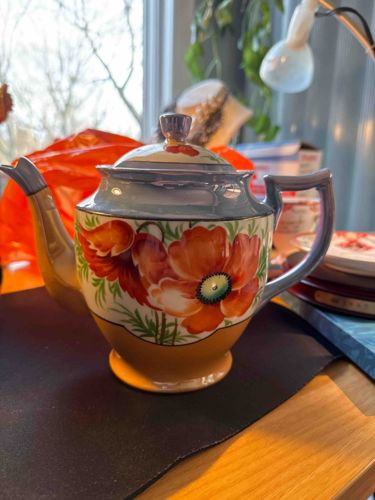
Submitted item photo
Submitted photo · May 27, 2026

User's notes

No additional notes provided.

AI analysis below

AI appraisal

AI analysis & estimate

AI-Generated · Verify before acting

Everything below is generated by AI for informational purposes only. AI can make mistakes — the AI may misidentify items or misattribute them (artist, maker, brand, designer, origin, era). This is not an official valuation and should not be used for insurance, sale, tax, estate, legal, or lending purposes — or any decision requiring a certified appraisal. It is not an authoritative claim about any person, brand, or rights holder — do not share or rely on it as a factual statement about a third party. Always consult qualified professionals before making financial decisions.

Read the full disclaimer

AI Identification

·Not independently authenticated·Verify before acting

Japanese Lustreware Poppy Teapot

Vintage Ceramics & Decorative Arts

AI Estimated Value

·Not an official valuation·Verify before acting

$45.00 - $65.00

As of May 27, 2026

AI Item Analysis

·AI can make mistakes·Verify before acting
This is a vintage Japanese lustreware teapot, likely dating from the mid-20th century, specifically the Deco-influenced period of the 1920s to 1940s. The piece features a high-gloss, iridescent metallic glaze known as lustreware, which provides a shimmering finish across the surfaces. The central body is decorated with large, hand-painted vibrant red and orange poppy flowers with black centers and green foliage against a white ground. The upper portion of the teapot and the handle are finished in a soft blue-grey lustre, while the lower segment and spout transition into an apricot or golden-tan lustre. The teapot has a bulbous shape with a flared foot, a distinctively angular handle, and a matching domed lid with a small finial. The craftsmanship exhibits typical mass-produced quality of the 'Made in Japan' export era, characterized by bold, slightly stylized floral motifs and thin-walled ceramic construction. Visually, the glaze appears to be in good condition with no major chips or cracks visible in the photo, though light surface wear consistent with age and gentle use is expected. This style was highly popular for export markets and remains a collectible example of early 20th-century decorative kitchenware.

AI Appraisal Report

·AI can make mistakes·Verify before acting
I have examined the digital representation of this vintage Japanese lustreware teapot, exhibiting the vibrant 'Poppy' motif characteristic of the late Art Deco export period (circa 1930s). Based on visual inspection, the item appears to be an authentic example of Japanese porcelain from the Noritake era or its contemporaries. The iridescent glaze shows good preservation, though slight shelf wear on the foot rim and minor thinning of the hand-painted enamels are noted—typical for pieces of this age. The angular handle and multi-tone lustre application are highly representative of the period's aesthetic. The market for mid-century Japanese ceramics remains steady but saturated. Comparables for similar poppy-patterned teapots typically realize between $40 and $70 at auction or specialized vintage retailers. While the color palette is particularly desirable, these were mass-produced for the North American and British markets, which limits rarity. Factors negatively impacting value include the lack of a prominent maker's mark (e.g., a 'Morimura' wreath) and the thin-walled nature of the ceramic, which makes it prone to hairline fractures. Note: This appraisal is based strictly on photographic evidence. A definitive valuation would require an in-person physical inspection to rule out professional restorations, internal 'spider' cracks not visible in photos, and to verify the 'Made in Japan' backstamp. Scientific testing (such as ultraviolet light examination) and original provenance documentation would be necessary to confirm the exact production kiln and ensure the piece is not a modern reproduction. The absence of chips or heavy crazing remains a significant value-driver for this specific specimen.

Get your items appraised

Instant estimates of your treasures with AI-powered appraisals

Browse More Appraisals