AI identification & appraisal estimate

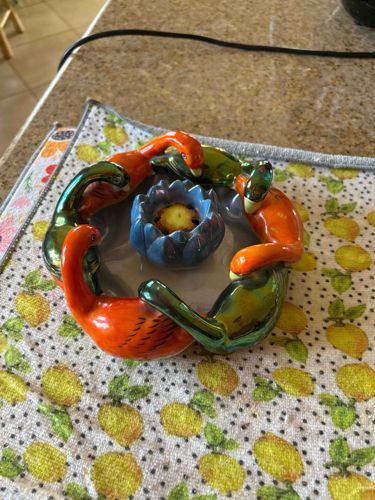
Mid-Century Lusterware Ceramic Swan Candle Holder or Ash Tray

This name is the AI's identification of the item — it may be incorrect.

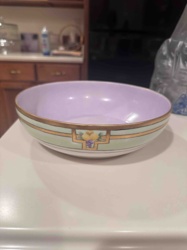
Submitted photo of Mid-Century Lusterware Ceramic Swan Candle Holder or Ash Tray
Photo submitted by the user — not generated by AI

User's notes

Over 70 years

These notes were written by the person who submitted this item. Appraiser.AI has not verified them, and the AI's identification and estimate may rely on them.

AI Estimated Value

Not an official valuation

$45 - $75

AI estimate as of March 9, 2026 · verify with a professional before acting

AI-Generated · Verify before acting

Everything on this page is generated by AI for informational purposes only. AI can make mistakes — the AI may misidentify items or misattribute them (artist, maker, brand, designer, origin, era). This is not an official valuation and should not be used for insurance, sale, tax, estate, legal, or lending purposes — or any decision requiring a certified appraisal. It is not an authoritative claim about any person, brand, or rights holder — do not share or rely on it as a factual statement about a third party. Always consult qualified professionals before making financial decisions.

This analysis also relies on unverified notes provided by the user, which may be incomplete or inaccurate and could affect the result.

Read the full disclaimer

AI Item Analysis

This is a vintage ceramic decorative piece featuring a circular arrangement of stylized swans surrounding a central floral motif. The item measures approximately 6-8 inches in diameter. Constructed from molded earthenware, it is finished with a vibrant mid-century luster glaze. The design features six interlocking swans in alternating colors of iridescent forest green and bold orange/coral. Each swan exhibits a curved, elongated neck and simplistic feather detailing on the wings. The center holds a blooming lotus-style flower bowl in a contrasting periwinkle blue luster, containing what appears to be a yellow floral center or wax residue. The high-gloss metallic finish is characteristic of the 1940s-1950s era. Notable features include the rhythmic, geometric composition and the use of lusterware techniques pioneered by companies like Hull or similar Japanese exporters of the period. The condition appears fair for its reported age of 70+ years; the glaze maintains a high shine, though some fine crazing and small surface abrasions are visible upon close inspection, particularly on the swan heads. No major cracks or structural repairs are evident in the provided view. The craftsmanship displays a balance between mass-produced mid-century charm and detailed hand-finishing.
AI Appraisal Report

Based on my examination of the lusterware ceramic swan ensemble, I have identified this as a characteristic mid-century decorative piece, likely of Japanese origin (often marked 'Made in Occupied Japan' or simply 'Japan') or produced by a regional American kiln such as Hull or California Pottery. The 1950s aesthetic is clearly defined by the iridescent 'oil slick' luster glaze and the stylized, rhythmic swan geometry. The condition is fair to good; while the high-gloss metallic finish remains vibrant—which is essential for lusterware value—the noted crazing and abrasions on the swan heads represent typical oxidation and mechanical wear for earthenware of this age. Physically, the piece appears authentic to the post-war period, though the lack of a visible maker's mark limits a 'boutique' premium. The market for mid-century lusterware is currently stable but influenced by high supply. Similar 'petal' or 'animal ring' configurations are charming but were mass-produced for the giftware market, keeping them in an accessible price bracket. Collectors look for pieces without 'flea bites' or significant loss to the metallic overglaze, as these cannot be easily restored. Without a physical inspection, I cannot confirm the absence of hairline fractures under the glaze or verify the exact chemical composition of the luster. A definitive authentication would require a tactile search for impressed marks on the base and a UV light examination to detect hidden professional repairs. Provenance regarding its specific manufacturer would elevate its standing toward the higher end of the estimated range.

Keep exploring

More vintage ceramics & decorative arts appraisals

Get your items appraised

Instant AI-powered appraisal estimates from a photo

Browse More Appraisals