AI Appraisal Estimate

AI-generated estimates · not official valuations

From the user

What was submitted

Photo and notes provided by the user — not generated by AI

Submitted item photo
Submitted photo · June 25, 2026

User's notes

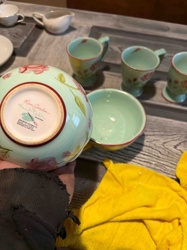
Hand Painted Pacific Rim Made in China

AI analysis below

AI appraisal

AI analysis & estimate

AI-Generated · Verify before acting

Everything below is generated by AI for informational purposes only. AI can make mistakes — the AI may misidentify items or misattribute them (artist, maker, brand, designer, origin, era). This is not an official valuation and should not be used for insurance, sale, tax, estate, legal, or lending purposes — or any decision requiring a certified appraisal. It is not an authoritative claim about any person, brand, or rights holder — do not share or rely on it as a factual statement about a third party. Always consult qualified professionals before making financial decisions.

Note

This analysis also relies on unverified notes provided by the user, which may be incomplete or inaccurate and could affect the result.

Read the full disclaimer

AI Identification

·Not independently authenticated·Verify before acting

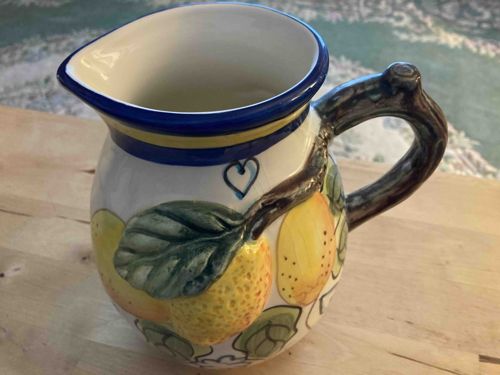
Pacific Rim Hand Painted Lemon Ceramic Pitcher

Decorative Ceramic Kitchenware

AI Estimated Value

·Not an official valuation·Verify before acting

$45.00-$65.00

As of June 25, 2026

AI Item Analysis

·AI can make mistakes·Verify before acting
This is a decorative ceramic pitcher featuring a vibrant hand-painted lemon design, manufactured by Pacific Rim in China. The piece is constructed from glazed earthenware or stoneware, characterized by a bulbous teardrop body and a distinctive branch-style handle. The handle is modeled to resemble tree bark with a dark brown glaze and textured knots, extending down the side of the pitcher into a relief-style branch. The central motif consists of large, embossed yellow lemons with stippled skin textures, accompanied by dark green leaves showing clear veining and a blue heart outline. The rim and neck of the pitcher are finished with a bold cobalt blue band and a thin yellow accent stripe, contrasting against the creamy white base glaze. The interior is also glazed in the same off-white tone. Notable quality indicators include the tactile nature of the relief elements and the depth of the hand-applied pigments. The condition appears to be excellent for its age (likely late 20th century, circa 1990s), showing a high-gloss finish without visible crazing, chips, or structural cracks. The use of folk-art aesthetics combined with functional form makes it a classic example of mass-market decorative kitchenware from the period. According to the provided context, the bottom is marked with 'Hand Painted Pacific Rim Made in China'.
AI Appraisal Report

·AI can make mistakes·Verify before acting
I have conducted a visual examination of the Pacific Rim hand-painted lemon pitcher. Based on the uniform high-gloss finish and the 'Made in China' stamp, I can confirm this is an authentic piece of mass-market decorative earthenware produced during the late 20th-century imports boom. The condition is excellent; the absence of crazing suggests the piece was likely used for display rather than utility, and the relief-molded branch handle shows no stress fractures or pigment loss. The market for Pacific Rim ceramics is currently stable, primarily driven by enthusiasts of the 'Lemon/Vineyard' kitchen aesthetic popular in the 1990s. While these pieces were manufactured in large quantities, finding examples with intact relief elements and vibrant cobalt banding is becoming more difficult for collectors. Comparables on the secondary market consistently fall within the $40 to $70 range depending on size and geographical location. This item’s value is bolstered by its tactility and folk-art charm, though as a mass-produced item, it lacks the scarcity required for significant investment appreciation. Please note that this appraisal is based on photographic evidence. A physical inspection would be required to rule out internal structural 'pinking' of the clay or professional repairs hidden under the glaze. For full authentication, I would typically verify the weight against known factory specifications and use a UV light to check for overpainting. However, given the nature of the brand, the risk of sophisticated forgery is negligible.

Get your items appraised

Instant estimates of your treasures with AI-powered appraisals

Browse More Appraisals