AI estimate as of November 8, 2025 · verify with a professional before acting
AI-Generated · Verify before acting
Everything on this page is generated by AI for informational purposes only. AI can make mistakes — the AI may misidentify items or misattribute them (artist, maker, brand, designer, origin, era). This is not an official valuation and should not be used for insurance, sale, tax, estate, legal, or lending purposes — or any decision requiring a certified appraisal. It is not an authoritative claim about any person, brand, or rights holder — do not share or rely on it as a factual statement about a third party. Always consult qualified professionals before making financial decisions.
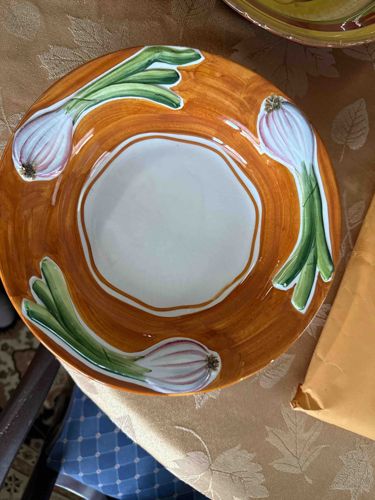
This is a hand-painted ceramic serving bowl, likely used for salads or pasta. The bowl features a round, somewhat shallow form with flaring sides. The primary color of the outer rim is a warm, rustic orange or burnt sienna, with visible brushstrokes indicating a hand-painted finish. The center of the bowl is a clean, off-white cream color, delineated from the orange rim by a thin, irregular brown or dark orange line that also appears hand-applied. Adorning the orange rim are four distinct illustrations of scallions or spring onions, spaced equidistantly around the circumference. Each scallion is depicted with a white to light purple bulbous base and vibrant green stalks, also rendered with visible brushwork, adding to the hand-crafted aesthetic. The painting style is somewhat naive but charming, emphasizing the natural texture and imperfections of the ceramic and the produce it depicts. The glaze appears glossy over the painted surfaces. No obvious chips, cracks, or repairs are immediately visible from the provided image, suggesting good overall condition. The underside or reverse of the bowl is not visible, so manufacturer's marks or signatures cannot be discerned. Given the style, it likely dates to the late 20th or early 21st century, possibly a piece inspired by Italian or Mediterranean culinary themes. The craftsmanship suggests it is a studio pottery piece or from a small-scale manufacturer focused on decorative wares.
AI Appraisal Report
I have examined the hand-painted ceramic serving bowl, featuring scallion/spring onion motifs on an orange and off-white base. Visually, the condition appears good, with no evident chips, cracks, or repairs, though a physical inspection would confirm this. The hand-painted, somewhat naive style, visible brushstrokes, and glossy glaze are consistent with studio pottery or small-batch decorative wares. The design theme points to a late 20th or early 21st-century origin, possibly inspired by Italian or Mediterranean aesthetics.
My assessment for authenticity is based solely on the visual evidence; without physical inspection, identifying specific artists, studios, or confirming signature details (which are not visible) is impossible. While the piece appears genuine as a hand-painted ceramic item, its specific maker or origin remains unconfirmed. An in-person examination would allow for detailed inspection of manufacturing marks, clay type, and painting consistency, which are crucial for full authentication.
Market conditions for hand-painted ceramic serving bowls of this nature are generally moderate. While charming, pieces without a known artist, significant provenance, or exceptional rarity typically fall within an accessible price range. Comparable items found in artisan markets or online platforms often retail for similar amounts. The demand for such decorative kitchenware is steady but not exceptional, driven primarily by aesthetic appeal rather than investment potential. The lack of rarity and a known maker significantly limit its investment value.
Factors impacting value include its good apparent condition, pleasant aesthetic, and functional size. Conversely, the absence of a known maker, specific provenance, or unique design elements keeps the value modest. The lack of visible maker's marks is a significant limitation on value, as is the inability to physically inspect for subtle flaws or repairs.
For a full authentication, I would need a physical examination to check for artist signatures, maker's marks, specific glaze composition, and to assess the item's precise weight and construction. Provenance documentation, if available, would also be invaluable in confirming origin and enhancing its value.