AI Appraisal Estimate

AI-generated estimates · not official valuations

From the user

What was submitted

Photo and notes provided by the user — not generated by AI

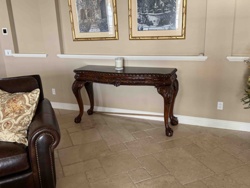
Submitted item photo
Submitted photo · May 26, 2026

User's notes

No additional notes provided.

AI analysis below

AI appraisal

AI analysis & estimate

AI-Generated · Verify before acting

Everything below is generated by AI for informational purposes only. AI can make mistakes — the AI may misidentify items or misattribute them (artist, maker, brand, designer, origin, era). This is not an official valuation and should not be used for insurance, sale, tax, estate, legal, or lending purposes — or any decision requiring a certified appraisal. It is not an authoritative claim about any person, brand, or rights holder — do not share or rely on it as a factual statement about a third party. Always consult qualified professionals before making financial decisions.

Read the full disclaimer

AI Identification

·Not independently authenticated·Verify before acting

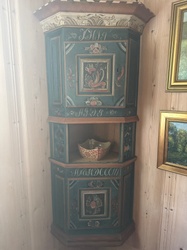
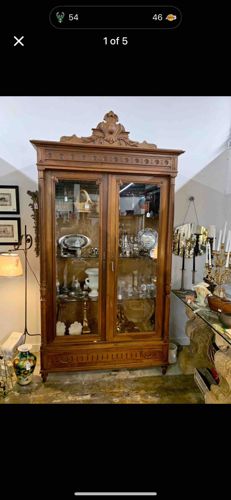
Late 19th-Century European Walnut Carved Armoire Showcase

Fine Antique Furniture

AI Estimated Value

·Not an official valuation·Verify before acting

$4,500 - $6,500

As of May 26, 2026

AI Item Analysis

·AI can make mistakes·Verify before acting
A striking late 19th-century European display armoire, likely of French or Italian origin, crafted from finely grained walnut with a warm honey-colored patina. This monumental piece features a prominent, highly ornate crest with a center shell and scroll motif, sitting atop a flat molded cornice adorned with an incised geometric and floral frieze. The lower section consists of two large glass-fronted doors, each framed by elaborate molding and accented by small decorative finials on the outer stiles. Inside, the cabinet houses multiple glass shelves, designed to maximize the display of fine collectibles. The base is equally detailed, featuring a wide drawer or panel with carved circular and vertical channel motifs, supported by four short, tapered turned feet. The construction exhibits high-quality craftsmanship characteristic of late Victorian or Renaissance Revival styles, utilizing solid wood frames and beveled edges. Condition-wise, the wood appears well-maintained with minor age-appropriate scuffs and a healthy sheen, suggesting a historic restoration. The glass panels appear intact, and the overall structural integrity remains robust for its scale.
AI Appraisal Report

·AI can make mistakes·Verify before acting
Upon visual examination of this Late 19th-Century European Walnut Showcase, I find it to be a superior example of Renaissance Revival craftsmanship. The walnut displays an excellent honey-toned patina and tight graining consistent with high-grade European timber. The ornate cresting and incised frieze suggest a French provincial influence, likely produced between 1880 and 1900. The structural integrity appears sound, and the presence of what appears to be original glass in the dual-door display adds significant value. The condition is excellent, though the surface sheen suggests a high-quality historic wax restoration which, while preserving the wood, indicates it has been expertly maintained rather than left in a 'dry' attic state. The market for monumental 19th-century case pieces remains selective. Value is driven by the 'showcase' functionality; pieces with large glass apertures are currently in higher demand than solid-door armoires because they serve modern collectors. Recent auction comparables for walnut vitrines of this scale and carving quality range from $4,000 to over $7,000 depending on provenance. Limitations: This appraisal is based solely on high-resolution imagery. Visual inspection cannot confirm internal joinery methods (such as hand-cut dovetails) or the presence of secondary woods (like oak or pine) which would confirm regional origin. To fully authenticate this piece, an in-person examination is required to verify the lock mechanisms, assess for any replaced moldings, and inspect for 'married' components. Provenance documentation or original maker’s stamps, often found on the backboard or drawer linings, would be necessary to elevate this valuation into a higher 'investment-grade' bracket.

Get your items appraised

Instant estimates of your treasures with AI-powered appraisals

Browse More Appraisals