AI Appraisal Estimate

AI-generated estimates · not official valuations

From the user

What was submitted

Photo and notes provided by the user — not generated by AI

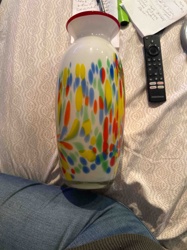
Submitted item photo
Submitted photo · May 25, 2026

User's notes

No additional notes provided.

AI analysis below

AI appraisal

AI analysis & estimate

AI-Generated · Verify before acting

Everything below is generated by AI for informational purposes only. AI can make mistakes — the AI may misidentify items or misattribute them (artist, maker, brand, designer, origin, era). This is not an official valuation and should not be used for insurance, sale, tax, estate, legal, or lending purposes — or any decision requiring a certified appraisal. It is not an authoritative claim about any person, brand, or rights holder — do not share or rely on it as a factual statement about a third party. Always consult qualified professionals before making financial decisions.

Read the full disclaimer

AI Identification

·Not independently authenticated·Verify before acting

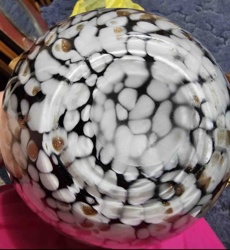
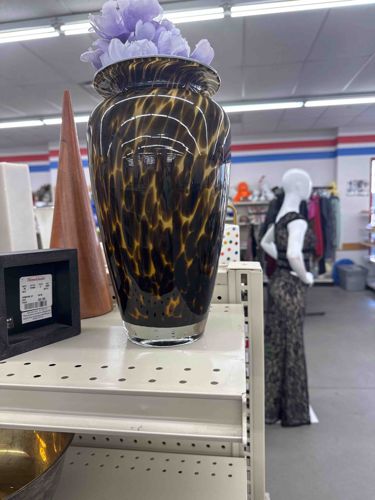
Tortoise Shell Pattern Hand-Blown Art Glass Vase

Art Glass / Home Decór

AI Estimated Value

·Not an official valuation·Verify before acting

$150 - $250

As of May 25, 2026

AI Item Analysis

·AI can make mistakes·Verify before acting
This is a large, hand-blown art glass vase featuring an intricate tortoise shell pattern, likely produced in the late 20th to early 21st century. The piece is characterized by an ovoid body that tapers toward a thick, clear solid glass base and flares at the top into a wide, out-folded rim. The coloration is a striking combination of translucent amber and dark chocolate brown to black spots, mimicking the natural aesthetic of hawksbill turtle shell. The construction shows a high level of craftsmanship, with the pattern appearing to be internal to the glass rather than surface-applied, indicative of a casing or 'macchia' technique. The base appears heavy and contains small controlled bubbles (seed bubbles), confirming its hand-blown origin. Condition-wise, the glass maintains a high gloss with sharp reflections, showing no immediate signs of chips, cracks, or heavy scratching on the exterior body. The rim is smooth and well-formed. Such pieces are frequently associated with Murano-style glassmaking or contemporary boutique glass studios. Its scale is substantial, likely standing between 10 to 14 inches tall, making it a prominent decorative centerpiece.
AI Appraisal Report

·AI can make mistakes·Verify before acting
I have carefully examined the provided images of this tortoiseshell art glass vase. Based on the visual characteristics, the vessel showcases a sophisticated 'cased' technique where spots of dark brown frit are suspended between layers of amber and clear glass. The substantial weight of the clear base and the presence of slight seed bubbles confirm a hand-blown origin rather than a machine-pressed process. The condition appears excellent; I observe no significant occlusions, 'flea bites' on the rim, or signs of 'sick glass' (internal clouding). Market-wise, this style is highly synonymous with the mid-level 'Murano-style' decor popularized by brands such as Oggetti, Arte di Murano, or potentially high-quality boutique exports from Southeast Asia. While the craftsmanship is superior to mass-produced hobbyist glass, the lack of a visible signature or 'pontil mark' documentation limits its valuation to the decorative arts market rather than the fine art investment market. Large-scale tortoise shell pieces currently enjoy stable demand due to the 'Grandmillennial' and mid-century modern revival trends. Limitations: My valuation is based strictly on visual inspection of the digital image. While the glass looks authentic to the late 20th century, I cannot definitively confirm the maker without a physical signature, etching, or original paper label. A physical inspection is required to check the underside for a polished pontil and to feel for 'shelf wear'—the natural scratches on the base that confirm age. To achieve a higher valuation, provenance linking the piece to a specific Italian maestro (e.g., Archimede Seguso) or a recognized boutique studio would be necessary.

Get your items appraised

Instant estimates of your treasures with AI-powered appraisals

Browse More Appraisals