AI estimate as of August 1, 2025 · verify with a professional before acting
AI-Generated · Verify before acting
Everything on this page is generated by AI for informational purposes only. AI can make mistakes — the AI may misidentify items or misattribute them (artist, maker, brand, designer, origin, era). This is not an official valuation and should not be used for insurance, sale, tax, estate, legal, or lending purposes — or any decision requiring a certified appraisal. It is not an authoritative claim about any person, brand, or rights holder — do not share or rely on it as a factual statement about a third party. Always consult qualified professionals before making financial decisions.
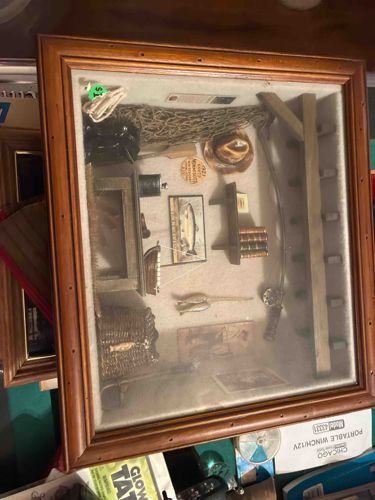
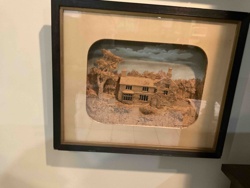
This item is a framed shadow box diorama depicting a vintage fishing theme. The shadow box itself is constructed from wood, likely stained an medium to dark brown, with visible wood grain and a classic profile. It features a transparent front, presumably glass or acrylic, protecting the contents within. The interior of the shadow box is lined with a light-colored fabric or paper backing, serving as a neutral backdrop for the various miniature fishing-related objects. Visible elements include a miniature fishing net, a small fishing creel or basket, what appears to be a section of a fishing rod, and various other tiny accessories such as a fishing fly, a small picture of a fish (possibly a trout), and spools of thread or line. There's also a small, rounded wooden disc with text, a miniature hat, and what looks like a small lure or bait. Some elements, like the wooden disc and the fishing creel, exhibit fine details, suggesting careful craftsmanship in their miniature reproduction. The overall condition appears good for a decorative piece, with no obvious signs of significant damage or wear to the frame or the contents, although some dust accumulation on the glass is possible. The item seems to evoke a nostalgic, rustic aesthetic, typical of decor from the mid-to-late 20th century. The arrangement of the objects suggests a deliberate composition, aiming to tell a story or capture the essence of a fishing enthusiast's collection.
AI Appraisal Report
I have examined the Vintage Fishing Themed Shadow Box Diorama based on the provided image. Overall, the piece appears to be in good condition for its type and age, with no obvious signs of significant damage to the wooden frame or the miniature items within. The transparent front seems clear, though some minor dust might be present as is common with such display pieces. The arrangement is well-composed, creating an appealing vintage aesthetic.
Authenticity, in this context, refers to the diorama being an original decorative piece rather than a reproduction. From the image, the materials and craftsmanship appear consistent with mid-to-late 20th-century decorative items. The details on the miniature creel and wooden disc suggest better-than-average quality for mass-produced decor.
Market conditions for vintage decorative dioramas of this nature are stable, driven by an enduring interest in rustic, nostalgic, and hobby-themed decor. Comparable items typically sell in the collector/specialty decor market. Demand is moderate, largely from individuals seeking unique accent pieces for homes, cabins, or offices. While not rare, well-preserved examples like this, especially with an appealing theme, hold their value. Factors impacting value include the quality of the miniature components, the overall artistic composition, and the condition of the frame and contents.
Limitations in authenticity verification from an image alone are significant. I cannot definitively assess the materials' quality (e.g., whether the 'wood' frame is solid wood or veneer, or the type of 'transparent front' material), the presence of any hidden damage, or the true age without physical inspection. An in-person examination would allow for tactile inspection of materials, closer scrutiny of miniature details, and assessment of any odor indicative of storage conditions. Provenance documentation, such as original sales receipts or maker's marks, would be invaluable for establishing a definitive origin and manufacturer, which could enhance value if from a known maker. Scientific testing is typically not applied to items of this decorative nature.