AI Appraisal Estimate

AI-generated estimates · not official valuations

From the user

What was submitted

Photo and notes provided by the user — not generated by AI

Submitted item photo
Submitted photo · June 27, 2026

User's notes

No additional notes provided.

AI analysis below

AI appraisal

AI analysis & estimate

AI-Generated · Verify before acting

Everything below is generated by AI for informational purposes only. AI can make mistakes — the AI may misidentify items or misattribute them (artist, maker, brand, designer, origin, era). This is not an official valuation and should not be used for insurance, sale, tax, estate, legal, or lending purposes — or any decision requiring a certified appraisal. It is not an authoritative claim about any person, brand, or rights holder — do not share or rely on it as a factual statement about a third party. Always consult qualified professionals before making financial decisions.

Read the full disclaimer

AI Identification

·Not independently authenticated·Verify before acting

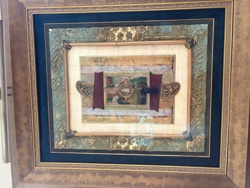
Framed 3D Cork Diorama of a European Castle

Decorative Arts / Mixed Media Sculpture

AI Estimated Value

·Not an official valuation·Verify before acting

$150 - $250

As of June 27, 2026

AI Item Analysis

·AI can make mistakes·Verify before acting
This is a meticulously crafted three-dimensional diorama, depicting a scenic European architectural landscape with a medieval castle or fortress. The primary material used for the sculpture is natural cork, which has been intricately carved and shaped to create a high-relief depth. The cork varies in texture to represent stone walls, foliage, and architectural details, featuring a warm, monochromatic tan and brown color palette. The scene includes a bridge, turrets, and dense trees, all rendered with surprising detail considering the porous nature of the medium. The artwork is housed within a shadowbox frame to accommodate the depth of the cork carvings. The frame itself is a dark, likely black or dark brown, wood with ribbed texture, and it includes a gold-toned inner fillet. A rounded rectangular mat board in a cream or light buff tone provides a window for the art. The condition shows some signs of age; the matting appears to have slight discoloration or foxing, particularly near the bottom edges. The craftsmanship is indicative of European cork artistry (Pheloplastik), which reached a peak in popularity during the late 18th and 19th centuries, though this specific piece may be a mid-20th-century revival. The piece exhibits high-quality hand-carving techniques, particularly visible in the fine textures of the castle walls and the organic shapes of the trees.
AI Appraisal Report

·AI can make mistakes·Verify before acting
I have conducted a visual examination of the framed 3D cork diorama. This piece is a fine example of 'Pheloplastik' or cork carving, a traditional European craft requiring significant patience and manual dexterity. Based on the stylistic elements of the black-ribbed frame and the specific cream-toned matting, I identify this as a mid-20th-century revival piece rather than an 18th-century antique. The level of detail in the turrets and foliage is high, showcasing skilled hand-carving techniques. My assessment of the condition reveals visible foxing and light staining on the lower portion of the mat board, which suggests exposure to humidity. Such environmental damage typically necessitates a replacement of the matting to prevent further acid migration to the cork itself. The market for mid-century cork dioramas remains a niche segment within decorative arts; while charming, they do not command the high prices of original 19th-century masterworks. Comparable sales for similar architectural scenes of this size and period typically fluctuate between $100 and $300 depending on the complexity of the subject matter. This specific scene's depth and the inclusion of a bridge and fortress place it toward the upper-mid range of that bracket. Limitations: This appraisal is based solely on digital images. A physical inspection is required to confirm the stability of the cork, check for pest damage (an occasional issue with organic materials), and verify the wood species of the frame. Provenance documentation or original gallery labels on the reverse would further solidify its origin and potentially enhance its marketability.

Get your items appraised

Instant estimates of your treasures with AI-powered appraisals

Browse More Appraisals