AI Appraisal Estimate

AI-generated estimates · not official valuations

From the user

What was submitted

Photo and notes provided by the user — not generated by AI

Submitted item photo
Submitted photo · June 12, 2026

User's notes

Set of 7

AI analysis below

AI appraisal

AI analysis & estimate

AI-Generated · Verify before acting

Everything below is generated by AI for informational purposes only. AI can make mistakes — the AI may misidentify items or misattribute them (artist, maker, brand, designer, origin, era). This is not an official valuation and should not be used for insurance, sale, tax, estate, legal, or lending purposes — or any decision requiring a certified appraisal. It is not an authoritative claim about any person, brand, or rights holder — do not share or rely on it as a factual statement about a third party. Always consult qualified professionals before making financial decisions.

Note

This analysis also relies on unverified notes provided by the user, which may be incomplete or inaccurate and could affect the result.

Read the full disclaimer

AI Identification

·Not independently authenticated·Verify before acting

Japanese-style hand-painted porcelain side plates

Ceramic Tableware

AI Estimated Value

·Not an official valuation·Verify before acting

$100 - $250

As of June 12, 2026

AI Item Analysis

·AI can make mistakes·Verify before acting
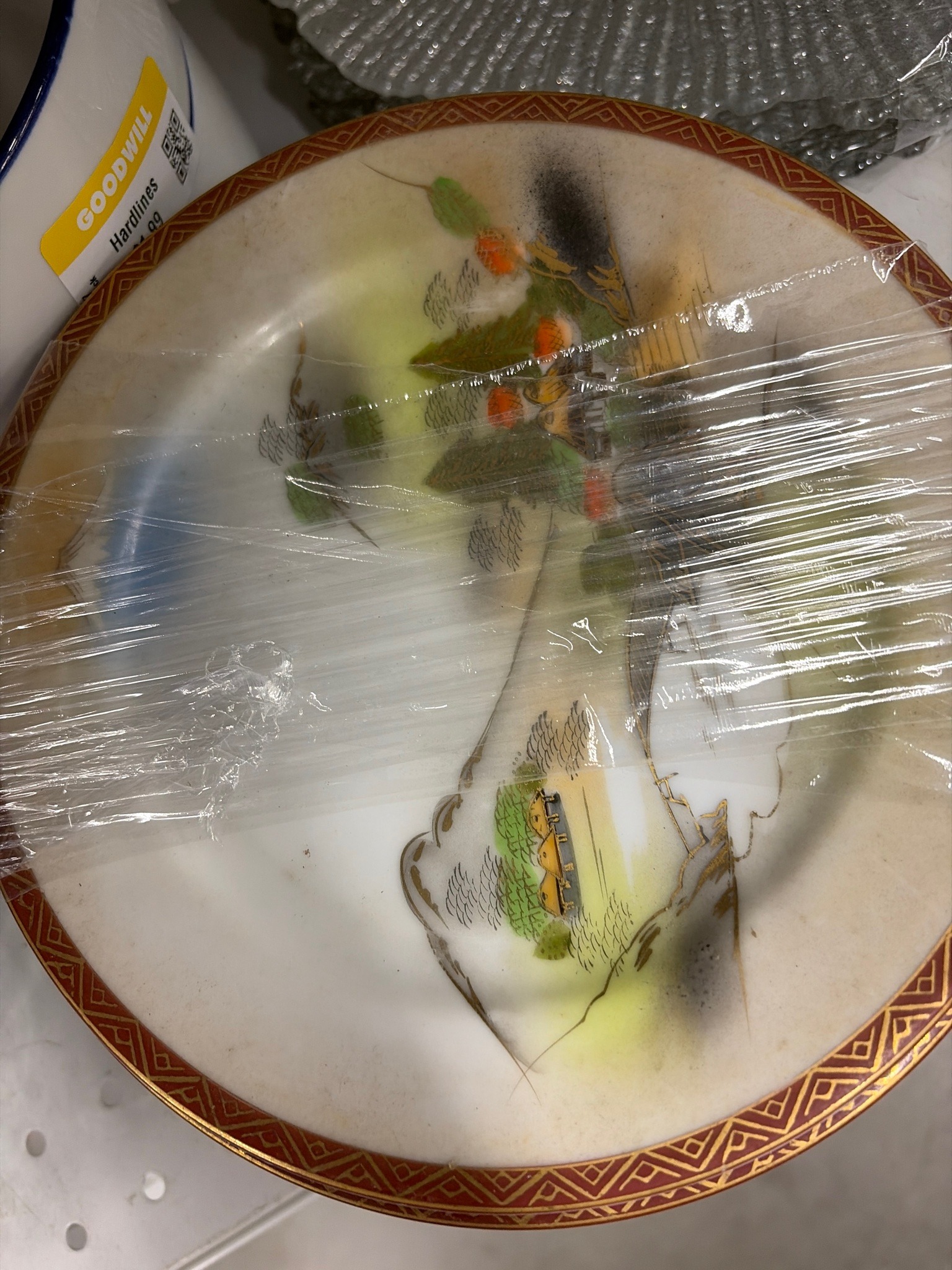
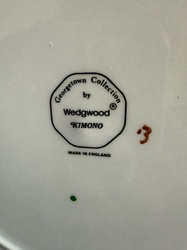
This appears to be a stack of seven side plates featuring a design consistent with Japanese Satsuma or Kutani wares from the late 19th to mid-20th century. The plates are composed of a cream-colored porcelain or earthenware, decorated with a hand-painted landscape scene that includes architectural structures, stylized foliage in greens and oranges, and what appears to be a mountain peak in the background. The rim is finished with a wide red-brown border containing an interlocking geometric fret pattern in gold-toned gilt. The decoration shows signs of 'moriage' or raised enamel work, particularly in the white and green accents. A significant portion of the surface is obscured by clear plastic wrap, but visible areas show possible surface grime, minor gilt loss on the rim, and some fading of the lighter pigments consistent with age. There is no visible maker's mark or signature on the front of the piece; any attribution would require inspecting the underside for a 'Made in Japan' or kiln mark. The owner's note mentions a set of seven, which is an unverified count based on the image alone. The identification as Japanese-style is based on the traditional landscape motifs and the specific geometric border patterns commonly found in export ceramics from that region.
AI Appraisal Report

·AI can make mistakes·Verify before acting
I have examined the image provided of a stack of seven side plates. Based on what I can see, these pieces appear to be Japanese-style ceramics, possibly Kutani or Satsuma-style export wares from the late 19th to early 20th century. The hand-painted landscape motifs, raised enameling (moriage), and geometric gilt borders are characteristic of that era's craftsmanship. However, I cannot verify the material composition or the maker from a photo alone; a physical inspection of the underside is necessary to check for kiln marks or 'Made in Japan' stamps which would refine the date of production. My valuation assumes the set of seven is intact as stated. The estimate represents typical market behavior for antique or vintage Japanese export sets in similar condition. I note visible surface grime and potential gilt wear under the plastic wrap, which can lower the value compared to pristine examples. Higher-end authenticated Kutani sets with rare signatures or fine porcelain bodies can exceed this range, whereas mass-produced mid-century souvenir versions or pieces with significant damage might sell for under $50. To move toward a more accurate valuation, I would need to inspect each plate for chips, hairline cracks, and examine any signatures on the reverse. Confirming whether these are high-quality porcelain or lower-fired earthenware would also impact the marketability. Provenance documentation or a verified kiln mark would be required to elevate this from a hypothetical attribution to a confirmed period set. If these prove to be modern reproductions 'in the style of' older wares, the value would be primarily decorative and likely fall at the lower end of the spectrum.

Get your items appraised

Instant estimates of your treasures with AI-powered appraisals

Browse More Appraisals