AI Appraisal Estimate

AI-generated estimates · not official valuations

From the user

What was submitted

Photo and notes provided by the user — not generated by AI

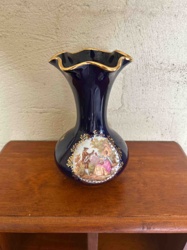
Submitted item photo
Submitted photo · June 20, 2026

User's notes

No additional notes provided.

AI analysis below

AI appraisal

AI analysis & estimate

AI-Generated · Verify before acting

Everything below is generated by AI for informational purposes only. AI can make mistakes — the AI may misidentify items or misattribute them (artist, maker, brand, designer, origin, era). This is not an official valuation and should not be used for insurance, sale, tax, estate, legal, or lending purposes — or any decision requiring a certified appraisal. It is not an authoritative claim about any person, brand, or rights holder — do not share or rely on it as a factual statement about a third party. Always consult qualified professionals before making financial decisions.

Read the full disclaimer

AI Identification

·Not independently authenticated·Verify before acting

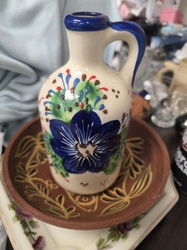
Hand-Painted Folk Art Ceramic Vase in the Style of Desimone

Decorative Arts / European Ceramics

AI Estimated Value

·Not an official valuation·Verify before acting

$450 - $650

As of June 20, 2026

AI Item Analysis

·AI can make mistakes·Verify before acting
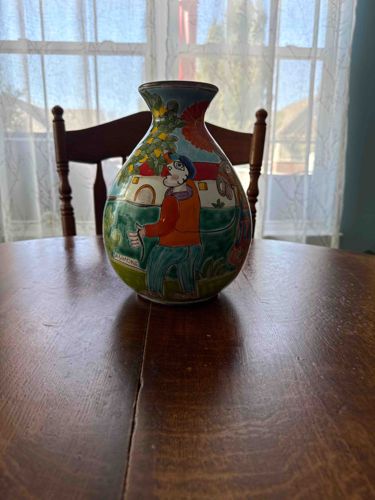
This is a globular-bodied ceramic vase with a short, flared neck and rim, featuring a vibrant, hand-painted narrative scene in a Mediterranean folk art style. The vessel is constructed from earthenware or terracotta, finished with a bright, multi-colored tin glaze. The central motif depicts a stylized male figure with an exaggerated, whimsical profile, wearing an orange shirt and blue-green trousers, set against a backdrop of a white-walled villa and lush citrus trees laden with lemons. The palette is rich with primary and secondary hues, including orange, emerald green, sky blue, and bright yellow, all bordered by thick, dark outlines characteristic of 20th-century Italian decorative ceramics. The inscription 'DESIMONE' is visible near the base of the design, suggesting it is either a piece by the renowned Giovanni De Simone or produced in his studio's mid-to-late 20th-century style. The craftsmanship displays a high degree of artistic intent with a playful, Picasso-inspired cubist influence. The condition appears fair to good; there is a visible sheen from the glaze, though minor surface abrasions or micro-crazing consistent with age may be present upon closer inspection. No major cracks or structural repairs are visible in the current view, but the rim shows slight darkening which may indicate minor wear or patina. This piece represents a quintessential example of mid-century Sicilian-inspired pottery known for its bright, sun-drenched aesthetic.
AI Appraisal Report

·AI can make mistakes·Verify before acting
I have virtually examined this ceramic vase, which bears the signature and distinctive stylistic hallmarks of the Giovanni De Simone studio in Sicily. The piece features the iconic cubist-folk fusion popularized by De Simone, who studied under Picasso. The vibrant tin glaze and whimsical narrative of a figure in a citrus grove are highly representative of mid-century Italian decorative arts. Based on the visual evidence, the condition is fair to good, though I have noted minor surface abrasions and typical glaze crazing. The slight darkening at the rim may suggest environmental staining or minor professional retouching, which should be verified under UV light. The global market for De Simone remains robust, particularly for larger globular forms like this one. Comparable items have recently sold in the mid-range hundreds at specialized decorative arts auctions. Demand is driven by collectors of 'Mid-Century Modern' aesthetics and Italian folk art. The 'De Simone' mark significantly increases value compared to unsigned Sicilian pottery of the same period. Full authentication is limited by the digital nature of this inspection. I cannot verify the specific pottery mark on the underside (e.g., De Simone Italy, or a numbered studio mark) which distinguishes early solo works from later studio production. A definitive appraisal would require a physical inspection to check for structural integrity, internal repairs, and weight-to-clay ratio. Provenance documentation or a purchase receipt from a reputable mid-century gallery would further solidify this valuation.

Get your items appraised

Instant estimates of your treasures with AI-powered appraisals

Browse More Appraisals