AI Appraisal Estimate

AI-generated estimates · not official valuations

From the user

What was submitted

Photo and notes provided by the user — not generated by AI

Submitted item photo
Submitted photo · June 26, 2026

User's notes

No additional notes provided.

AI analysis below

AI appraisal

AI analysis & estimate

AI-Generated · Verify before acting

Everything below is generated by AI for informational purposes only. AI can make mistakes — the AI may misidentify items or misattribute them (artist, maker, brand, designer, origin, era). This is not an official valuation and should not be used for insurance, sale, tax, estate, legal, or lending purposes — or any decision requiring a certified appraisal. It is not an authoritative claim about any person, brand, or rights holder — do not share or rely on it as a factual statement about a third party. Always consult qualified professionals before making financial decisions.

Read the full disclaimer

AI Identification

·Not independently authenticated·Verify before acting

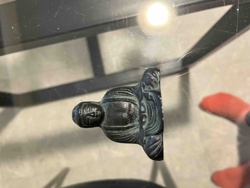
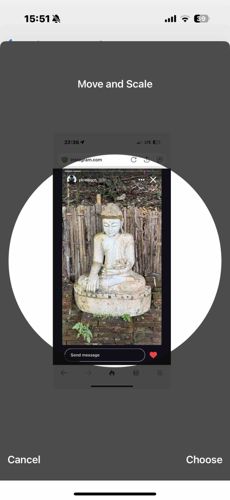
Seated Stone Buddha Statue in Bhumisparsha Mudra

Religious & Spiritual Artifacts

AI Estimated Value

·Not an official valuation·Verify before acting

$450 - $700

As of June 26, 2026

AI Item Analysis

·AI can make mistakes·Verify before acting
This item is a medium-sized, outdoor stone sculpture of a Buddha seated in the 'Bhumisparsha Mudra' or the 'Earth Witness' gesture. The figure is carved from a light-colored natural stone, possibly limestone or a consolidated sandstone, which has developed a significant weathered patina over time. The sculpture features a seated form atop a wide, rounded oval pedestal. The Buddha is depicted with traditional characteristics including an ushnisha (cranial bump), elongated earlobes, and draped robes that leave the right shoulder bare. The facial features are serene and simplified. The surface shows notable signs of environmental exposure, including darkened organic staining, possible lichen growth, and a granular erosion characteristic of stone kept in a damp, outdoor environment. The craftsmanship appears to be folk or vernacular in style, displaying a robust rather than delicate carving technique. While the exact age is difficult to determine without physical inspection, the wear patterns suggest it has been situated outdoors for several decades. No specific maker's marks or signatures are visible in the current image. The base shows some moss or small plant growth at the foot, indicating it is currently integrated into a garden or courtyard setting against a rustic bamboo-style fence.
AI Appraisal Report

·AI can make mistakes·Verify before acting
Based on my visual examination of the Seated Stone Buddha Statue, I have assessed the item as a decorative outdoor sculpture likely originating from the mid-to-late 20th century. The Bhumisparsha Mudra is a common and highly sought-after iconographic form, which supports its marketability. The piece exhibits significant environmental weathering, including organic staining and lichen growth, which many collectors of garden statuary find desirable for its 'aged' aesthetic. The carving technique is vernacular and robust, suggesting it was produced in a workshop rather than by a master artisan. The material appears to be a porous natural stone, which has suffered some granular erosion, particularly on the base and facial features. Market demand for large-scale stone Buddhas remains steady for interior design and landscape architecture. Comparables for non-antique stone carvings of this size and condition typically realize between $400 and $800 at regional auction houses or specialty garden sales. The lack of a signature or documented provenance indicates this is a decorative rather than a fine arts piece. Limitations: My assessment is based solely on digital images. Without an in-person inspection, I cannot definitively confirm the stone type or identify hidden structural cracks. To fully authenticate the age and origin, I would require a microscopic analysis of the mineral surface to distinguish between natural stone and reconstituted cast stone. Furthermore, provenance documentation detailing its purchase history or import records would be necessary to elevate its value from a decorative object to a historical artifact. If it were proven to be a pre-19th-century provincial carving, the valuation would increase significantly.

Get your items appraised

Instant estimates of your treasures with AI-powered appraisals

Browse More Appraisals