AI estimate as of August 9, 2025 · verify with a professional before acting
AI-Generated · Verify before acting
Everything on this page is generated by AI for informational purposes only. AI can make mistakes — the AI may misidentify items or misattribute them (artist, maker, brand, designer, origin, era). This is not an official valuation and should not be used for insurance, sale, tax, estate, legal, or lending purposes — or any decision requiring a certified appraisal. It is not an authoritative claim about any person, brand, or rights holder — do not share or rely on it as a factual statement about a third party. Always consult qualified professionals before making financial decisions.
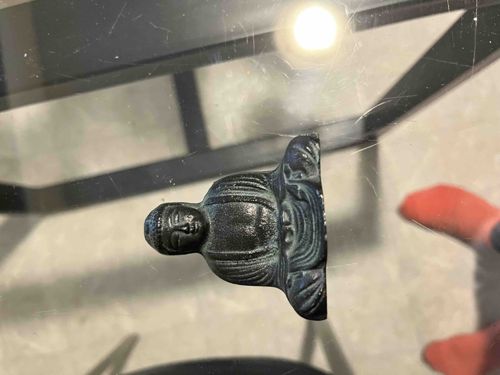
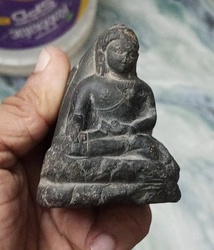
The item appears to be a small, seated Buddha figurine or a component of a larger piece, possibly a finial or decorative element. It is crafted from a dark, likely metallic material, presenting a mottled, distressed surface that hints at a bronze or similar alloy with a natural, aged patina. The color is predominantly dark grey to black with subtle hints of greenish or bluish oxidation, suggesting significant age or an intentional antique finish. The Buddha is depicted with distinct facial features, including closed eyes, a serene expression, and clearly defined hair or ushnisha. The body is relatively simple in form, adorned with robes indicated by undulating lines that suggest folds of fabric, particularly visible on the right side of the figure. The craftsmanship appears to be reasonably detailed for its size, capturing the essence of the Buddha's form and traditional iconography. There are no readily discernible manufacturer's marks or signatures from the visible angles. The overall condition suggests a vintage or antique piece; the surface shows some wear consistent with age and handling, although no significant damage like cracks or chips are immediately apparent. The small size makes it suitable for personal devotion, meditation, or as a decorative accent. Given its stylistic elements, it likely originates from an Asian culture, possibly within the last century or two, although a more precise age would require further expert examination.
AI Appraisal Report
Upon my virtual examination of this Seated Buddha figurine, I observe a charming piece, likely cast in bronze or a similar patinated metal alloy. The mottled surface and dark coloration, with hints of greenish/bluish oxidation, strongly suggest an authentic aged patina, rather than a forced modern finish. The definition of facial features, serene expression, and the undulating lines of the robes speak to a respectable level of craftsmanship for its size. The general condition appears sound, with wear consistent with age and handling, but no obvious damage that would significantly detract from its aesthetic appeal.
In terms of market conditions, smaller, well-preserved Buddha figurines, particularly those with a genuine aged appearance, consistently find demand from collectors of Asian art and spiritual items. While not a masterpiece, its classic iconography and perceived age make it appealing. Comparables in the market for similar bronze or metal Buddha figures of this size and apparent age typically range widely, influenced heavily by precise origin, historical significance, and artist. This piece falls into a general decorative or devotional category rather than high-end museum quality.
Demand for authentic-looking pieces remains steady, and while this item isn't overtly rare, its age and condition contribute positively to its desirability. Factors impacting value include the positive visual cues of age and its intact condition. However, a significant limitation of this appraisal is the absence of a physical examination. From images alone, I cannot definitively confirm the precise metal composition, assess the true depth and stability of the patina, or search for any hidden marks. full authentication would require in-person examination to verify casting methods, assess the specific gravity and alloy composition, and microscopic analysis of the patina. Provenance documentation, if available, would significantly enhance its value by confirming its history and origin.