AI Appraisal Estimate

AI-generated estimates · not official valuations

From the user

What was submitted

Photo and notes provided by the user — not generated by AI

Submitted item photo
Submitted photo · June 6, 2026

User's notes

No additional notes provided.

AI analysis below

AI appraisal

AI analysis & estimate

AI-Generated · Verify before acting

Everything below is generated by AI for informational purposes only. AI can make mistakes — the AI may misidentify items or misattribute them (artist, maker, brand, designer, origin, era). This is not an official valuation and should not be used for insurance, sale, tax, estate, legal, or lending purposes — or any decision requiring a certified appraisal. It is not an authoritative claim about any person, brand, or rights holder — do not share or rely on it as a factual statement about a third party. Always consult qualified professionals before making financial decisions.

Read the full disclaimer

AI Identification

·Not independently authenticated·Verify before acting

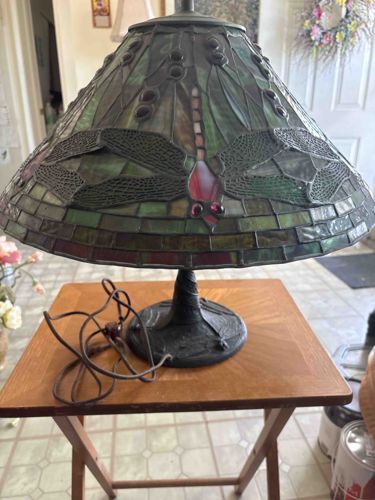
Dragonfly Design Stained Glass Tiffany-Style Table Lamp

Decorative Arts and Lighting

AI Estimated Value

·Not an official valuation·Verify before acting

$450 - $700

As of June 6, 2026

AI Item Analysis

·AI can make mistakes·Verify before acting
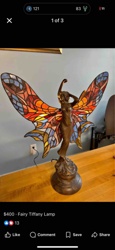
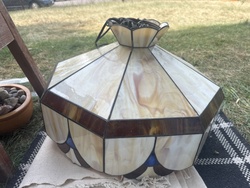
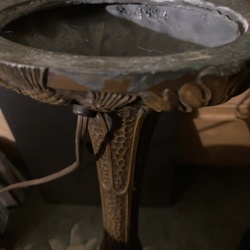
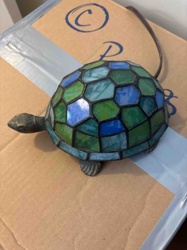
This is a decorative table lamp featuring a conical shade in the iconic 'Dragonfly' pattern, heavily inspired by the original designs of Louis Comfort Tiffany. The shade is constructed from multi-colored art glass pieces joined by leaded solder. The palette consists primarily of mottled green and blue hues in the background, with the focal dragonflies featuring red bodies, purple jewel eyes, and intricate bronze-toned metal filigree overlays on their wings to mimic natural veining. The lower border is composed of square-cut glass tiles in varying shades of green. The base appears to be made of cast metal (likely zinc or bronze-finished pot metal) with a stylized dragonfly and leaf motif on the circular foot, and an organic twisted stem. The lamp shows signs of age with a dark patina on the leading and metalwork. No distinct maker's mark is visible in the photograph, suggesting this may be a high-quality late 20th-century reproduction rather than a period original from the Tiffany Studios era (1890s-1930s). The wiring is a modern brown plastic cord with an inline thumb switch, indicating it is likely a functional contemporary piece. There are no obvious cracks in the glass panes, and the filigree appears intact, though light dust and surface oxidation are present on the metal components.
AI Appraisal Report

·AI can make mistakes·Verify before acting
I have conducted a visual appraisal of this Dragonfly design stained glass table lamp. Based on my examination, the item presents as a high-quality late 20th-century homage to Louis Comfort Tiffany’s iconic 'Dragonfly' pattern. My assessment of the construction—specifically the use of modern plastic-coated wiring and the lack of a 'Tiffany Studios New York' stamped bronze base—leads me to conclude this is a contemporary reproduction rather than a period original. The craftsmanship is commendable; the hand-cut glass and metal filigree overlays on the wings are well-executed, though the leading displays a surface oxidation consistent with late-modern manufacturing rather than early 20th-century patina. The market for high-end Tiffany reproductions remains steady, with comparable pieces from manufacturers like Dale Tiffany or Meyda Lighting frequently selling in the $400 to $800 range at boutique auctions. Factors limiting the value include the lack of a known manufacturer’s signature and the mass-produced nature of the cast-metal base. Conversely, the excellent condition of the glass pieces and the preservation of the delicate wing filigree support the higher end of the valuation. Please note that a definitive authentication is impossible via digital images alone. For full verification, an in-person inspection is required to examine the solder composition, the interior rim of the shade for obscured marks, and the weight of the base. Provenance documentation or a receipt from the original point of purchase would further clarify its origin. Scientific testing of the glass chemistry or lead isotopes would be necessary to rule out early 20th-century production, though visual indicators suggest this is unlikely.

Get your items appraised

Instant estimates of your treasures with AI-powered appraisals

Browse More Appraisals