AI Appraisal Estimate

AI-generated estimates · not official valuations

From the user

What was submitted

Photo and notes provided by the user — not generated by AI

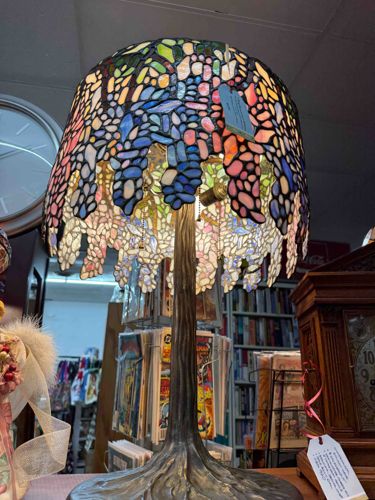
Submitted item photo
Submitted photo · May 25, 2026

User's notes

No additional notes provided.

AI analysis below

AI appraisal

AI analysis & estimate

AI-Generated · Verify before acting

Everything below is generated by AI for informational purposes only. AI can make mistakes — the AI may misidentify items or misattribute them (artist, maker, brand, designer, origin, era). This is not an official valuation and should not be used for insurance, sale, tax, estate, legal, or lending purposes — or any decision requiring a certified appraisal. It is not an authoritative claim about any person, brand, or rights holder — do not share or rely on it as a factual statement about a third party. Always consult qualified professionals before making financial decisions.

Read the full disclaimer

AI Identification

·Not independently authenticated·Verify before acting

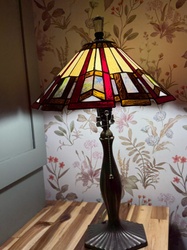
Tiffany-Style Wisteria Stained Glass Table Lamp

Antique & Vintage Lighting / Decorative Arts

AI Estimated Value

·Not an official valuation·Verify before acting

$800 - $1,200

As of May 25, 2026

AI Item Analysis

·AI can make mistakes·Verify before acting
This is a decorative table lamp featuring a highly intricate leaded stained-glass shade in the iconic 'Wisteria' pattern, popularized by Tiffany Studios in the early 20th century. The shade is characterized by a dense, organic arrangement of numerous small glass segments in shades of cobalt blue, violet, lavender, and soft pink, interspersed with green leaf-like panels near the crown. The shade features a distinctive irregular, scalloped lower border intended to mimic the natural trailing blossoms of a wisteria vine. It rests upon a cast metal base designed to resemble a tree trunk, with deep vertical fluting that flows into a spreading root-like foundation. The metal base possesses a dark bronze or verdigris patina. Notable features include dual pull-chain sockets and a small blue paper identification tag attached to the shade. While the style dates back to the Art Nouveau period (circa 1900-1910), the bright coloration and visible socket construction suggest this is a high-quality contemporary or late 20th-century reproduction rather than an antique original. The glass appears intact without prominent cracks, though some light surface dust is visible. The craftsmanship demonstrates significant labor in the copper-foil assembly of several hundred individual glass pieces.
AI Appraisal Report

·AI can make mistakes·Verify before acting
Based on my visual examination of this Wisteria-pattern leaded glass table lamp, I have identified it as a high-quality late 20th-century reproduction in the style of Tiffany Studios. The shade features several hundred hand-cut glass segments utilizing the copper-foil technique, with an irregular lower border that successfully mimics the naturalistic Art Nouveau aesthetic. The cast metal 'tree trunk' base provides a period-accurate silhouette with an appropriate dark verdigris patina. Condition appears excellent; the glass shows no apparent heat cracks or lead-line fatigue, though minor surface oxidation is present on the solder. While the workmanship is superior to mass-market imports, the coloration—specifically the vibrant cobalt and violet hues—and the modern pull-chain socket assembly indicate this is a contemporary tribute rather than a 1901 original. Original Tiffany Wisteria lamps are rarities that command six-figure prices at auction; however, the market for high-end reproductions remains stable among collectors of decorative arts, with recent comparables for 'artist-signed' modern versions fetching between $800 and $1,500. It is critical to note that this appraisal is based solely on digital imagery. For definitive authentication, an in-person inspection is required to check for 'TIFFANY STUDIOS NEW YORK' stampings on the base and shade rim, which must be scrutinized for font consistency. Furthermore, I would require provenance documentation or a forensic analysis of the lead solder and glass chemical composition to rule out an early 20th-century origin, which would exponentially increase the valuation.

Get your items appraised

Instant estimates of your treasures with AI-powered appraisals

Browse More Appraisals