AI estimate as of July 6, 2025 · verify with a professional before acting
AI-Generated · Verify before acting
Everything on this page is generated by AI for informational purposes only. AI can make mistakes — the AI may misidentify items or misattribute them (artist, maker, brand, designer, origin, era). This is not an official valuation and should not be used for insurance, sale, tax, estate, legal, or lending purposes — or any decision requiring a certified appraisal. It is not an authoritative claim about any person, brand, or rights holder — do not share or rely on it as a factual statement about a third party. Always consult qualified professionals before making financial decisions.
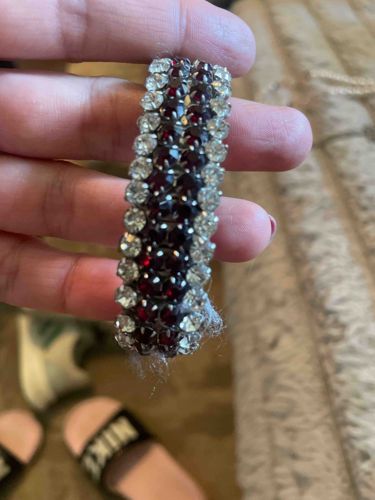
This item is a vintage-style rhinestone bracelet, characterized by its multi-row design. It features three distinct rows of faceted stones, with the central row composed of dark red (likely garnet or ruby-colored) rhinestones and the two outer rows consisting of clear, colorless rhinestones. Each rhinestone appears to be individually set, possibly using prong or bezel settings, into a silver-toned metal base. The construction suggests a flexible band, typical of bracelet designs intended to conform to the wrist. The overall aesthetic points to an early to mid-20th-century costume jewelry piece, often referred to as 'parure' or 'paste' jewelry. Its condition shows some visible wear, particularly at one end where there is a noticeable accumulation of lint or fibrous material, indicating age and possible prolonged storage. The metal settings may exhibit minor tarnishing or dulling consistent with age, though the stones themselves appear to retain their sparkle. There are no visible maker's marks or signatures from the provided image, common for many mass-produced costume jewelry pieces of the era. The craftsmanship, while not fine jewelry quality, appears solid for its type, with numerous stones meticulously arranged to create a striking visual effect.
AI Appraisal Report
Based on my visual examination of the provided image, this vintage multi-row red and clear rhinestone bracelet presents as a charming example of early to mid-20th-century costume jewelry. The item's condition, while generally good for its age, shows clear signs of wear, particularly the noticeable lint accumulation at one end, suggesting a need for cleaning and potentially minor restoration. The metal work appears silver-toned, likely base metal given the era and style, with no visible maker's marks, which is typical for mass-produced costume pieces.
Authenticity, in terms of its vintage nature and use of rhinestones (glass paste, not natural gemstones), is largely confirmed by its design and apparent construction methods. However, a definitive assessment of the exact age, original setting techniques, and confirmation that all stones are original without replacements would require in-person examination. Physical inspection would allow me to assess the integrity of each setting, the presence of any lead in the rhinestones (common in older pieces), and the exact composition of the metal.
From a market perspective, vintage rhinestone bracelets of this caliber generally fall into the affordable costume jewelry category. Demand is steady among collectors of vintage accessories, but rarity is low as similar pieces were mass-produced. There are countless comparables readily available online and in antique shops. Factors significantly impacting value are primarily condition, perceived aesthetic appeal, and the absence of any known designer or manufacturer. The presence of red and clear stones creates a classic, appealing contrast.
My appraisal is limited by the fact that this is an image-based assessment. For full authentication and a more precise value, I would need to physically examine the piece to check for hidden damage, the quality of settings, the material of the stones (e.g., glass vs. crystal), and potential repairs or alterations over time. Provenance documentation, if available, would also add to the historical and collectible value, but given the nature of this item, such documentation is highly unlikely.