AI estimate as of October 27, 2025 · verify with a professional before acting
AI-Generated · Verify before acting
Everything on this page is generated by AI for informational purposes only. AI can make mistakes — the AI may misidentify items or misattribute them (artist, maker, brand, designer, origin, era). This is not an official valuation and should not be used for insurance, sale, tax, estate, legal, or lending purposes — or any decision requiring a certified appraisal. It is not an authoritative claim about any person, brand, or rights holder — do not share or rely on it as a factual statement about a third party. Always consult qualified professionals before making financial decisions.
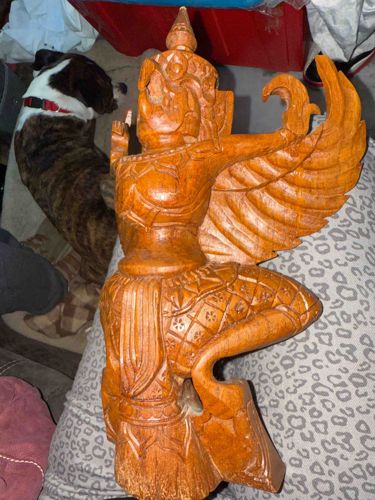
This item is a decorative carved wooden figure depicting Garuda, a mythical bird-like creature from Hindu and Buddhist mythology. The figure is substantial in size, given its placement next to a bulldog, and appears to be carved from a single piece of medium-toned hardwood, likely teak or a similar tropical wood, judging by its grain and rich reddish-brown color, which is enhanced by a clear finish. The carving exhibits intricate details characteristic of Southeast Asian artistry, particularly Thai or Indonesian. Garuda is shown in a dynamic, mid-flight or soaring pose, with one knee bent and the body slightly inclined. The upper body features a humanoid torso with clearly defined musculature, breasts, and hands raised in a gesture (possibly 'wai' or a similar veneration gesture, though the full extent is obscured). The head is crowned with an ornate, pointed headdress typical of divine or royal figures. Large, feathered wings are spread wide, showing individual feather carvings and a strong, sweeping curve. The lower body transitions into bird-like 'legs' or stylized garments that mimic legs, adorned with geometric patterns such as diamonds and squares filled with floral or starburst motifs. The overall construction appears solid and well-executed, with clear marks of hand-carving visible in the texture and various details. There are no obvious signs of significant damage such as large cracks or breaks, but some minor scuffs or wear consistent with age and handling are possible, particularly on the base or protruding edges. The surface has a visible sheen, suggesting a polished or waxed finish that highlights the wood's natural grain. The craftsmanship is indicative of skilled artistry, emphasizing both the mythical power and the regal demeanor of Garuda. This piece would likely date from the mid to late 20th century, a common period for the production of such cultural art for export or local decorative use.
AI Appraisal Report
Upon visual examination of the provided image, I assess this Carved Wooden Garuda Figure to be an authentic, hand-carved piece of Southeast Asian decorative art, likely from Thailand or Indonesia. The detailed carving, characteristic iconography (headdress, wings, dynamic pose, lower body patterns), and presumed use of a medium-toned tropical hardwood like teak are consistent with items of this type from the mid to late 20th century. The figure appears to be in very good condition, with no obvious major damage such as significant cracks or repairs, and maintains a lustrous finish highlighting the wood grain. Minor scuffs or wear consistent with age and handling are anticipated, particularly on edges or the base, though these cannot be definitively confirmed from images alone.
The market for such a substantial and well-executed Garuda figure is generally stable. Comparables for intricately carved, mid-20th century Southeast Asian wooden sculptures of this size (suggested by the bulldog for scale) typically range from $500 to $1,500. Factors positively impacting value include the intricate detail, dynamic pose, and good apparent condition. The solid craftsmanship and decorative appeal contribute to its desirability. Demand is moderate, driven by collectors of Asian art, spiritual decor enthusiasts, and interior designers. While not exceptionally rare, pieces of this scale and detail are not commonplace.
Limitations in authenticity verification are inherent when appraising solely from images. A physical examination would allow for definitive identification of the wood species, assessment of joinery (if any), a more precise age determination through analysis of patina and wear patterns, and confirmation of any minor damages or repairs not visible here. Provenance documentation, such as original acquisition records, would significantly enhance the valuation by confirming origin and ownership history.