AI identification & appraisal estimate

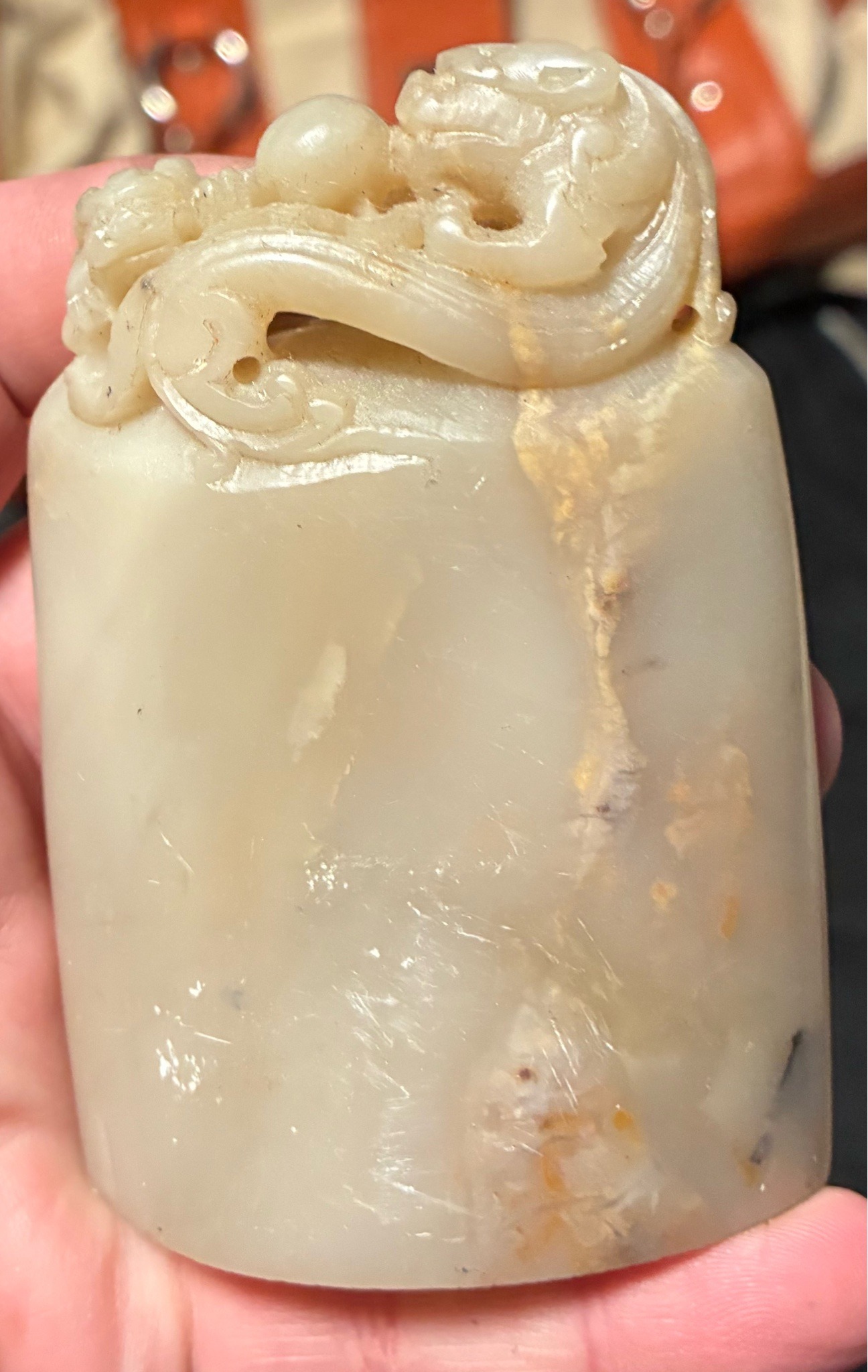
Carved semi-translucent stone seal in the Chinese style

Submitted photo of Carved semi-translucent stone seal in the Chinese style
Photo submitted by the user — not generated by AI

AI Estimated Value

Not an official valuation

$300 - $800 (as untested hardstone carving)

AI estimate as of July 9, 2026 · verify with a professional before acting

AI-Generated · Verify before acting

Everything on this page is generated by AI for informational purposes only. AI can make mistakes — the AI may misidentify items or misattribute them (artist, maker, brand, designer, origin, era). This is not an official valuation and should not be used for insurance, sale, tax, estate, legal, or lending purposes — or any decision requiring a certified appraisal. It is not an authoritative claim about any person, brand, or rights holder — do not share or rely on it as a factual statement about a third party. Always consult qualified professionals before making financial decisions.

Read the full disclaimer

AI Item Analysis

This item appears to be a large, carved seal or toggle made from a semi-translucent stone with a waxy luster, stylistically consistent with nephrite or a similar hardstone. The material exhibits a pale, creamy white to celadon-green hue with visible internal crystalline structures, minor russet-toned veining, and dark inclusions. The top of the rectangular body is surmounted by a detailed carving of at least two chilong (archaic dragons), characterized by sinuous bodies and bifid tails, which is a motif consistent with traditional Chinese lapidary art. The carving appears to be rendered in high relief with undercut elements. The surface shows evidence of moderate wear, including fine surface scratches and some pitting, particularly toward the bottom edge. While the form is consistent with seals of the Qing Dynasty style, there are no visible maker's marks or period signatures to confirm a specific age or manufacture. Hedged language is used as physical material testing (such as a Mohs scale test or spectroscopic analysis) would be required to identify the exact mineral and its origin.
AI Appraisal Report

Based on the image provided, I observe a large carved seal or toggle depicting chilong (archaic dragons) atop a rectangular base. The waxy luster and semi-translucent pale creamy to celadon hue suggest nephrite or a similar hardstone, showing minor russet veining and inclusions within the matrix. However, from a photograph alone, I cannot test the material's hardness or refractive index, which is critical for identifying specific lapidary materials. Furthermore, while the high-relief carving style bears characteristics of Qing Dynasty lapidary art, there are no visible markings to suggest a specific age. Therefore, my assessment treats this as a Chinese-style hardstone carving, with its period and precise material functioning strictly as working assumptions. Market demand for Chinese carved seals varies tremendously based on age, material quality (true nephrite vs. bowenite, serpentine, or glass), and quality of carving. If this piece undergoes scientific testing and in-person examination that supports an attribution to a specific historical period and high-quality nephrite, values could considerably exceed this estimate, potentially reaching several thousand dollars. However, assuming this is a 20th-century or later piece in the style of earlier works, or made from a lesser hardstone, a realistic estimate would be in the $300 to $800 range. The current valuation reflects this more conservative hypothesis. To establish a precise value, an in-person physical inspection, spectroscopic analysis, and review of any provenance documentation would be required.

Keep exploring

More stone carvings appraisals

Get your items appraised

Instant AI-powered appraisal estimates from a photo

Browse More Appraisals