AI estimate as of August 21, 2025 · verify with a professional before acting
AI-Generated · Verify before acting
Everything on this page is generated by AI for informational purposes only. AI can make mistakes — the AI may misidentify items or misattribute them (artist, maker, brand, designer, origin, era). This is not an official valuation and should not be used for insurance, sale, tax, estate, legal, or lending purposes — or any decision requiring a certified appraisal. It is not an authoritative claim about any person, brand, or rights holder — do not share or rely on it as a factual statement about a third party. Always consult qualified professionals before making financial decisions.
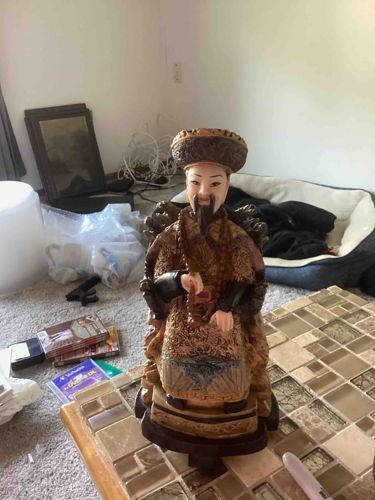
This appears to be a decorative figurine, likely made of resin or a similar composite material, depicting an elderly male figure in traditional East Asian attire, possibly representing a scholar, dignitary, or a deity such as Shou Xing (God of Longevity). The figure is seated, with a prominent long, dark beard and mustache. He wears a round, brimmed hat that resembles fur or textured fabric. His robes are highly detailed with intricate patterns, suggesting brocade or heavily embroidered textiles, primarily in shades of gold, brown, and possibly red, with darker accents. The texture on the clothing is rich and varied, indicating a 'faux' or simulated textile pattern, possibly with some areas appearing woven or textured like basketry. The figure's left hand is visible, holding a small object, perhaps a scroll or a symbolic item, which adds to the narrative of the piece. The base upon which the figure sits is also intricately designed, possibly resembling a throne or elaborately carved chair, with similar textured patterns. The color palette is warm, dominated by earth tones and gilded accents. There are no immediately visible signs of significant damage like chips or cracks, but the overall condition appears to be good for a decorative item. The craftsmanship suggests a commercially produced item, possibly from the late 20th or early 21st century, focusing on decorative appeal rather than fine art quality. The material allows for intricate molding of details, which is evident in the facial features, beard, and clothing patterns. The heavy texture throughout the piece is a key design element. There are no visible manufacturer’s marks or signatures in the provided images.
AI Appraisal Report
Based on my visual examination of the provided image, this decorative figurine, likely made of resin or a similar composite material, appears to be in good overall condition. I observe no obvious chips, cracks, or significant wear that would detract from its display value. The intricate detailing on the robe, hat, and base is well-preserved, suggesting careful handling.
From the image alone, I can assess the authenticity only as a commercially produced decorative item, likely late 20th to early 21st century. The material choice and casting method point away from antique or fine art status. Without physical inspection, I cannot confirm the exact material composition, nor can I identify any hidden manufacturer's marks or signatures. An in-person examination would allow me to assess the tactile quality, precise weight, and search for specific production indicators. Provenance documentation, though unlikely for such an item, would offer further value insights, and scientific testing (e.g., material analysis) could definitively confirm content but is unnecessary for this type of object.
Market conditions for decorative figurines of this nature are generally moderate. Comparables typically sell in the low-to-mid range, depending on size, detail, and perceived quality. While intricately detailed, this piece lacks the rarity or historical significance that would drive high demand. Demand is primarily from individuals seeking Asian-inspired home decor. The piece's larger size and intricate texture may appeal to some, but its mass-produced nature limits its intrinsic value. Factors impacting value are primarily condition and aesthetic appeal, rather than rarity or artistic merit.