AI estimate as of September 28, 2026 · verify with a professional before acting
AI-Generated · Verify before acting
Everything on this page is generated by AI for informational purposes only. AI can make mistakes — the AI may misidentify items or misattribute them (artist, maker, brand, designer, origin, era). This is not an official valuation and should not be used for insurance, sale, tax, estate, legal, or lending purposes — or any decision requiring a certified appraisal. It is not an authoritative claim about any person, brand, or rights holder — do not share or rely on it as a factual statement about a third party. Always consult qualified professionals before making financial decisions.
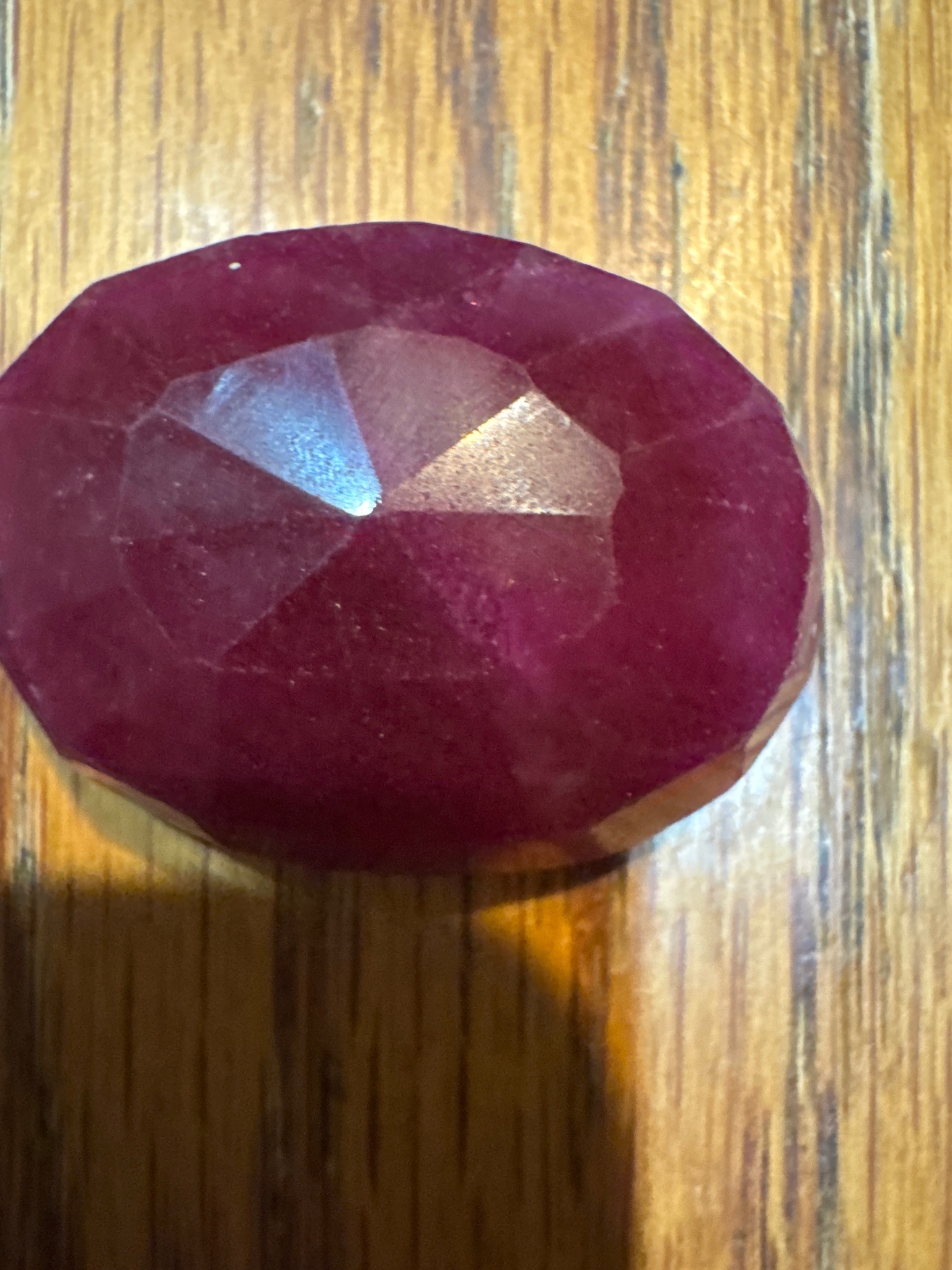
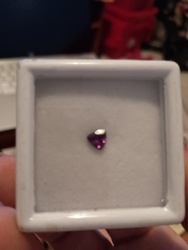
The item depicted in the photograph is a large, oval-shaped faceted gemstone displaying a deep purplish-red or magenta color. The stone features a mixed or rough brilliant cut style with broad, asymmetrical facets across the table and crown, reflecting light with a slightly muted luster. The material appears visually consistent with corundum, commonly known as ruby or pink sapphire, exhibiting characteristic internal texture and color zoning typical of natural corundum, though without physical testing or microscopic analysis, this remains entirely unverified. There are no visible maker's marks, inscriptions, or hallmarks on the visible surface of the stone. The surface shows minor micro-abrasions, slight rounding on the facet junctions, and soft edge wear consistent with handling or unmounted storage. The identification rests strictly on the visual color and rough faceted morphology observed in the image and is not authenticated. Without gemological testing, it is impossible to determine whether the stone is natural, synthetic, treated, or glass, nor can its precise carat weight be assessed from a two-dimensional photograph.
AI Appraisal Report
Based on what I can see in the photograph, the item appears to be a large, oval-shaped faceted gemstone displaying a deep purplish-red or magenta color with a mixed or rough brilliant cut style. Based on visual characteristics alone, the material is consistent with natural corundum such as ruby or pink sapphire, exhibiting typical internal color zoning and texture. However, I cannot verify from a photo whether the stone is natural, synthetic, treated, or glass, nor can I determine its precise carat weight or internal composition. Physical inspection, microscopic analysis, and advanced gemological testing would be needed to confirm identity, origin, and treatment status. The surface shows minor micro-abrasions, slight facet junction rounding, and soft edge wear consistent with handling or unmounted storage. Assuming the working hypothesis that this is a natural corundum gemstone of similar size, color, and optical characteristics, comparable unmounted stones typically trade within the $300 to $800 range depending on clarity, exact carat weight, and optical transparency. General market demand for colored gemstones remains steady, particularly for stones exhibiting desirable saturated hues. If further testing were to reveal that the piece is a synthetic laboratory-created corundum, a glass imitation, or a treated simulacrum, the market value would decrease significantly, likely falling into the $50 to $150 range. To establish a reliable valuation, this piece would require in-person examination and professional laboratory testing by a qualified gemologist.