AI Appraisal Estimate

AI-generated estimates · not official valuations

From the user

What was submitted

Photo and notes provided by the user — not generated by AI

Submitted item photo
Submitted photo · June 28, 2026

User's notes

Painting

AI analysis below

AI appraisal

AI analysis & estimate

AI-Generated · Verify before acting

Everything below is generated by AI for informational purposes only. AI can make mistakes — the AI may misidentify items or misattribute them (artist, maker, brand, designer, origin, era). This is not an official valuation and should not be used for insurance, sale, tax, estate, legal, or lending purposes — or any decision requiring a certified appraisal. It is not an authoritative claim about any person, brand, or rights holder — do not share or rely on it as a factual statement about a third party. Always consult qualified professionals before making financial decisions.

Note

This analysis also relies on unverified notes provided by the user, which may be incomplete or inaccurate and could affect the result.

Read the full disclaimer

AI Identification

·Not independently authenticated·Verify before acting

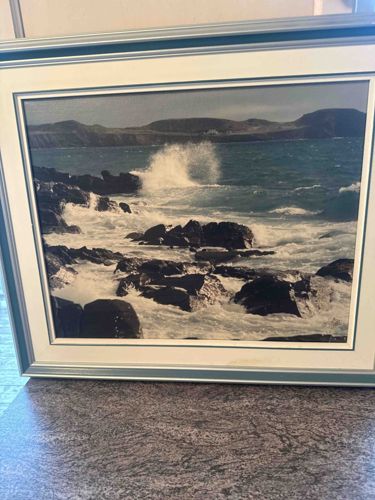
Framed Seascape Print of Crashing Waves

Wall Art

AI Estimated Value

·Not an official valuation·Verify before acting

$30-70

As of June 28, 2026

AI Item Analysis

·AI can make mistakes·Verify before acting
This item is a framed print depicting a dramatic seascape scene. The primary subject is a rocky coastline with powerful waves crashing against dark, jagged rocks, sending white spray high into the air. The water exhibits shades of deep blue and turquoise, indicative of a vibrant ocean. In the background, rolling hills or distant landforms are visible under what appears to be a slightly overcast sky, adding depth to the composition. The print is housed in a layered wooden frame. The innermost layer directly bordering the print is a narrow, light-colored mat board, likely off-white or cream, which shows some visible discoloration or staining along the bottom edge, suggesting moisture exposure or age-related foxing. This mat is then bordered by a wider, flat inner frame section, also in a light, possibly off-white or light grey color, which also appears to have some minor scuffs or dirt. The outermost frame is a pale blue, possibly painted wood, featuring a simple stepped profile, creating a visually appealing contrast with the inner layers and complementing the ocean tones in the print. The overall construction appears to be machine-made, common for decorative prints. No artist's signature, edition number, or specific manufacturing marks are discernible from the provided images, suggesting it may be a mass-produced decorative print. The style is traditional landscape/seascape art, likely dating from the late 20th century to early 21st century. The condition suggests moderate wear consistent with age and typical display environments, particularly noted by the discoloration on the matting.

AI Appraisal Report

·AI can make mistakes·Verify before acting
Based on my examination of the provided image, this item is a framed print, not a painting, depicting a seascape. The condition suggests moderate wear, particularly the noticeable discoloration and staining on the bottom edge of the innermost matting, indicating potential moisture damage or age-related foxing. The absence of an artist's signature, edition number, or specific manufacturing marks, combined with the machine-made appearance of the framing, strongly suggests this is a mass-produced decorative print, likely from the late 20th or early 21st century. In the current market, decorative prints of this nature are widely available through various retailers, including big-box stores, online marketplaces, and secondary markets like thrift shops or garage sales. There is no indication of rarity or significant artistic demand for such items. Comparables typically sell for modest sums, reflecting their decorative rather than fine art value. Factors significantly impacting value are the mass-produced nature, lack of artist attribution, and condition issues. The discoloration on the matting is a detractor. It is crucial to note the limitations of this appraisal. Authenticity as a 'painting' as initially described by the owner cannot be verified from images alone; however, the visual characteristics strongly suggest a print. A physical inspection would be required to definitively confirm the medium (print vs. painting), assess the exact nature and extent of matting damage, and look for any hidden markings. Provenance documentation or scientific testing would be necessary for full authentication if it were presented as an original artwork, which it does not appear to be.

Get your items appraised

Instant estimates of your treasures with AI-powered appraisals

Browse More Appraisals