AI estimate as of August 1, 2025 · verify with a professional before acting
AI-Generated · Verify before acting
Everything on this page is generated by AI for informational purposes only. AI can make mistakes — the AI may misidentify items or misattribute them (artist, maker, brand, designer, origin, era). This is not an official valuation and should not be used for insurance, sale, tax, estate, legal, or lending purposes — or any decision requiring a certified appraisal. It is not an authoritative claim about any person, brand, or rights holder — do not share or rely on it as a factual statement about a third party. Always consult qualified professionals before making financial decisions.
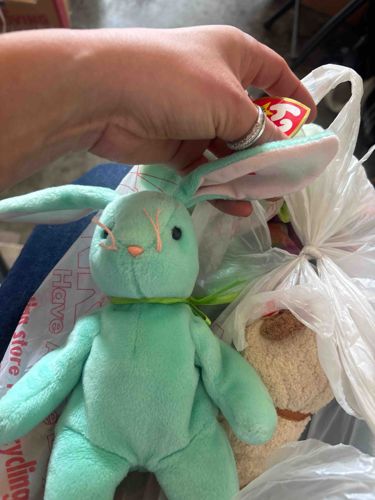
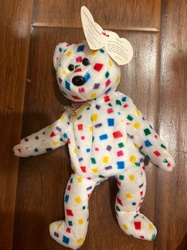
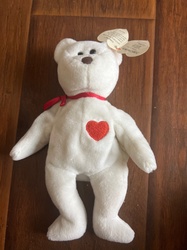
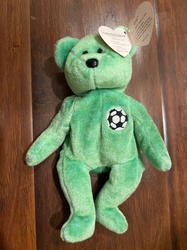
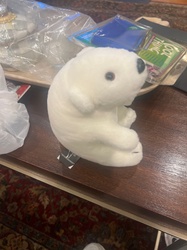
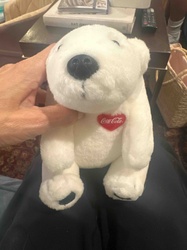
The item is identified as a plush Beanie Baby bunny, specifically 'Hippity' or a similar green bunny from the Ty Inc. collection, given the visible red heart-shaped tag with "Ty" logo held by a hand. The bunny is approximately 8-9 inches tall based on its proportion to the human hand. It is constructed from a soft, light mint green plush fabric, which appears to be uniform across its body, arms, legs, and ears. The ears have a lighter, possibly pastel pink or white, inner lining, indicating a two-tone design. The facial features include small, black, embroidered or plastic bead eyes, a peach or light orange embroidered nose, and thin, wavy embroidered whiskers in a light orange or pink hue extending from the nose area. A thin, bright lime green ribbon is tied around its neck, forming a bow, which adds a distinct accent. The plush appears to be in very good, potentially excellent, condition with no obvious signs of wear, tear, discoloration, or missing parts. The fabric texture seems consistent and soft, suggesting it has been well-preserved. There are no visible stains, dirt, or heavy compression of the stuffing. The craftsmanship is typical of Ty Inc. Beanie Babies, known for their specific bean-filled bodies and characteristic soft plush. The presence of the original Ty tag, though partially obscured, is a key quality indicator for collectors. Given the design and the visible tag, this item dates to the late 20th or early 21st century, falling within the peak popularity period for Beanie Babies. The exact age would depend on the specific generation of the tag and the particular bunny's release date. Its unique aspect is its recognizable brand and the specific 'Hippity' design, which is a known collectible within the Beanie Baby line.
AI Appraisal Report
Upon examining the provided image of this Ty Beanie Baby green plush bunny, likely 'Hippity' or a similar model, I can offer the following professional appraisal. The plush appears to be in remarkably very good to excellent condition. The fabric is clean, shows no visible signs of wear, tear, staining, or discoloration. The stuffing appears consistently distributed, indicating no significant compression or deformation from handling. The key detail of the original Ty heart-shaped tag, although partially obscured, is crucial for authenticity and value retention for collectors.
From a market perspective, Beanie Babies saw their peak in the late 1990s and early 2000s. While most common items have significantly depreciated, specific, rarer, or first-generation pieces, especially those in pristine condition with original tags, can still command a premium. 'Hippity' itself is a common release; therefore, its value is largely driven by its exceptional condition and the intact tag.
Demand for common Beanie Babies like this is generally low to moderate in the current collectible market. Rarity is not a significant factor for this specific model, as many were produced. Factors impacting value positively are its excellent condition and the presence of the original tag. However, the commonality of the item keeps its intrinsic value modest.
My primary limitation in this appraisal is the reliance on images alone. I cannot definitively verify the tag's generation, its absolute authenticity (e.g., reproduction vs. original), or any hidden flaws not visible in the photograph, such as odors, internal material degradation, or specific tag errors. Full authentication would require a hands-on physical inspection to examine the tag's generation and specific print details, confirm the exact plush materials, and verify the internal structure. Provenance documentation (e.g., original purchase receipts) would also enhance certainty regarding its history and authenticity. Without this, the appraisal assumes visible information is complete and accurate.