AI estimate as of October 20, 2025 · verify with a professional before acting
AI-Generated · Verify before acting
Everything on this page is generated by AI for informational purposes only. AI can make mistakes — the AI may misidentify items or misattribute them (artist, maker, brand, designer, origin, era). This is not an official valuation and should not be used for insurance, sale, tax, estate, legal, or lending purposes — or any decision requiring a certified appraisal. It is not an authoritative claim about any person, brand, or rights holder — do not share or rely on it as a factual statement about a third party. Always consult qualified professionals before making financial decisions.
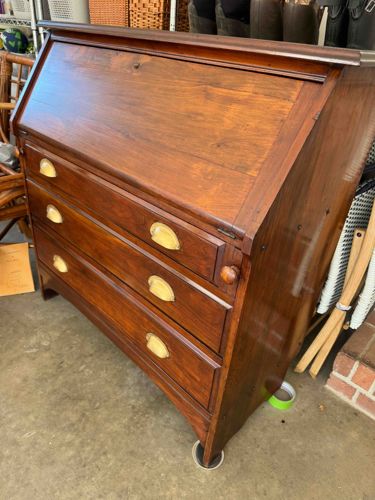
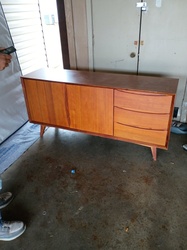
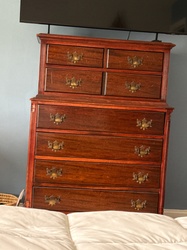
This is an antique slant-front desk, likely constructed from a hardwood such as mahogany or cherry, given its rich, reddish-brown stain and visible grain patterns. The finish appears to be a polished, somewhat glossy lacquer, showing areas of wear and some minor scratches consistent with age and use, particularly on the top slant surface. The desk features a classic design with a hinged slant-front lid that, when opened, would typically reveal a writing surface and interior compartments (not visible in the current image). Below the slant front, there are three full-width drawers, each fitted with two brass bat-wing or bail-pull handles and keyholes, though no keys are present. The brass hardware shows some tarnish and patina, indicating its age. A small, turned wooden knob on the right side of the desk may serve as a release for the slant-front, or perhaps a pull for a discreet side compartment. The construction appears sturdy, with solid wood panels and dovetailed drawers hinted at by the overall quality. The side panels are flat, and the desk rests on short, bracket-style feet or possibly continuous side legs that curve slightly outward at the base. Temporary risers or protectors are visible under the front feet, suggesting it may be placed on an uneven surface or lifted for protection. The overall aesthetic points to an early to mid-19th century American Federal or Empire style, characterized by clean lines and functional design. There are no visible maker's marks or signatures, but the craftsmanship suggests a well-made, utilitarian piece of furniture from its period. The wood shows some minor imperfections, such as small dings and variations in the finish, contributing to its authentic antique character.
AI Appraisal Report
Based on my visual examination of the provided image, this antique slant-front desk appears to be a solid piece, likely constructed from a hardwood such as mahogany or cherry, consistent with early to mid-19th century American Federal or Empire styling. The rich, reddish-brown stain and visible grain patterns suggest quality materials for its period. The finish shows expected wear, minor scratches, and some gloss degradation, which are all characteristics of an item of this age that has been actively used. The brass bat-wing or bail-pull handles and keyholes on the three full-width drawers exhibit appropriate tarnish and patina, further supporting its antiquity. The overall construction seems sturdy, with solid wood panels and the implied dovetail joinery typical of higher-quality period furniture. The bracket-style feet or continuous side legs also align with the aesthetic of the period.
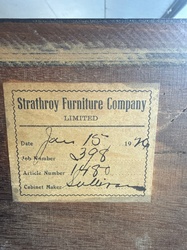
My assessment of its authenticity, based solely on the image, is that it is a period piece, not a modern reproduction. The wear patterns, hardware, and stylistic elements are consistent with a genuine antique. The primary limiting factor in a full authentication from an image is the inability to physically inspect joinery (e.g., dovetails on drawers), the interior construction, wood type (confirming primary and secondary woods), and any potential old repairs or alterations. Provenance documentation would significantly enhance value and authenticity confirmation. I would also need to check for any hidden maker's marks or signatures, which are not visible here.
Market conditions for such utilitarian antique desks are steady but not soaring. Pieces in original, unrestored condition with charming wear often appeal to a specific collector base. Demand is moderate, with rarity depending on the exact craftsmanship and maker, which cannot be determined from the image. Factors impacting value positively include its apparent solid construction and period-correct hardware; negative impacts include the lack of keys, unknown interior configuration, and surface wear. I estimate the appraisal value to be in the range of $800 to $1,500, assuming no major hidden structural flaws or significant repairs are revealed upon physical inspection.