AI Appraisal Estimate

AI-generated estimates · not official valuations

From the user

What was submitted

Photo and notes provided by the user — not generated by AI

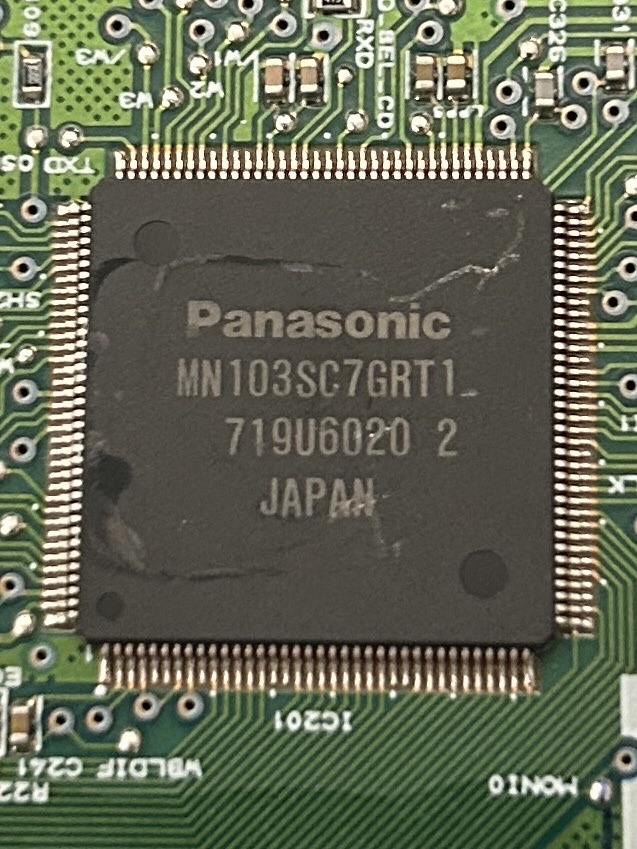
Submitted item photo
Submitted photo · June 18, 2026

User's notes

Panasonic MN103SC7GRT1

AI analysis below

AI appraisal

AI analysis & estimate

AI-Generated · Verify before acting

Everything below is generated by AI for informational purposes only. AI can make mistakes — the AI may misidentify items or misattribute them (artist, maker, brand, designer, origin, era). This is not an official valuation and should not be used for insurance, sale, tax, estate, legal, or lending purposes — or any decision requiring a certified appraisal. It is not an authoritative claim about any person, brand, or rights holder — do not share or rely on it as a factual statement about a third party. Always consult qualified professionals before making financial decisions.

Note

This analysis also relies on unverified notes provided by the user, which may be incomplete or inaccurate and could affect the result.

Read the full disclaimer

AI Identification

·Not independently authenticated·Verify before acting

Panasonic MN103SC7GRT1 Microcontroller

Electronic Components

AI Estimated Value

·Not an official valuation·Verify before acting

$5.00 - $12.00

As of June 18, 2026

AI Item Analysis

·AI can make mistakes·Verify before acting
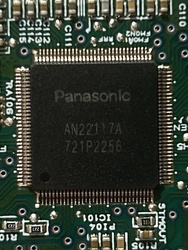
This is a Panasonic-manufactured integrated circuit (IC), specifically a 32-bit microcontroller from the MN103S series. The component is housed in a square, black plastic Quad Flat Package (QFP) with a high pin count, featuring fine-pitch metallic leads extending from all four sides to surface-mount onto the green printed circuit board (PCB). The top surface of the chip features laser-etched markings including the 'Panasonic' corporate logo, the specific model number 'MN103SC7GRT1', a production code '719U6020 2', and the country of origin 'JAPAN'. A circular indentation is visible in the corner to indicate pin 1 orientation. Regarding condition, there are visible surface abrasions, smudges, and residual adhesive or thermal compound marks across the face of the package, likely from previous handling or a heatsink. The solder joints appear intact, though they show the characteristic dull grey patina of leaded or aged solder. This component is typical of automotive or industrial electronic control units from the late 1990s to mid-2000s, representing high-quality Japanese semiconductor craftsmanship of that era. The surrounding PCB features various surface-mount devices like capacitors, resistors, and complex copper trace routing, providing a scale for this compact processing unit.
AI Appraisal Report

·AI can make mistakes·Verify before acting
I have virtually examined this Panasonic MN103SC7GRT1 32-bit microcontroller. Visually, the component exhibits authentic characteristics consistent with Panasonic's manufacturing standards of the late 1990s and early 2000s, including the correct laser-etched logo, font profile, and QFP packaging. The condition is rated as 'Used' or 'Pulls,' evidenced by surface abrasions, thermal residue, and visible solder dulling, indicating it remains mounted on its original PCB. Market conditions for legacy ICs are split into two categories: scrap value and replacement value. As a common industrial/automotive component, its rarity is low; however, it holds specific value for repair technicians maintaining legacy systems where identical part numbers are required for firmware compatibility. The current secondary market for such 'pulls' typically ranges between $5 and $12 per unit. Factors limiting value include the fact that the chip is currently soldered to a board, requiring high-heat extraction which risks thermal damage. Furthermore, its functional integrity cannot be verified visually. My appraisal is limited by the inability to perform X-ray inspection for internal wire bond integrity or electrical testing to verify Logic Unit functionality. For full authentication and valuation, I would require a logic analyzer trace to ensure the silicon hasn't suffered latched-up states or electrostatic discharge (ESD) damage, and provenance regarding the functional status of the parent board.

Get your items appraised

Instant estimates of your treasures with AI-powered appraisals

Browse More Appraisals