AI identification & appraisal estimate

Two-Tone Inlaid Stone Tennis Bracelet

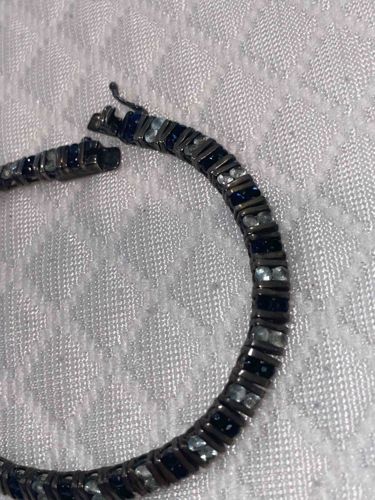
Submitted photo of Two-Tone Inlaid Stone Tennis Bracelet
Photo submitted by the user — not generated by AI

AI Estimated Value

Not an official valuation

$40 - $70

AI estimate as of December 5, 2025 · verify with a professional before acting

AI-Generated · Verify before acting

Everything on this page is generated by AI for informational purposes only. AI can make mistakes — the AI may misidentify items or misattribute them (artist, maker, brand, designer, origin, era). This is not an official valuation and should not be used for insurance, sale, tax, estate, legal, or lending purposes — or any decision requiring a certified appraisal. It is not an authoritative claim about any person, brand, or rights holder — do not share or rely on it as a factual statement about a third party. Always consult qualified professionals before making financial decisions.

Read the full disclaimer

AI Item Analysis

This item is a tennis bracelet featuring a repeating pattern of alternating clear and dark blue/black rectangular-cut stones. The bracelet has a dark-toned metallic setting, possibly rhodium-plated base metal or oxidized sterling silver, which enhances the contrast with the stones. The stones appear to be channel-set or bar-set, meaning they are held in place by thin strips of metal that run along their sides, giving the bracelet a smooth and continuous surface. Each stone segment is separated by a short, dark metallic bar. The bracelet exhibits a classic tennis bracelet design, indicating it is likely a modern or contemporary piece, possibly from the late 20th or early 21st century. The clasp mechanism is visible and appears to be a box clasp with a safety catch, suggesting a common and secure jewelry fastening method. One portion of the clasp appears to be bent or slightly damaged, specifically the pull-tab of the safety catch which is visible in an upward-bent position, indicating a potential repair or wear issue that could affect its functionality and security. The overall condition shows some minor surface wear consistent with use, and the dark metal finish may have some areas of slight dullness or scratching. The clarity and cut of the stones, while difficult to ascertain definitively from the image, suggest they could be cubic zirconia, crystal, or a similar synthetic stone, given the perceived uniformity and lack of deep inclusions typical of natural gemstones. The craftsmanship appears to be of a commercial jewelry standard, focusing on a uniform, mass-produced aesthetic rather than bespoke artisanal quality.
AI Appraisal Report

Based on my visual examination of the provided image, I assess this Two-Tone Inlaid Stone Tennis Bracelet. The bracelet features alternating clear and dark blue/black rectangular-cut stones set in a dark-toned metallic setting, likely rhodium-plated base metal or oxidized sterling silver, given the commercial aesthetic. The stones, appearing uniform and inclusion-free, are most consistent with synthetic materials such as cubic zirconia or crystal. Condition-wise, the piece shows minor surface wear consistent with use, including some slight dullness or scratching on the metal finish. A significant factor impacting value is the visibly bent pull-tab on the safety catch, indicating a potential repair need or compromised security, which diminishes its overall appeal and functionality. This type of damage typically suggests a lower quality construction or considerable wear. From a market perspective, this style of tennis bracelet, featuring synthetic stones and base metal, is widely available from numerous commercial jewelers and online retailers. Demand for such items is generally steady, but supply is abundant, making them common rather than rare. Comparables in the modern accessory market for similar non-precious stone and metal tennis bracelets range from $20 to $100. This piece falls into the higher end of that range due to its dual-tone design and the relative complexity of the stone setting, despite the clasp issue. Limitations in authenticity verification are significant. Without a physical inspection, I cannot definitively confirm stone composition (natural vs. synthetic), metal purity, or the exact nature of the dark finish. An in-person examination would allow for precise testing of the metal (e.g., acid testing or XRF analysis) and stones (e.g., refractometer or spectroscope), as well as a thorough assessment of the clasp's integrity. Provenance documentation would also provide valuable context regarding manufacture and materials. My valuation assumes synthetic stones and base metal, which is common for items of this visual quality and style.

Keep exploring

More jewelry appraisals

Get your items appraised

Instant AI-powered appraisal estimates from a photo

Browse More Appraisals