AI Appraisal Estimate

AI-generated estimates · not official valuations

From the user

What was submitted

Photo and notes provided by the user — not generated by AI

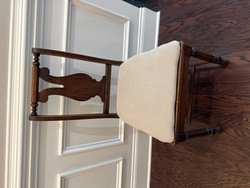
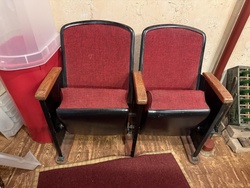
Submitted item photo
Submitted photo · June 28, 2026

User's notes

No additional notes provided.

AI analysis below

AI appraisal

AI analysis & estimate

AI-Generated · Verify before acting

Everything below is generated by AI for informational purposes only. AI can make mistakes — the AI may misidentify items or misattribute them (artist, maker, brand, designer, origin, era). This is not an official valuation and should not be used for insurance, sale, tax, estate, legal, or lending purposes — or any decision requiring a certified appraisal. It is not an authoritative claim about any person, brand, or rights holder — do not share or rely on it as a factual statement about a third party. Always consult qualified professionals before making financial decisions.

Read the full disclaimer

AI Identification

·Not independently authenticated·Verify before acting

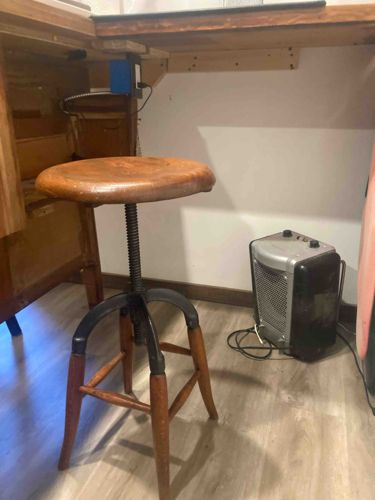
Vintage Industrial Adjustable Swivel Drafting Stool

Antique Furniture / Industrial Seating

AI Estimated Value

·Not an official valuation·Verify before acting

$450 - $650

As of June 28, 2026

AI Item Analysis

·AI can make mistakes·Verify before acting
This is a vintage industrial-style drafting or shop stool featuring a height-adjustable swivel mechanism. The stool is constructed with a circular solid wood seat that exhibits a deep, honey-toned patina and visible grain patterns. It is supported by a heavy-duty threaded steel screw post that allows for manual height adjustment. The base is complex, consisting of four outward-curving cast metal arms finished in a dark, possibly weathered black coating, which transition into four tapered wooden legs. These legs are reinforced by cross-stretchers for structural stability. Physically, the item shows significant signs of age and utilitarian use, including scuffing, rounding of the seat edges, and various indentations in the wood. The metal components show surface oxidation and wear consistent with an early-to-mid 20th-century piece (circa 1930s-1950s). There are no immediately visible maker's marks in the photo, but the craftsmanship suggests a high-quality commercial grade manufacture, likely intended for architectural drafting or factory work. The mix of cast iron, steel, and hardwood indicates a durable, professional-grade design characteristic of the American industrial era.
AI Appraisal Report

·AI can make mistakes·Verify before acting
Based on my visual examination of this industrial drafting stool, I assess it as an authentic piece of mid-century utilitarian furniture, likely dating from the 1930s to 1950s. The 'honey-toned' patina on the hardwood seat and the specific oxidation patterns on the cast metal base suggest genuine age rather than a modern reproduction. The marriage of cast iron, threaded steel, and tapered wood legs is a hallmark of high-end commercial manufacturers of that era, such as Kewaunee or Hamilton Manufacturing. The current market for 'Industrial Chic' remains steady, though it has stabilized from its peak a decade ago. Comparables for stools featuring this specific mixed-material base (wood-to-metal-to-wood) typically fetch higher premiums than all-metal variants due to their aesthetic versatility. The visible wear—scuffing and rounding of the seat—actually enhances the value for many collectors, as it provides the 'lived-in' provenance desired in industrial decor. However, there are limitations to this digital appraisal. Without a physical inspection, I cannot verify if the swivel mechanism operates smoothly or if there are structural fractures in the cast iron arms, which would significantly decrease value. I also cannot confirm the presence of faint manufacturer stamps often found on the underside of the seat or the interior of the metal casting. To fully authenticate this item and reach a 'Fair Market Value' at the higher end of the spectrum, I would need to inspect the joinery of the stretchers and examine the threading for tool marks consistent with early 20th-century production. Provenance documentation regarding its original factory or studio use would further solidify its historical value.

Get your items appraised

Instant estimates of your treasures with AI-powered appraisals

Browse More Appraisals