AI estimate as of August 22, 2025 · verify with a professional before acting
AI-Generated · Verify before acting
Everything on this page is generated by AI for informational purposes only. AI can make mistakes — the AI may misidentify items or misattribute them (artist, maker, brand, designer, origin, era). This is not an official valuation and should not be used for insurance, sale, tax, estate, legal, or lending purposes — or any decision requiring a certified appraisal. It is not an authoritative claim about any person, brand, or rights holder — do not share or rely on it as a factual statement about a third party. Always consult qualified professionals before making financial decisions.
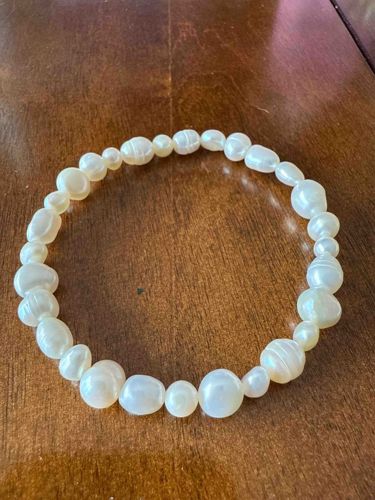
This item is a freshwater baroque pearl bracelet, exhibiting a natural and organic aesthetic. It is composed of numerous individual pearls, strung together to form a circular shape, consistent with that of a bracelet. The pearls vary significantly in size and shape, ranging from small, nearly round beads to larger, irregular, and elongated forms. This variability is characteristic of baroque pearls, which are celebrated for their unique, non-symmetrical shapes, unlike perfectly round cultured or natural pearls. The color of the pearls is predominantly a lustrous cream to off-white, with iridescent overtones visible on many of the surfaces, indicative of good nacre quality. Some pearls display subtle hints of rose or silver undertones, enhancing their visual appeal. The surface of the pearls appears relatively smooth, with a distinct nacreous sheen and some minor surface irregularities and ridges, which are common and expected in natural baroque pearls. The construction method appears to be a stringing process, likely on an elastic cord, given the bracelet's relaxed circular form, suggesting it is designed to stretch for easy wear without a visible clasp. There are no discernible maker's marks, signatures, or stamps visible in the provided image. The overall condition appears to be good, with no obvious signs of chips, cracks, or significant wear. The luminescence and varied shapes contribute to its unique charm, providing a handcrafted or artisanal feel. Given the characteristic appearance of freshwater baroque pearls and the lack of traditional clasps, this piece likely dates from the late 20th century to the present, a period when such organic styles gained significant popularity. The quality of craftsmanship appears to be appropriate for a beaded bracelet, focusing on the natural beauty of the pearls rather than intricate metalwork.
AI Appraisal Report
Based on my visual examination of the provided image, this Freshwater Baroque Pearl Stretch Bracelet appears to be in good condition, exhibiting no obvious chips, cracks, or significant wear. The irregular shapes and varied sizes confirm their baroque nature, characteristic of freshwater pearls. The predominant cream to off-white color with iridescent overtones and subtle hints of rose or silver undertones indicates good nacre quality. The surface seems relatively smooth with expected minor irregularities. Authenticity of freshwater pearls is strongly suggested by these visual cues.
In terms of market conditions, baroque pearl jewelry, particularly stretch bracelets, enjoys consistent demand due to their organic aesthetic and ease of wear. They appeal to a broad market segment looking for natural, artisanal pieces. While not rare, the unique shape of each baroque pearl makes every piece unique. Factors significantly impacting value include the lustre, nacre quality, size, and overall visual appeal of the pearls. The lack of a traditional clasp and the use of a stretch cord typically position this type of bracelet at a more accessible price point compared to pieces with intricate metalwork or precious metal clasps.
It is crucial to note the limitations in authenticity verification from images alone. While the visual characteristics align with genuine freshwater baroque pearls, an in-person examination would allow for tactile assessment of the nacre, precise measurement of individual pearls, and confirmation of stringing material integrity. Provenance documentation, though unlikely for this type of casual piece, would definitively confirm its origin. Scientific testing, such as X-ray radiography or gemmological microscope examination, could definitively confirm pearl type and natural origin versus cultured, though this is typically not cost-effective for freshwater baroque pearls in this value range.