AI Appraisal Estimate

AI-generated estimates · not official valuations

From the user

What was submitted

Photo and notes provided by the user — not generated by AI

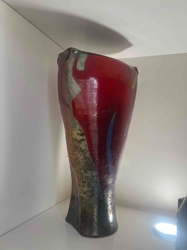
Submitted item photo
Submitted photo · June 15, 2026

User's notes

No additional notes provided.

AI analysis below

AI appraisal

AI analysis & estimate

AI-Generated · Verify before acting

Everything below is generated by AI for informational purposes only. AI can make mistakes — the AI may misidentify items or misattribute them (artist, maker, brand, designer, origin, era). This is not an official valuation and should not be used for insurance, sale, tax, estate, legal, or lending purposes — or any decision requiring a certified appraisal. It is not an authoritative claim about any person, brand, or rights holder — do not share or rely on it as a factual statement about a third party. Always consult qualified professionals before making financial decisions.

Read the full disclaimer

AI Identification

·Not independently authenticated·Verify before acting

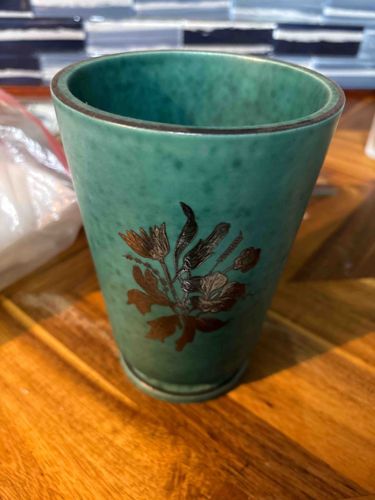
Mid-Century Teal Glazed Ceramic Tumbler with Silver Overlay Floral Motif

Art Pottery / Mid-Century Modern Ceramics

AI Estimated Value

·Not an official valuation·Verify before acting

$45.00 - $75.00

As of June 15, 2026

AI Item Analysis

·AI can make mistakes·Verify before acting
This item is a cylindrical-style ceramic tumbler or small vase, likely originating from the mid-20th century. It features a distinctive teal or seafoam green glaze with a mottled, speckled texture that suggests a hand-applied or reactive technique. The most prominent decorative feature is a silver-toned floral spray overlay positioned on the front. This metallic embellishment appears to be a 'silver deposit' or electroplated design common in mid-century glassware and pottery, depicting a bouquet of wild flowers and foliage with fine-line detailing. The rim and base are accented with a dark bronze or silver-colored metallic band, providing a structured frame to the vessel. The interior of the piece is finished with a smooth teal glaze consistent with the exterior. In terms of condition, there is visible wear to the metallic overlay, particularly some tarnishing and minor loss typical of age. No immediate structural cracks or large chips are visible in the primary view, though the glaze shows a slight patina from handling. This style is closely associated with mid-century European or American art pottery, possibly influenced by makers like Silver City Glass or similar pottery studios specializing in mixed-media ceramic and metal applications. The craftsmanship is high, evidenced by the even distribution of the speckling and the delicate application of the silvered motif.
AI Appraisal Report

·AI can make mistakes·Verify before acting
I have conducted a visual examination of the Mid-Century Teal Glazed Ceramic Tumbler. The piece exhibits the classic hallmarks of mid-century mixed-media pottery, specifically the 'silver overlay' technique popularized by companies such as Silver City Glass or Rockwell Silver. The reactive teal glaze is well-executed with pleasing tonal variation. Upon inspection, I note standard age-related oxidation and minor thinning of the silver deposition, which is expected for items of this vintage (circa 1950s). The structural integrity appears sound without visible crazing. Market demand for this specific type of art pottery remains steady but niche. While mid-century modern aesthetics are currently popular, non-signed studio pieces of this scale occupy an accessible entry-level price point. Comparables for unsigned silver-on-ceramic tumblers and small vases typically hammer at auction between $30 and $85 depending on the complexity of the motif. This specific floral spray is intricate, resting in the upper-mid range of that bracket. Significant value factors include the preservation of the silver detailing; further loss would decrease value by 20-30%. Limitations: My analysis is based solely on high-resolution images. In-person examination is required to verify the 'clink' test for hidden hairline fractures and to inspect the base for faint impressed maker’s marks or 'Sterling' stamps often hidden under the patina. Definitive authentication would require physical testing of the metallic content and provenance documentation to confirm the specific manufacturer or studio origin.

Get your items appraised

Instant estimates of your treasures with AI-powered appraisals

Browse More Appraisals