AI estimate as of October 11, 2025 · verify with a professional before acting
AI-Generated · Verify before acting
Everything on this page is generated by AI for informational purposes only. AI can make mistakes — the AI may misidentify items or misattribute them (artist, maker, brand, designer, origin, era). This is not an official valuation and should not be used for insurance, sale, tax, estate, legal, or lending purposes — or any decision requiring a certified appraisal. It is not an authoritative claim about any person, brand, or rights holder — do not share or rely on it as a factual statement about a third party. Always consult qualified professionals before making financial decisions.
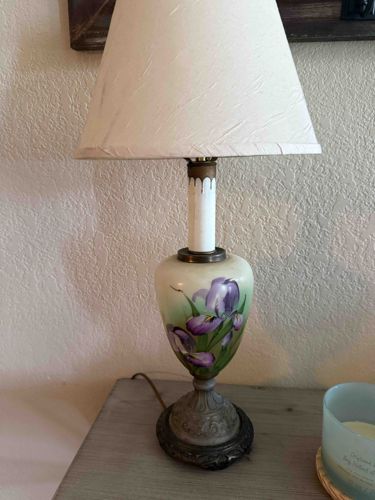
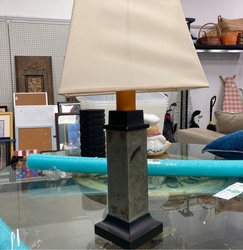
This is a vintage table lamp featuring a hand-painted milk glass body depicting irises, mounted on an embossed metal base. The lamp's central body is an elongated ovoid shape crafted from opaque white (milk) glass, adorned with vibrant hand-painted iris flowers in shades of purple and blue, with green foliage, against a soft, light green to white gradient background. The painting style appears to be freehand and somewhat impressionistic, giving the flowers a naturalistic yet artistic feel. Above the milk glass body, a white ceramic or painted metal column, possibly meant to mimic a candle, rises, topped by a brass-toned fitting. The lamp is completed with a light-colored, possibly cream or off-white, fabric lampshade with a somewhat wrinkled or textured surface, showing some minor dust or discoloration along the edges and surface. The base of the lamp is constructed from a dark-toned metal, likely cast iron or a similar alloy, featuring intricate embossed or molded scrollwork and floral motifs, giving it a somewhat ornate and classical aesthetic. The metal base exhibits visible wear, including areas where the dark finish has chipped or rubbed off, revealing a lighter metallic color underneath, consistent with age and use. The electrical cord is visible, indicating it is a wired lamp. The overall style suggests an age from the early to mid-20th century, possibly Art Nouveau or Art Deco influence in the floral design, translated into a more traditional lamp form. The craftsmanship of the hand-painted glass is a notable feature, indicating a degree of artistic effort and making each lamp unique.
AI Appraisal Report
Based on my visual examination of the image, this Vintage Hand-Painted Iris Milk Glass Table Lamp with Embossed Metal Base is a charming piece. The overall condition appears good for its age, though the lampshade shows minor dust/discoloration and some wrinkling, which is typical wear. The milk glass body with hand-painted irises is the focal point and exhibits good artistic quality, enhancing its appeal. The embossed metal base shows expected wear, with some finish loss revealing the underlying metal, consistent with a vintage item that has seen use. This wear contributes to its authentic vintage character rather than detracting significantly from value, provided it's not structural. Authenticity, based solely on the image, suggests it is indeed a period piece, likely early to mid-20th century, given the style, materials, and apparent manufacturing techniques. Replication of such detailed hand-painting and embossed bases is less common in modern mass production. Market conditions for decorative vintage lighting are generally stable. Comparables would include similar hand-painted glass lamps from the era, often ranging from $100 to $300 depending on the artistry, condition, and specific design. Factors impacting value include the unique hand-painted nature, which makes each lamp distinct, and the attractive iris motif. Demand for decorative vintage lamps is moderate, appealing to collectors and decorators seeking unique accent pieces. Rarity is not exceptionally high for this type of item, but good examples with original hand-painting are less common than plain glass lamps. My valuation reflects its decorative appeal, good condition for age, and unique artistic element. Limitations in authenticity verification from images alone are important to note. I cannot assess the integrity of the wiring (a crucial safety and functional factor), confirm the material composition of the metals and glass definitively, or detect any internal flaws, repairs, or restorations. A physical inspection would be necessary to test the electrical components, examine any manufacturer's marks, verify the glass type through tactile and light transmission tests, and thoroughly inspect for subtle damage or repairs not visible in the image. Provenance documentation could further confirm its age and origin.