AI Appraisal Estimate

AI-generated estimates · not official valuations

From the user

What was submitted

Photo and notes provided by the user — not generated by AI

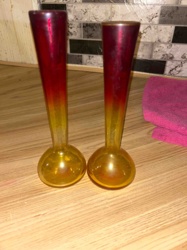
Submitted item photo
Submitted photo · May 27, 2026

User's notes

No additional notes provided.

AI analysis below

AI appraisal

AI analysis & estimate

AI-Generated · Verify before acting

Everything below is generated by AI for informational purposes only. AI can make mistakes — the AI may misidentify items or misattribute them (artist, maker, brand, designer, origin, era). This is not an official valuation and should not be used for insurance, sale, tax, estate, legal, or lending purposes — or any decision requiring a certified appraisal. It is not an authoritative claim about any person, brand, or rights holder — do not share or rely on it as a factual statement about a third party. Always consult qualified professionals before making financial decisions.

Read the full disclaimer

AI Identification

·Not independently authenticated·Verify before acting

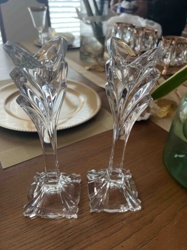
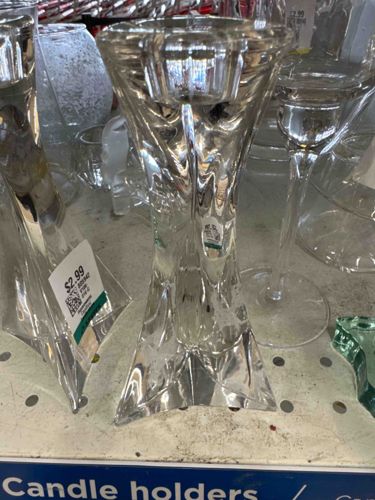
Triangular Molded Glass Pillar or Taper Candle Holder

Home Decor - Glassware / Candle Holders

AI Estimated Value

·Not an official valuation·Verify before acting

$15.00 - $25.00

As of May 27, 2026

AI Item Analysis

·AI can make mistakes·Verify before acting
This is a contemporary clear glass candle holder featuring a distinctive modernist architectural design. The piece stands approximately 6 to 8 inches tall and is constructed from heavy, molded non-lead or low-lead glass. Its primary design element is an elongated triangular form that tapers at the waist before flaring out to a broad, three-pointed star base. This geometric shaping creates deep vertical concave channels that run the length of the body, which serve to refract light and enhance the brilliance of the clear material. The top features a dual-purpose rim, designed with a central well that can accommodate a standard taper candle while the broader top surface could support a small pillar candle or votive. The glass appears to be of moderate thickness, indicative of mass-market commercial production rather than hand-blown artisanal work. In terms of condition, the piece shows no major fractures or structural cracks, though typical shelf wear in the form of fine surface scratches and minor abrasions is visible on the base. A small manufacturer's or retailer's paper label is partially visible on the lower trunk, though it is not clearly legible. The overall style is consistent with late 20th-century to early 21st-century home decor trends, specifically echoing the clean, geometric lines popularized by brands like Mikasa or Libby during the 1990s.
AI Appraisal Report

·AI can make mistakes·Verify before acting
I have conducted a visual appraisal of this contemporary clear molded glass candle holder. The item exhibits a modernist architectural aesthetic characterized by an elongated triangular form with a three-pointed star base. Upon my examination, the condition appears consistent with a well-maintained decorative object; surface-level abrasions on the base are commensurate with standard shelf wear. The visible seams and the clarity of the glass suggest a high-volume, commercial press-molded production method rather than luxury lead crystal or artisanal studio work. The styling is highly consistent with late-20th-century 'Lifestyle' glassware marketed by retailers such as Mikasa, Libbey, or IKEA. The current market for mass-produced colorless glassware of this era is saturated, with high supply and moderate demand driven primarily by utilitarian use rather than collectibility. Comparable sales for similar non-signed geometric candle holders typically fall within the $10 to $30 range at secondary market venues. The presence of a partial, illegible paper label suggests a retail origin rather than a prestigious design house, which would typically utilize an etched acid mark or sandblasted signature for branding. Please note that this appraisal is based solely on digital representations. A definitive valuation is limited by the inability to physically assess the glass density, resonant ring (to determine lead content), and the specific manufacturer via the illegible label. Full authentication would require an in-person inspection to verify the glass composition and potentially uncover a maker's mark under high-magnification or UV light. No provenance documentation was provided, which also limits the ability to assign a premium for historical or designer significance.

Get your items appraised

Instant estimates of your treasures with AI-powered appraisals

Browse More Appraisals