AI Appraisal Estimate

AI-generated estimates · not official valuations

From the user

What was submitted

Photo and notes provided by the user — not generated by AI

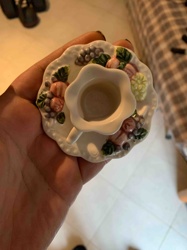
Submitted item photo
Submitted photo · June 8, 2026

User's notes

No additional notes provided.

AI analysis below

AI appraisal

AI analysis & estimate

AI-Generated · Verify before acting

Everything below is generated by AI for informational purposes only. AI can make mistakes — the AI may misidentify items or misattribute them (artist, maker, brand, designer, origin, era). This is not an official valuation and should not be used for insurance, sale, tax, estate, legal, or lending purposes — or any decision requiring a certified appraisal. It is not an authoritative claim about any person, brand, or rights holder — do not share or rely on it as a factual statement about a third party. Always consult qualified professionals before making financial decisions.

Read the full disclaimer

AI Identification

·Not independently authenticated·Verify before acting

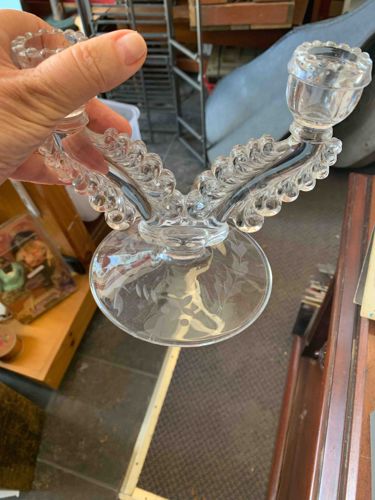
Clear Glass Two-Arm Candelabra

Candle Holder

AI Estimated Value

·Not an official valuation·Verify before acting

$40-$65

As of June 8, 2026

AI Item Analysis

·AI can make mistakes·Verify before acting
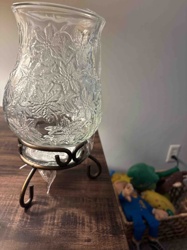
This appears to be a clear glass candelabra, designed to hold at least two candles. The material is transparent glass, exhibiting a clear, colorless quality, suggesting either lead crystal or high-quality pressed glass. The candelabra features a central stem that branches out into two arms, each terminating in a candle cup. A notable design element is the series of applied, fluted decorations or 'petals' along the underside of the branching arms and around the rims of the candle cups. These fluted elements seem to be individually molded and attached, or intricately pressed as part of the main body, creating a scalloped or highly ornamental edge. The candle cups themselves have a subtle ribbed or fluted exterior. The base of the candelabra is a flat, circular disc. This base is adorned with etched or engraved floral motifs, specifically what appear to be ferns or delicate leaves, demonstrating a level of decorative detail. The overall construction suggests a piece from the late 19th to early 20th century, possibly Victorian or Edwardian era, given the elaborate decorative style. There are no immediately visible chips, cracks, or significant repair marks, and the glass appears to be in good condition with a clean surface, though some dust or minor surface grime is present. The craftsmanship, particularly the precision of the fluted elements and the etched base, indicates a well-made, decorative glassware item, likely intended for formal table settings or as a mantelpiece accent. There are no discernible maker's marks or signatures visible from the provided images.
AI Appraisal Report

·AI can make mistakes·Verify before acting
Upon examining the provided images, I assess this item to be a clear glass two-arm candelabra, likely of American or European origin, dating from the late 19th to early 20th century. My assessment of its condition is good, with no visible chips or cracks. The glass maintains excellent clarity, and the etched floral motifs on the base appear well-defined and intact. The design, featuring applied fluted 'petals' and a decorative base, is characteristic of the Victorian or Edwardian periods. The market for this type of glassware is stable but selective. Unmarked, high-quality pressed glass candelabra from this era are relatively common. Value is heavily influenced by the maker, condition, and decorative complexity. While visually appealing, the absence of a maker's mark (such as Fostoria, Cambridge, or Heisey) significantly limits its value, as it cannot be attributed to a highly collected manufacturer. Its primary value lies in its decorative quality and antique character rather than rarity. Without a physical examination, I cannot perform crucial tests to confirm its authenticity and origin. An in-person inspection would allow me to check for a pontil mark, analyze the glass composition (distinguishing pressed glass from lead crystal by weight and resonance), and use a blacklight to identify potential repairs or the type of glass. Provenance documentation or a confirmed maker's mark would be required for a more definitive valuation.

Get your items appraised

Instant estimates of your treasures with AI-powered appraisals

Browse More Appraisals