AI estimate as of August 9, 2025 · verify with a professional before acting
AI-Generated · Verify before acting
Everything on this page is generated by AI for informational purposes only. AI can make mistakes — the AI may misidentify items or misattribute them (artist, maker, brand, designer, origin, era). This is not an official valuation and should not be used for insurance, sale, tax, estate, legal, or lending purposes — or any decision requiring a certified appraisal. It is not an authoritative claim about any person, brand, or rights holder — do not share or rely on it as a factual statement about a third party. Always consult qualified professionals before making financial decisions.
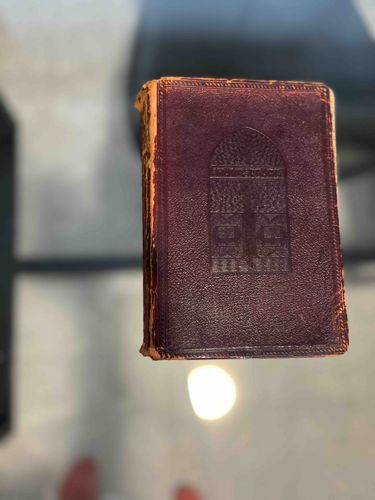
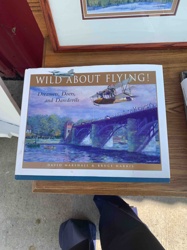
This item is an antique or vintage bound book, likely a religious text or devotional given its small size and decorative cover. The book features a dark reddish-brown, possibly embossed leather or faux leather cover, exhibiting a fine-grained texture. The front cover is adorned with a central, deeply debossed or blind-stamped design that appears to be an architectural element, perhaps a stylized arched doorway or a window with intricate patterns resembling tracery or stained glass. Above and below this central motif, there are horizontal lines or bands of decorative tooling. The edges of the book's pages, visible along the fore-edge and head, show a light brownish-yellow hue, indicative of natural aging or possibly gilt edges that have worn off. The spine, while not fully visible, appears to be heavily worn, with significant loss and fraying of the cover material, exposing the underlying book board or binding structure. The corners of the book also exhibit considerable wear, with the cover material peeling and missing, consistent with extensive use and age. The overall condition suggests a significant patina, with no obvious signs of recent repair. The size appears to be compact, suitable for personal carrying or bedside use. The craftsmanship, particularly the detailed embossing on the cover, suggests a period where such decorative binding was common, likely late 19th or early 20th century.
AI Appraisal Report
Based on my visual examination of the provided image, this antique embossed leather-bound book presents as a devotional or religious text from the late 19th to early 20th century. The reddish-brown cover, likely leather or a high-quality faux leather, features an intricate architectural motif, indicative of the period's decorative binding trends. The fine-grained texture and blind-stamped design are consistent with historical techniques.
Condition: The book exhibits significant wear, particularly to the spine, which shows substantial loss and fraying, exposing the underlying binding. The corners are also heavily worn with material loss. The page edges display discoloration consistent with aging, possibly indicating worn gilt. This level of wear, while detracting from the pristine appearance, also confirms its age and extensive prior use, contributing to its authentic patina. There are no signs of recent repairs, suggesting its originality. Authenticity, based solely on visual cues, strongly points to it being genuinely antique or vintage.
Market Conditions and Comparables: Similar small, heavily worn, decorative Victorian-era devotional books, especially those with unmarked religious or common architectural motifs, typically fall into the lower end of the antique book market. While the embossing is attractive, it is not uniquely rare. Demand for such items is generally moderate, driven more by aesthetic appeal for decorative purposes than by historical significance or textual rarity, unless a specific author or edition is identified.
Factors Impacting Value: The extensive wear, particularly the spine damage, significantly limits its value as a collectible antique. The lack of specific identification (title, author, publisher, date) also restricts its appeal to collectors. Its value is primarily decorative. However, its genuine age and the attractive, well-executed embossing do retain some inherent appeal.
Limitations: My appraisal is strictly based on the provided image. I cannot definitively ascertain the book's precise age, internal contents (which could reveal a rare edition or significant provenance), the exact material of the cover, or the true extent of the binding damage without physical examination. In-person inspection would allow for tactile assessment of the cover material, evaluation of the internal text block, and a more thorough assessment of structural integrity. Provenance documentation, if available, could significantly enhance its value by linking it to a notable owner or history. Scientific testing is not typically required or cost-effective for items of this nature and value range unless a specific, high-stakes authenticity claim is being made.