AI Appraisal Estimate

AI-generated estimates · not official valuations

From the user

What was submitted

Photo and notes provided by the user — not generated by AI

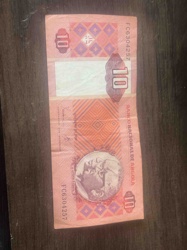
Submitted item photo
Submitted photo · June 8, 2026

User's notes

No additional notes provided.

AI analysis below

AI appraisal

AI analysis & estimate

AI-Generated · Verify before acting

Everything below is generated by AI for informational purposes only. AI can make mistakes — the AI may misidentify items or misattribute them (artist, maker, brand, designer, origin, era). This is not an official valuation and should not be used for insurance, sale, tax, estate, legal, or lending purposes — or any decision requiring a certified appraisal. It is not an authoritative claim about any person, brand, or rights holder — do not share or rely on it as a factual statement about a third party. Always consult qualified professionals before making financial decisions.

Read the full disclaimer

AI Identification

·Not independently authenticated·Verify before acting

Angola 10 Kwanzas Banknote (1984 Issue)

Numismatics - Foreign Paper Money

AI Estimated Value

·Not an official valuation·Verify before acting

$4.00 - $12.00

As of June 8, 2026

AI Item Analysis

·AI can make mistakes·Verify before acting
This is a 10 Dez Kwanzas banknote from Angola, belonging to the 1984 series released by the Banco Nacional de Angola. The note features a warm, reddish-brown/terracotta monochromatic color palette printed on paper currency stock. The obverse side (pictured) prominently displays an engraved central illustration of two Giant Sable Antelopes (Palanca Negra Gigante), which is the national symbol of Angola. The text 'DEZ KWANZAS' is printed at the top. The note includes the Angolan coat of arms on the left and a portrait of a local figure or statue head on the upper right, enclosed in a geometric border. Intricate guilloche patterns and security latice work are visible throughout the background and within the denomination '10' indicators. There appears to be a large watermark window on the center-right, showing a faint sculpted head. Regarding its condition, the note shows visible signs of circulation including vertical and horizontal folding creases, slight corner rounding, and general paper softening. There is a noticeable yellowish tint or staining in the central white area, possibly due to environmental exposure or handling. The edges appear relatively intact without major tears, suggesting a grade of 'Fine' to 'Very Fine' by numismatic standards. This currency represents a period of Angolan history post-independence, following the transition from the Escudo to the Kwanza.
AI Appraisal Report

·AI can make mistakes·Verify before acting
After a visual examination of this 1984 Angola 10 Kwanzas banknote (Pick #115), I have assessed its condition as 'Fine' (F) to 'Very Fine' (VF). The note displays clear circulation wear, specifically a heavy central vertical fold and secondary horizontal creases that have softened the paper fibers. The slight yellowing in the watermark area and general surface soiling are typical for this issue's paper stock when exposed to environmental humidity. The design elements, including the Giant Sable Antelope and the portrait of Agostinho Neto, remain legible despite the circulation. In terms of market demand, this specific denomination is quite common. Following the Angolan currency reforms, large quantities of these notes remained in the collectors' market. While the 1984 series is a fundamental part of post-independence African numismatics, lower denominations in circulated condition do not command high premiums. Most recent auction results and retail listings for this 10 Kwanza note in VF condition fall within the single-digit to low double-digit dollar range. Authenticity appears consistent with known security features of the Banco Nacional de Angola, specifically the intricate guilloche patterns and the visible watermark. However, a conclusive authentication is impossible through digital images alone. A physical inspection would be required to verify the paper's ultraviolet response, the presence of security fibers, and the depth of the intaglio printing. Provenance documentation or a record of bank issuance would further bolster its profile, though rarely provided for low-value circulated currency. For a definitive grade, submission to a third-party grading service like PMG would be necessary, though the cost of grading may exceed the market value of the note itself.

Get your items appraised

Instant estimates of your treasures with AI-powered appraisals

Browse More Appraisals