AI identification & appraisal estimate

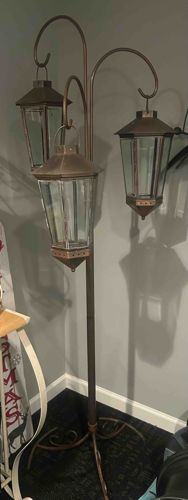
Three-Lantern Floor Stand

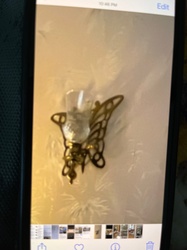
Submitted photo of Three-Lantern Floor Stand
Photo submitted by the user — not generated by AI

AI Estimated Value

Not an official valuation

$150-250

AI estimate as of June 20, 2025 · verify with a professional before acting

AI-Generated · Verify before acting

Everything on this page is generated by AI for informational purposes only. AI can make mistakes — the AI may misidentify items or misattribute them (artist, maker, brand, designer, origin, era). This is not an official valuation and should not be used for insurance, sale, tax, estate, legal, or lending purposes — or any decision requiring a certified appraisal. It is not an authoritative claim about any person, brand, or rights holder — do not share or rely on it as a factual statement about a third party. Always consult qualified professionals before making financial decisions.

Read the full disclaimer

AI Item Analysis

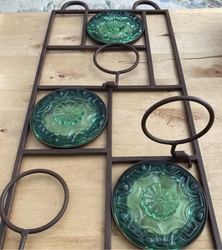
This item is a decorative freestanding floor lantern post featuring three individual lanterns. The overall construction appears to be entirely of metal, likely wrought iron or a similar ferrous alloy, given its dark, possibly bronzed or antiqued copper finish and the visible scrollwork. The finish exhibits a slightly distressed or brushed appearance, contributing to an aged aesthetic. The central pole is slender and straight, supporting three branched arms at various heights, each culminating in an upward-curving hook from which a lantern is suspended by a small ring. The lanterns themselves are hexagonal or octagonal in cross-section, with clear glass panels allowing light to pass through. They feature a decorative cap at the top, mimicking a roof, and a pointed finial at the bottom. The largest lantern is centrally located and positioned lower than the two flanking lanterns, which are at different heights from each other creating a pleasing asymmetrical arrangement. The base of the stand is robust, with three or more scrolled legs providing stability, typical of floor lamp or stand design. The visible condition suggests good integrity with no obvious major damage, although minor surface wear or dust accumulation might be present consistent with occasional use. The clear glass panels appear intact, and the metal components show a consistent patina. This lantern stand appears to be a contemporary decorative piece, likely from the late 20th or early 21st century, designed to evoke a rustic, traditional, or even romantic aesthetic, suitable for indoor ornamental display or possibly covered outdoor areas. It lacks any discernible maker's marks or signatures from the provided image.
AI Appraisal Report

Having examined the provided image of this Three-Lantern Floor Stand, I assess its condition as generally good, consistent with a decorative piece from the late 20th or early 21st century. The metal construction, likely wrought iron or a similar ferrous alloy with a bronzed/antiqued copper finish, shows no obvious major damage, dents, or significant rust. The clear glass panels appear intact. Minor surface wear or dust, typical of a used decorative item, may be present but does not negatively impact its aesthetic appeal. Authenticity as a period or historically significant piece cannot be confirmed from an image alone; it appears to be a contemporary reproduction designed to evoke an older aesthetic. This type of decorative lighting/home decor item is quite common in the current market. Similar three-lantern floor stands, often produced in volume, can be found readily online and in furniture or home goods stores. Demand for such items is moderate, driven by general home decor trends, but they are not rare. Factors impacting value include the non-period nature, the lack of maker's marks suggesting mass production rather than artisan craftsmanship, and its primary function as a decorative accent rather than a high-performance lighting fixture. Without an in-person examination, I cannot definitively ascertain the precise material quality, the integrity of all welded joints, or confirm the absence of subtle flaws not visible in the photo. Provenance documentation would be needed to establish any unique history or limited production. Scientific testing (e.g., material analysis) would be required for definitive dating or material composition, though this is generally unnecessary for contemporary decor items.

Keep exploring

More decorative lighting/home decor appraisals

Get your items appraised

Instant AI-powered appraisal estimates from a photo

Browse More Appraisals