AI estimate as of September 16, 2025 · verify with a professional before acting
AI-Generated · Verify before acting
Everything on this page is generated by AI for informational purposes only. AI can make mistakes — the AI may misidentify items or misattribute them (artist, maker, brand, designer, origin, era). This is not an official valuation and should not be used for insurance, sale, tax, estate, legal, or lending purposes — or any decision requiring a certified appraisal. It is not an authoritative claim about any person, brand, or rights holder — do not share or rely on it as a factual statement about a third party. Always consult qualified professionals before making financial decisions.
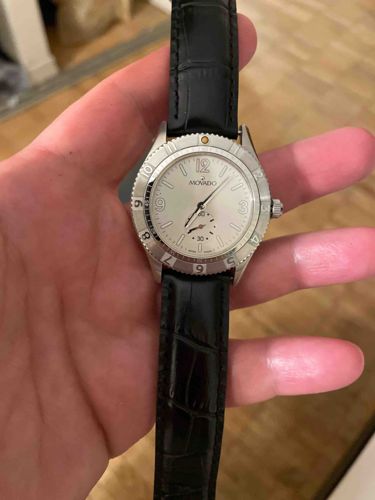
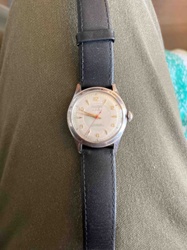
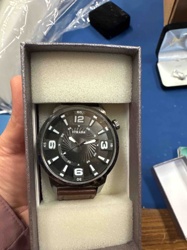
This is a Movado brand wristwatch, featuring a classic Museum Dial design with a sub-seconds complication. The watch has a circular silver-tone case, likely made of stainless steel, with a distinctive textured, possibly coin-edge or fluted, bezel that has a polished finish. The bezel is marked with Arabic numerals ranging from 1 to 12, with a small yellow or gold-tone dot at the 12 o'clock position, suggesting a functional element like a bezel marker. The main dial is a clean, minimalist silver or white color, characteristic of Movado's iconic Museum Dial, but deviates slightly by incorporating full Arabic numerals for indices, except for the signature Movado dot at the 12 o'clock position (though a numeral is also present there). The Movado logo is visible below the 12 o'clock marker. A sub-dial for seconds is located above the 6 o'clock position, featuring small number markers for 0, 30, and 60. The watch hands are simple, slender batons, possibly blued steel or black. The crown is located on the right side of the case, featuring a grooved or textured surface for grip. The watch is fitted with a black leather strap with an alligator or crocodile embossed pattern, indicative of a dressier style. The condition appears to be very good, with no visible significant wear or damage, suggesting it is either new, lightly used, or well-maintained. A small tag, possibly the price or information tag, is visible near the top left lug. The overall aesthetic is one of elegant functionality, blending traditional watchmaking elements with Movado's distinct design philosophy. The craftsmanship appears solid, with crisp details on the dial and a well-finished case and bezel.
AI Appraisal Report
Based on my visual examination of the provided image, this Movado watch with a Museum Dial, sub-seconds complication, and textured bezel appears to be in very good condition. There are no visible significant scratches, dents, or wear on the case, crystal, or bezel. The black leather strap with an embossed pattern also appears well-preserved. The design, though featuring Movado's iconic Museum Dot, deviates with full Arabic numerals and a textured bezel, suggesting it may be a less common or vintage reference compared to the more ubiquitous plain Museum Dial models. This individuality could appeal to certain collectors.
Authenticity, based solely on imagery, is challenging; however, the typical hallmarks of a Movado—the clean dial, signature dot, and overall finishing—appear consistent. Market conditions for Movado watches generally place models of this style, particularly pre-owned, in the mid-range. While Movado is a recognized brand, this specific design with Arabic numerals and sub-seconds may not command the same broad appeal as their more classic, purely minimalist Museum Dial. Demand for this specific configuration would likely be moderate. Comparables for similar Movado models in good pre-owned condition suggest a value in a few hundred dollars.
Factors impacting value include the potential vintage status, the sub-seconds complication, and the textured bezel, which add character. Its excellent aesthetic condition is also a strong positive.
Limitations on authenticity verification are significant without physical inspection. I cannot confirm the movement type (quartz vs. mechanical), which heavily impacts value, nor can I verify the material purity of the case (e.g., stainless steel vs. plated metals if not marked). In-person examination would allow for movement inspection, detailed case and bezel material analysis, closer scrutiny for micro-scratches or damage not visible in the image, and weight assessment. Provenance documentation, such as original purchase papers or service records, would also be invaluable for full authentication and value assessment.