Neoclassical Curule Base Accent Table
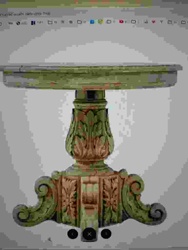
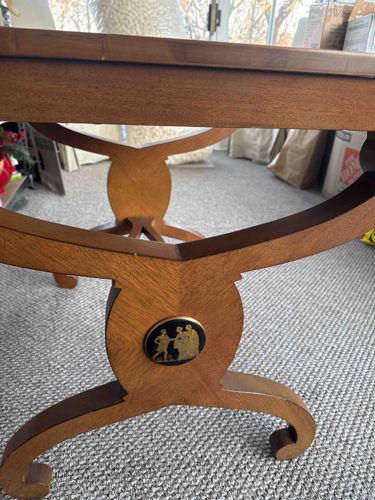
This item is a Neoclassical style accent or end table featuring a distinctive curule or 'X-frame' base. The piece is constructed primarily from wood with a light to medium brown finish, exhibiting a visible grain that suggests a walnut or light mahogany veneer. The most prominent design feature is the dual X-shaped supports with scrolled feet, connected by a central stretcher. At the intersection of each X-frame is a circular black medallion featuring an inlaid or painted scene of figures in classical Greek or Roman attire, rendered in a pale gold or cream tone. The table top appears to have a rectangular profile with a matching wood finish. The craftsmanship shows careful joinery and veneer application, characteristic of mid-20th-century revival styles, likely dating from the 1940s to the 1960s. The condition shows minor wear consistent with age, including small scuffs along the sharp edges of the wood base and minor fading, but the overall structure appears sound with a warm, aged patina. Key quality indicators include the rhythmic symmetry of the base and the detailed classical ornamentation, which aligns with Hollywood Regency or Neoclassical revival aesthetics.

AI-Generated Appraisal Disclaimer
Estimated Value
$450 - $650
Basic Information
Category
Antique and Vintage Furniture
Appraised On
January 30, 2026
Estimated Value
$450 - $650
Item Description
This item is a Neoclassical style accent or end table featuring a distinctive curule or 'X-frame' base. The piece is constructed primarily from wood with a light to medium brown finish, exhibiting a visible grain that suggests a walnut or light mahogany veneer. The most prominent design feature is the dual X-shaped supports with scrolled feet, connected by a central stretcher. At the intersection of each X-frame is a circular black medallion featuring an inlaid or painted scene of figures in classical Greek or Roman attire, rendered in a pale gold or cream tone. The table top appears to have a rectangular profile with a matching wood finish. The craftsmanship shows careful joinery and veneer application, characteristic of mid-20th-century revival styles, likely dating from the 1940s to the 1960s. The condition shows minor wear consistent with age, including small scuffs along the sharp edges of the wood base and minor fading, but the overall structure appears sound with a warm, aged patina. Key quality indicators include the rhythmic symmetry of the base and the detailed classical ornamentation, which aligns with Hollywood Regency or Neoclassical revival aesthetics.

Get Your Items Appraised
Instant estimates of your treasures with AI-powered instant appraisals