AI Appraisal Estimate

AI-generated estimates · not official valuations

From the user

What was submitted

Photo and notes provided by the user — not generated by AI

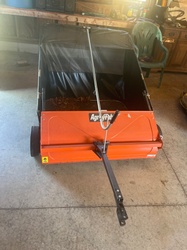
Submitted item photo
Submitted photo · June 10, 2026

User's notes

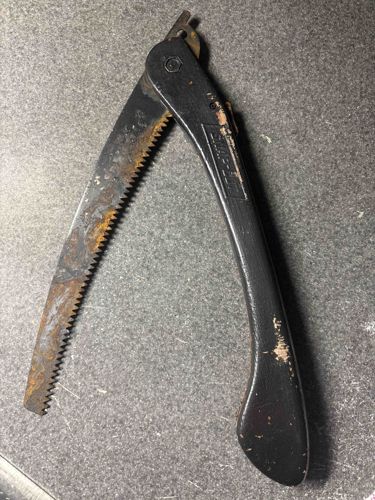
Old pruning saw no. 910 symour smith & son

AI analysis below

AI appraisal

AI analysis & estimate

AI-Generated · Verify before acting

Everything below is generated by AI for informational purposes only. AI can make mistakes — the AI may misidentify items or misattribute them (artist, maker, brand, designer, origin, era). This is not an official valuation and should not be used for insurance, sale, tax, estate, legal, or lending purposes — or any decision requiring a certified appraisal. It is not an authoritative claim about any person, brand, or rights holder — do not share or rely on it as a factual statement about a third party. Always consult qualified professionals before making financial decisions.

Note

This analysis also relies on unverified notes provided by the user, which may be incomplete or inaccurate and could affect the result.

Read the full disclaimer

AI Identification

·Not independently authenticated·Verify before acting

Vintage Seymour Smith & Son No. 910 Folding Pruning Saw

Vintage Tools & Garden Equipment

AI Estimated Value

·Not an official valuation·Verify before acting

$25-$45

As of June 10, 2026

AI Item Analysis

·AI can make mistakes·Verify before acting
This is a vintage Seymour Smith & Son No. 910 folding pruning saw, a mid-20th-century horticultural tool designed for arboriculture and gardening. The tool features a high-carbon steel tapered blade with a coarse tooth aggressive cut pattern, specifically designed for green wood and branch removal. The handle is constructed of cast metal, likely iron or a heavy alloy, finished in a characteristic black enamel or lacquer. The folding mechanism utilizes a heavy-duty pivot bolt and a locking latch at the shoulder for security during operation. Notable markings include the 'SNAP-CUT' branding and model number '910' embossed into the handle casting. The condition is consistent with age and utility, showing significant surface oxidation (rust) across the majority of the blade surface and tooth line, which would require cleaning and sharpening for functional use. The handle finish exhibits wear with various chips, abrasions, and loss of the black coating, revealing the base metal beneath. Despite these cosmetic issues, the structural integrity appears sound, reflecting the robust craftsmanship of the Oakville, Connecticut manufacturer known for durable agricultural implements. The style is utilitarian, typical of the 1950s to 1970s era. The presence of the original locking hardware and the distinct curved ergonomic handle are hallmarks of this specific model series.
AI Appraisal Report

·AI can make mistakes·Verify before acting
I have conducted a visual examination of the vintage Seymour Smith & Son No. 910 'Snap-Cut' folding pruning saw. Based on the embossed markings and distinctive cast metal handle geometry, the item appears to be an authentic mid-20th-century horticultural tool manufactured in Oakville, Connecticut. The structural integrity is sound; however, the condition is categorized as 'fair' to 'good' for a utility tool. There is significant surface oxidation on the high-carbon steel blade and approximately 30-40% finish loss on the black enamel handle. This wear is typical for agricultural implements of this era but necessitates a professional cleaning and sharpening if intended for use. The market for vintage garden tools is currently stable, though values for mass-produced Seymour Smith items are generally driven by utility and nostalgia rather than extreme rarity. Similar models frequently sell within the $20 to $50 range depending on the presence of original packaging and the degree of rust. The lack of significant pitting on the metal maintains its value for collectors of 'Snap-Cut' memorabilia. Please note that this appraisal is based on photographic evidence. A physical inspection is required to confirm the mechanical tension of the locking latch and to ensure the pivot bolt is not seized or cross-threaded. Furthermore, while the patina suggests age-appropriate oxidation, scientific testing of the metal alloy or provenance documentation, such as original sales receipts, would be needed to definitively confirm the exact production decade.

Get your items appraised

Instant estimates of your treasures with AI-powered appraisals

Browse More Appraisals