AI Appraisal Estimate

AI-generated estimates · not official valuations

From the user

What was submitted

Photo and notes provided by the user — not generated by AI

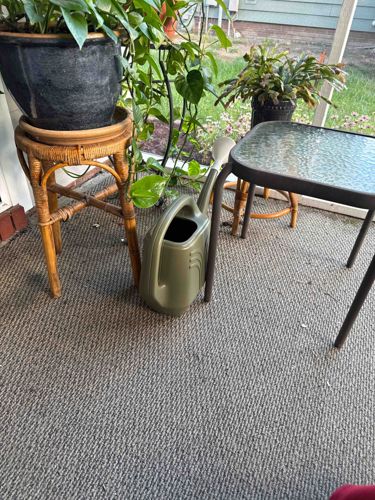
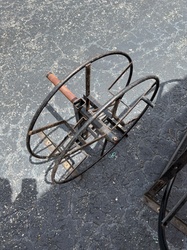
Submitted item photo
Submitted photo · May 30, 2026

User's notes

No additional notes provided.

AI analysis below

AI appraisal

AI analysis & estimate

AI-Generated · Verify before acting

Everything below is generated by AI for informational purposes only. AI can make mistakes — the AI may misidentify items or misattribute them (artist, maker, brand, designer, origin, era). This is not an official valuation and should not be used for insurance, sale, tax, estate, legal, or lending purposes — or any decision requiring a certified appraisal. It is not an authoritative claim about any person, brand, or rights holder — do not share or rely on it as a factual statement about a third party. Always consult qualified professionals before making financial decisions.

Read the full disclaimer

AI Identification

·Not independently authenticated·Verify before acting

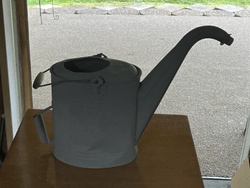
Plastic Garden Watering Can

Garden Tool

AI Estimated Value

·Not an official valuation·Verify before acting

$5-15

As of May 30, 2026

AI Item Analysis

·AI can make mistakes·Verify before acting
This item is a garden watering can, constructed primarily from plastic. It features a muted, olive-green color throughout its body, with a lighter, almost off-white or light grey spout and handle cap. The can has a utilitarian, somewhat rectangular body with softened edges, designed for stability. A prominent handle integrated into the design spans across the top and down one side, allowing for easy carrying and pouring. On the opposite side of the handle, a long, slender spout extends upwards and then angles downwards, terminating in a watering rose (though the fine details of the rose are not explicitly visible, its general shape suggests a standard watering can design). The spout also appears to have a contrasting lighter color at its tip. There are subtle molded ridges visible on the side of the can, likely for structural reinforcement or aesthetic grip. The overall condition appears used but functional, with no obvious cracks, breaks, or severe discoloration visible from the image. The plastic material indicates it is a relatively modern item, likely manufactured within the last few decades. It appears to be a standard capacity household or garden watering can, suitable for indoor and outdoor plant care. The design is practical and lacks ornate embellishments, typical of mass-produced garden tools. The craftsmanship is functional, focusing on durability and ease of use rather than artistic merit. No specific maker’s marks or signatures are discernible from the provided image.
AI Appraisal Report

·AI can make mistakes·Verify before acting
I have examined the provided image of this plastic garden watering can. Visually, the item appears to be in used but functional condition, with no obvious major damage such as cracks or severe discoloration. Its construction from plastic, coupled with its utilitarian design, indicates a modern, mass-produced item. The olive-green body with a lighter spout and handle cap is a common aesthetic for garden tools. Authenticity, in this context, refers primarily to its function as a watering can, which is evident. There are no discernible maker's marks or unique features that would suggest a special or collectible origin. The craftsmanship is entirely functional, prioritizing utility and durability common in contemporary garden equipment. Market conditions for plastic watering cans are robust, with a wide array of new products available at low price points. Comparables would include new plastic watering cans found at garden centers, hardware stores, or online retailers, typically ranging from $10 to $30. For a used item, the value depreciation is significant. There is no inherent rarity for an item of this type; it is a ubiquitous household and garden tool. Demand for used basic garden tools like this is generally low, as new versions are inexpensive and readily available. Factors significantly impacting value are its common material, lack of artistic or historical significance, and its used condition. The convenience of buying a new, unblemished item for a modest price heavily influences the secondary market for such goods. Limitations in authenticity verification from an image alone include the inability to detect subtle hairline cracks, assess the integrity of the plastic under stress, or confirm the presence of any hidden defects. An in-person examination would allow for a tactile assessment of material quality, a check for leaks, and a more thorough inspection for wear and tear that might not be visible in a photograph.

Get your items appraised

Instant estimates of your treasures with AI-powered appraisals

Browse More Appraisals