AI estimate as of October 25, 2025 · verify with a professional before acting
AI-Generated · Verify before acting
Everything on this page is generated by AI for informational purposes only. AI can make mistakes — the AI may misidentify items or misattribute them (artist, maker, brand, designer, origin, era). This is not an official valuation and should not be used for insurance, sale, tax, estate, legal, or lending purposes — or any decision requiring a certified appraisal. It is not an authoritative claim about any person, brand, or rights holder — do not share or rely on it as a factual statement about a third party. Always consult qualified professionals before making financial decisions.
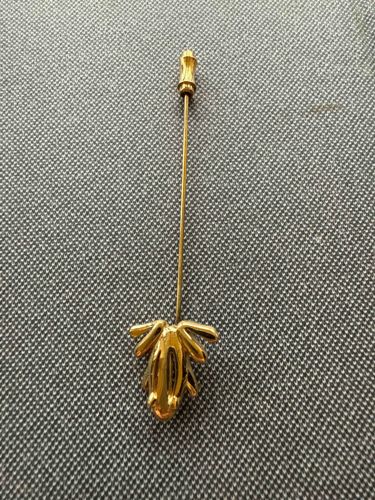
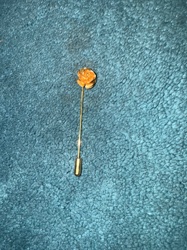
This item is a decorative lapel pin, characterized by its slender, elongated stem and an ornamental head depicting an insect, possibly a beetle or cicada, in a stylized manner. The entire pin appears to be crafted from a gold-toned metal, presenting a consistent metallic sheen. The insect motif at the bottom of the pin is three-dimensional and features a segmented body with visible wing casings or elytra, and what appear to be six small, delicate legs extending outwards. The surface of the insect element is smooth and polished, reflecting light, suggesting a high-quality finish. At the top end of the pin, there is a small, fluted or ribbed finial, which serves as both a decorative element and potentially a stop or a safety cap once the pin is inserted. The pin itself is thin and straight, designed to be inconspicuous when worn. Given its construction and artistic design, it likely dates from the mid-20th century onwards, reflecting a classic yet elegant style. There are no readily visible maker's marks or distinguishing hallmarks in the provided images. The overall condition appears excellent, with no apparent signs of significant wear, tarnish, or damage, suggesting it has been well-preserved. The craftsmanship is fine, focusing on clean lines and a smooth finish, indicative of a quality fashion accessory.
AI Appraisal Report
Based on my visual examination of the gold-toned insect lapel pin, the condition appears excellent. There are no observable signs of tarnish, bending, or significant wear on the metallic surface, which retains a consistent, polished sheen. The intricate details of the insect's segmented body, wing casings, and delicate legs are crisp and well-defined, indicating a high standard of craftsmanship. The pin's straightness and the intact unfluted finial further attest to its good preservation.
Authenticity, based solely on images, is limited. While the item presents as a well-made vintage or modern fashion accessory, without any visible maker's marks or hallmarks, I cannot definitively verify its material composition (e.g., gold-plated base metal vs. solid gold) or specific origin. An in-person examination would be crucial to test the metal composition, identify any hidden marks, and assess the weight and tactile quality which can often indicate manufacturing quality. Provenance documentation, such as original sales receipts or family history, would also significantly aid in authenticating its age and origin.
The market for vintage costume jewelry and novelty pins is moderate. Comparables typically include other gold-toned insect or figural lapel pins from the mid to late 20th century. Demand for such items is generally driven by their aesthetic appeal rather than intrinsic material value, unless made of precious metals. The clean design and excellent condition of this piece make it appealing, but its likely mass-produced nature (common for such designs without hallmarks) and lack of precious materials curtail its rarity.
The primary factors impacting its value are its excellent condition and attractive design. However, the lack of definitive material identification and manufacturer, which cannot be confirmed from images alone, prevents a higher appraisal. Assuming it is a gold-toned base metal piece, its value reflects its decorative appeal and condition within the costume jewelry market.