AI Appraisal Estimate

AI-generated estimates · not official valuations

From the user

What was submitted

Photo and notes provided by the user — not generated by AI

Submitted item photo
Submitted photo · June 27, 2026

User's notes

No additional notes provided.

AI analysis below

AI appraisal

AI analysis & estimate

AI-Generated · Verify before acting

Everything below is generated by AI for informational purposes only. AI can make mistakes — the AI may misidentify items or misattribute them (artist, maker, brand, designer, origin, era). This is not an official valuation and should not be used for insurance, sale, tax, estate, legal, or lending purposes — or any decision requiring a certified appraisal. It is not an authoritative claim about any person, brand, or rights holder — do not share or rely on it as a factual statement about a third party. Always consult qualified professionals before making financial decisions.

Read the full disclaimer

AI Identification

·Not independently authenticated·Verify before acting

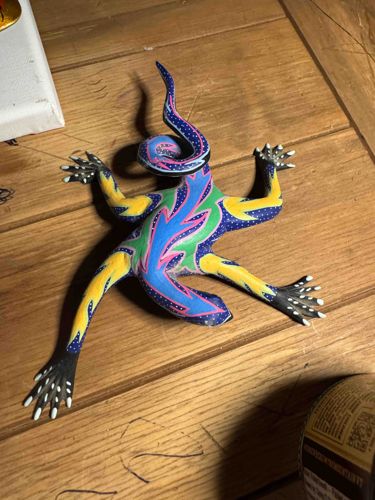
Oaxacan Alebrije Lizard Sculpture

Folk Art Sculpture

AI Estimated Value

·Not an official valuation·Verify before acting

$175 - $250

As of June 27, 2026

AI Item Analysis

·AI can make mistakes·Verify before acting
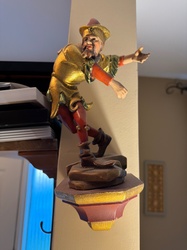
This is a vibrantly painted Oaxacan alebrije sculpture, depicting a stylized lizard or chameleon-like creature. The item is likely hand-carved from copal wood, a common material for these folk art pieces, and features an intricate and colorful design. Its physical characteristics include a serpentine, curled tail, four distinct limbs splayed outwards, and what appear to be claws or toes at the end of each appendage, painted white to contrast with the dark limb color. The main body of the creature is adorned with a dynamic pattern of bright blue and green lightning bolt-like shapes set against a dark blue background, which is intricately speckled with light pink or white dots. The limbs are primarily yellow with dark blue or black sections, also featuring white or light blue dot patterns. The overall size appears to be moderate, suitable for a tabletop or shelf display. Visible condition issues are minimal; the paintwork seems largely intact, and no obvious chips or cracks in the wood are discernible from the image. The craftsmanship is characterized by meticulous hand-painting, indicating skilled artistry, typical of traditional Oaxacan alebrijes. These pieces are known for their fantastical forms and psychedelic color schemes, representing mythical creatures or Nahual (animal spirits). This particular piece likely dates from the late 20th or early 21st century, given the prevalent style of these crafts. The curled tail adds a unique, dynamic quality to its silhouette, and the contrasting colors and detailed dot patterns highlight the quality and attention to detail in its construction.
AI Appraisal Report

·AI can make mistakes·Verify before acting
Upon visual examination of the Oaxacan alebrije lizard sculpture, I assess it to be a well-executed example of this vibrant Mexican folk art tradition. The carving appears to be from copal wood, and the paintwork is intricate and skillfully applied, consistent with authentic pieces from the Oaxaca region. The condition, as observable from the image, is excellent, with no visible chips, cracks, or significant paint loss. The dynamic form, with its curled tail and detailed Zapotec-inspired patterns, is aesthetically pleasing and demonstrates a high level of craftsmanship. The market for authentic Oaxacan alebrijes is steady, with values largely determined by the artist's reputation, the complexity of the carving, and the quality of the painted finish. This piece, while finely crafted, does not bear a visible signature, which limits its value compared to works by renowned masters like Manuel Jiménez or Jacobo and María Ángeles. It is representative of the high-quality work produced by numerous talented but less-famous families in San Martín Tilcajete or Arrazola. The demand for such decorative pieces is consistent among folk art collectors and interior designers. The primary factor influencing this appraisal is the anonymity of the artist. The quality is high, but its value is capped as a decorative, high-craft item rather than a signed piece of fine art. My appraisal value is based on comparable sales of unsigned but high-quality alebrijes of similar size and complexity. It is important to note that this appraisal is based solely on photographic evidence. A definitive authentication would require in-person examination to verify the type of wood, look for a signature under the base, and assess the texture and age of the paint. Provenance documentation connecting the piece to a specific artist or workshop would be necessary to potentially increase its value.

Get your items appraised

Instant estimates of your treasures with AI-powered appraisals

Browse More Appraisals