AI Appraisal Estimate

AI-generated estimates · not official valuations

From the user

What was submitted

Photo and notes provided by the user — not generated by AI

Submitted item photo
Submitted photo · May 27, 2026

User's notes

No additional notes provided.

AI analysis below

AI appraisal

AI analysis & estimate

AI-Generated · Verify before acting

Everything below is generated by AI for informational purposes only. AI can make mistakes — the AI may misidentify items or misattribute them (artist, maker, brand, designer, origin, era). This is not an official valuation and should not be used for insurance, sale, tax, estate, legal, or lending purposes — or any decision requiring a certified appraisal. It is not an authoritative claim about any person, brand, or rights holder — do not share or rely on it as a factual statement about a third party. Always consult qualified professionals before making financial decisions.

Read the full disclaimer

AI Identification

·Not independently authenticated·Verify before acting

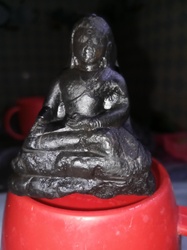
Phra Somdej Thai Amulet

Religious Artifacts and Collectibles

AI Estimated Value

·Not an official valuation·Verify before acting

$400 - $1,200

As of May 27, 2026

AI Item Analysis

·AI can make mistakes·Verify before acting
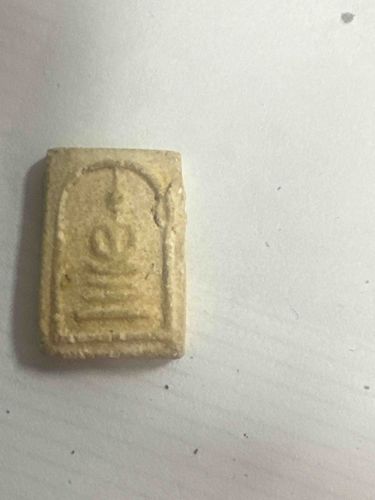
This item is a Phra Somdej, a highly revered style of Thai Buddhist amulet traditionally characterized by its rectangular shape and a seated Buddha image on a multi-tiered pedestal within an arched frame. This specific piece is composed of a light beige or cream-colored clay-like sacred powder mixture (Muan Sarn), which typically includes ingredients such as ground limestone, incense ash, floral extracts, and other auspicious materials. The physical construction shows a pressed-mold technique with a visible archway framing the central figure. The Buddha is depicted in a stylized, minimalist form with long ears and a pointed ushnisha atop the head, resting on a three-tiered base. The texture appears granular and porous, characteristic of aged powder amulets. Regarding condition, the piece shows significant softening of the original mold details due to handled wear and age. There is irregular chipping and edge loss along the right-hand side and corners, indicating it has not been kept in a protective case for its entire lifespan. The surface exhibits a natural patina with slight darkening in the recessed areas. While specific maker's marks are not visible on the front, the style is reminiscent of those produced in the late 19th to 20th century. The craftsmanship is folk-traditional, focusing on spiritual significance rather than ornate refinement, making it a classic example of Thai religious votive art.
AI Appraisal Report

·AI can make mistakes·Verify before acting
Upon visual inspection of this Phra Somdej amulet, I find it exhibits hallmarks of traditional 19th-to-early-20th-century craftsmanship. The light beige Muan Sarn powder mixture shows a porous, aged texture consistent with natural dehydration of sacred materials over several decades. The Buddha iconography, featuring the minimalist three-tiered pedestal and arched frame, aligns with the traditional styles popularized by Wat Rakhang or Wat Bang Khun Phrom, though the softening of details suggests significant handling wear or a later temple pressing. The irregular chipping and lack of a protective case impact the value negatively, as collectors of Thai amulets prioritize crisp mold lines and 'cleanness.' However, the natural patina in the recessed areas adds a level of aesthetic authenticity preferred by practitioners. The market for Phra Somdej is highly volatile and driven by provenance; without a G-Pra certificate or Samakom verification, the value remains in the 'devotional' tier rather than the 'investment' tier. A major limitation of this appraisal is the inability to examine the 'Nam Man Tang-Iw' (tung oil) distribution or the specific mineral inclusions via a 10x loupe. For definitive authentication and a potentially higher valuation, I would require an in-person physical examination to verify the density and weight, as well as any provenance documentation or historical temple box. If authenticated as a direct lineage piece from a renowned master, the value could increase exponentially, but based on visual evidence of condition and age, it is valued as a mid-tier collectible artifact.

Get your items appraised

Instant estimates of your treasures with AI-powered appraisals

Browse More Appraisals