AI Appraisal Estimate

AI-generated estimates · not official valuations

From the user

What was submitted

Photo and notes provided by the user — not generated by AI

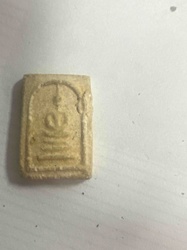
Submitted item photo
Submitted photo · May 27, 2026

User's notes

No additional notes provided.

AI analysis below

AI appraisal

AI analysis & estimate

AI-Generated · Verify before acting

Everything below is generated by AI for informational purposes only. AI can make mistakes — the AI may misidentify items or misattribute them (artist, maker, brand, designer, origin, era). This is not an official valuation and should not be used for insurance, sale, tax, estate, legal, or lending purposes — or any decision requiring a certified appraisal. It is not an authoritative claim about any person, brand, or rights holder — do not share or rely on it as a factual statement about a third party. Always consult qualified professionals before making financial decisions.

Read the full disclaimer

AI Identification

·Not independently authenticated·Verify before acting

Thai Buddhist Amulet Coin Featuring Phra That Chedi

Religious Artifacts and Collectibles

AI Estimated Value

·Not an official valuation·Verify before acting

$45.00 - $85.00

As of May 27, 2026

AI Item Analysis

·AI can make mistakes·Verify before acting
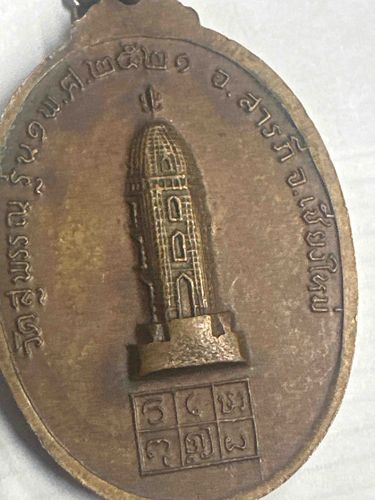
This is an oval-shaped Thai Buddhist commemorative amulet coin, typically cast in a copper-based alloy such as brass or tomback. The medal features a prominent central relief of a 'Phra That' or reliquary stupa, characterized by high-relief architectural details including window niches and a tiered spire. Surrounding the upper perimeter is a Thai inscription indicating its origin, likely associated with a specific temple (Wat) in northern Thailand, possibly Chiang Mai, given the pagoda's style. Below the stupa is a rectangular grid containing sacred 'Yant' (Yantra) scripts or mystical numerology diagrams intended for spiritual protection and prosperity. The item displays a natural aged patina with visible surface oxidation and 'skin' texture typical of struck metal from the late 20th century (circa 1970s-1990s). The edges show minor wear and softened details from handling, though the casting remains crisp. A small suspension loop or 'ear' is present at the top, though partially cropped in the frame. The craftsmanship reflects traditional Thai minting techniques used for religious pendants produced in limited batches for temple supporters and practitioners of the Buddhist faith.
AI Appraisal Report

·AI can make mistakes·Verify before acting
I have examined the digital representation of this Thai Buddhist commemorative amulet coin, which appears to be a late 20th-century production, likely dating between 1975 and 1995. The piece depicts a 'Phra That' (stupa) in a style consistent with Lanna architecture of Northern Thailand. The metal exhibits an authentic aged 'skin' with natural oxidation and particulate buildup in the recessed areas of the tiered spire and the Yantra grid, suggesting it has been kept in a devotional setting rather than a protective case. The market for Thai amulets (Phra Krieang) is highly segmented. Mass-produced temple editions intended for local practitioners generally trade in this price range, whereas pieces consecrated by renowned 'Guru Monks' can command thousands of dollars. Without a specific temple name or monk identification—which is often found on the reverse side or via specific provenance documents—this item is valued as a spiritual collectible rather than a high-stakes investment piece. Current demand for Lanna-style amulets remains steady among regional collectors. Limitations: This appraisal is based solely on visual inspection of images. Authenticity in Thai numismatics depends heavily on 'Kod' (stamped codes), precise metal alloy composition, and microscopic edge-wear patterns (cutting marks) that cannot be verified here. To provide a definitive authentication, I would require a physical examination to check the weight and density of the alloy, a high-resolution macro-photograph of the reverse side to identify the specific Wat (temple), and ideally, the original temple box or documentation of the 'Phutthaphisek' (consecration ceremony).

Get your items appraised

Instant estimates of your treasures with AI-powered appraisals

Browse More Appraisals