AI Appraisal Estimate

AI-generated estimates · not official valuations

From the user

What was submitted

Photo and notes provided by the user — not generated by AI

Submitted item photo
Submitted photo · June 18, 2026

User's notes

No additional notes provided.

AI analysis below

AI appraisal

AI analysis & estimate

AI-Generated · Verify before acting

Everything below is generated by AI for informational purposes only. AI can make mistakes — the AI may misidentify items or misattribute them (artist, maker, brand, designer, origin, era). This is not an official valuation and should not be used for insurance, sale, tax, estate, legal, or lending purposes — or any decision requiring a certified appraisal. It is not an authoritative claim about any person, brand, or rights holder — do not share or rely on it as a factual statement about a third party. Always consult qualified professionals before making financial decisions.

Read the full disclaimer

AI Identification

·Not independently authenticated·Verify before acting

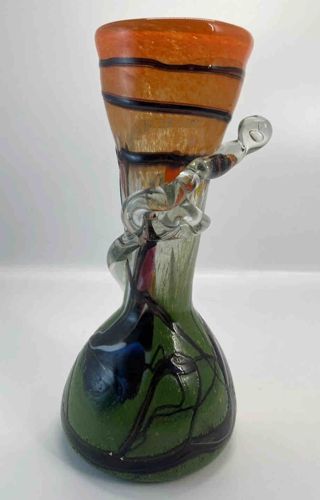
Contemporary Studio Art Glass Bud Vase with Applied Clear Glass Figural Wrap

Studio Art Glass / Decorative Art

AI Estimated Value

·Not an official valuation·Verify before acting

$150 - $250

As of June 18, 2026

AI Item Analysis

·AI can make mistakes·Verify before acting
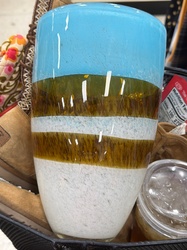
This is a hand-blown studio art glass vase featuring a high-waisted bulbous base that tapers into a wide, flared neck. The piece exhibits a complex bi-color palette typical of late 20th-century studio glass; the lower reservoir is a moss-green hue with dark, expressive trailed line accents and deep navy-blue mottling, while the upper portion transitions into a vibrant translucent amber and orange. The neck is decorated with dark, horizontal concentric bands. A unique, sculptural element is present in the form of a clear, hand-tooled glass 'ribbon' or figural abstraction that is applied to the exterior, wrapping around the mid-section with a protruding, looped arm. This applied element suggests a high degree of technical difficulty and studio craftsmanship. The glass appears to have a slightly grainy internal texture, often found in recycled or experimental glass melts. There are no clearly visible maker's marks or signatures on the front profile; however, the irregular symmetry and hand-pulled features indicate it is a unique, non-industrial creation, likely dating from the 1980s to the early 2000s. The condition appears excellent with no visible chips or fractures, manifesting a clean, reflective surface with only minor shelf wear expected on the base. The quality of the join between the clear wrap and the body indicates a proficient understanding of thermal compatibility in glass sculpting.
AI Appraisal Report

·AI can make mistakes·Verify before acting
I have carefully examined the high-resolution images of this contemporary studio art glass vase. The piece exhibits characteristic traits of late 20th-century experimental glasswork, specifically the bi-color translucent body and the technically demanding application of a clear figural wrap. Based on the visual evidence, the condition is excellent with no visible stress fractures at the join points, which is often where these pieces fail. The irregular, hand-pulled neck and internal graininess suggest a boutique studio origin rather than mass production. While the aesthetic is sophisticated, the lack of a visible signature or documented maker's mark limits its value to the decorative 'boutique' market rather than the blue-chip collector market. Comparable unsigned studio pieces of this size and complexity typically realize between $150 and $250 at regional auctions. The market for mid-sized non-attributed glass remains stable but relies heavily on visual appeal. A significant upward revision would be warranted if a signature from a recognized artist like Richard Jolley or a similar American studio master were discovered. My evaluation is limited by the inability to inspect the base for a pontil mark or etched signature, and I cannot verify internal annealing quality via polariscope through images. A physical inspection is required to confirm the absence of 'glass gall' or microscopic chips. For full authentication, I recommend researching local artisan records from the 1980s Pacific Northwest or Northeast glass movements, where this style was prevalent.

Get your items appraised

Instant estimates of your treasures with AI-powered appraisals

Browse More Appraisals