AI Appraisal Estimate

AI-generated estimates · not official valuations

From the user

What was submitted

Photo and notes provided by the user — not generated by AI

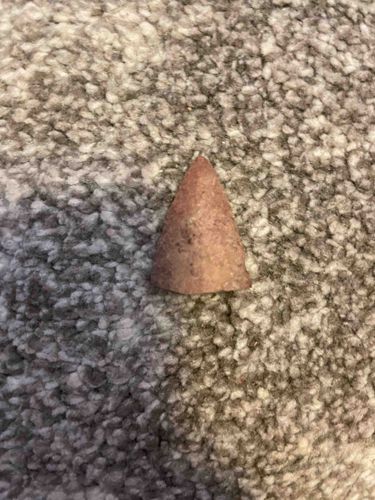
Submitted item photo
Submitted photo · May 27, 2026

User's notes

No additional notes provided.

AI analysis below

AI appraisal

AI analysis & estimate

AI-Generated · Verify before acting

Everything below is generated by AI for informational purposes only. AI can make mistakes — the AI may misidentify items or misattribute them (artist, maker, brand, designer, origin, era). This is not an official valuation and should not be used for insurance, sale, tax, estate, legal, or lending purposes — or any decision requiring a certified appraisal. It is not an authoritative claim about any person, brand, or rights holder — do not share or rely on it as a factual statement about a third party. Always consult qualified professionals before making financial decisions.

Read the full disclaimer

AI Identification

·Not independently authenticated·Verify before acting

Incense Cone

Home Fragrance/Aromatherapy

AI Estimated Value

·Not an official valuation·Verify before acting

$0.05 - $0.50

As of May 27, 2026

AI Item Analysis

·AI can make mistakes·Verify before acting
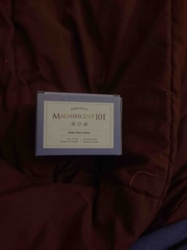
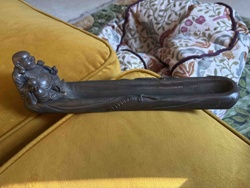
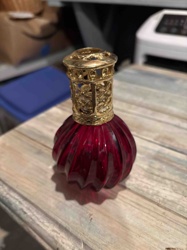
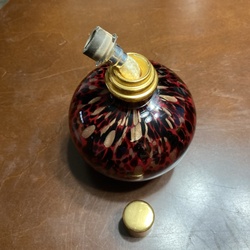
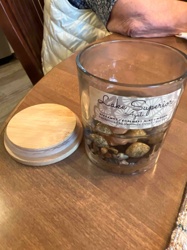
The item is a small, conical incense cone, likely constructed from a compressed mixture of aromatic plant materials and binders. Its physical dimensions appear to be very modest, perhaps in the range of 1 to 2 inches in height, given its presence on what appears to be a carpeted surface. The color is predominantly a reddish-brown or terracotta hue, with subtle variations and darker speckles visible across its surface, suggesting the inclusion of different botanical elements or the natural processing of the materials. The texture appears somewhat coarse and granular, indicative of its natural composition and molding process. The cone tapers smoothly from a broader, flat base to a pointed apex. There are no readily discernible manufacturing marks, stamps, or signatures. Its simple, functional design points towards a contemporary or relatively modern production, as the form of conical incense has remained largely unchanged for centuries, making precise stylistic dating difficult without additional context. The overall condition appears good, with no obvious signs of significant wear, damage, or repairs, though some minor surface irregularities are inherent to its manufacturing process. The darker spots are most likely part of the material composition rather than discoloration or damage. The craftsmanship appears to be standard for mass-produced incense cones, focusing on functionality rather than intricate detail. Its purpose is to release fragrance when lit.
AI Appraisal Report

·AI can make mistakes·Verify before acting
Based on my visual examination of the provided image, this incense cone appears to be in good condition. Its conical shape, reddish-brown hue, and visible material texture are consistent with standard-production incense cones. There are no signs of significant damage or unusual wear; the darker speckles are consistent with organic material inclusions inherent to its manufacture, not damage. From images alone, assessing authenticity is limited. This item's simplicity prevents definitive claims about its origin or specific ingredients without hands-on inspection. Authenticity here pertains more to its function as an incense cone, which it visually fulfills. Its form is universally recognized for this purpose. In terms of market conditions, mass-produced incense cones are a commodity item with broad availability. They are sold in large quantities, often in packs ranging from 10 to 100 cones, through various retailers from gift shops to supermarkets and online marketplaces. Comparables include widely available brands from India, China, or local craft producers. Demand for such items is consistent but not high-value, driven by personal aromatherapy, meditation, or home fragrance preferences. Rarity is not a factor; these are mass-produced goods. Factors impacting value negatively include their commonality and lack of unique distinguishing features such as rare ingredients, artisanal craftsmanship, or historical provenance. There is no perceived collector's market for this specific type of item. Limitations: My assessment is purely visual. For full authentication and to determine specific ingredient composition or origin (if it were relevant to value, which it is not for this item), an in-person physical examination would be required, potentially including chemical analysis of the materials and a review of any associated packaging or production documentation.

Get your items appraised

Instant estimates of your treasures with AI-powered appraisals

Browse More Appraisals