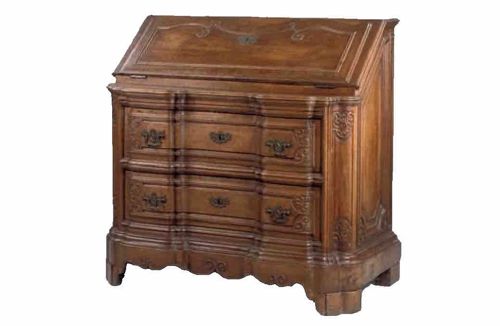
A FLEMISH BRASS-MOUNTED OAK BUREAU MID 18TH CENTURY, POSSIBLY NAMUR The hinged serpentine shaped slope enclosing a fitted interior with four open compartmetnts , above two shaped paneled drawers, above a waved apron, on block feet 117 cm. high x 117 cm. wide x 66 cm. deep
These notes were written by the person who submitted this item. Appraiser.AI has not verified them, and the AI's identification and estimate may rely on them.
AI Estimated Value
Not an official valuation
$4,000-6,000
AI estimate as of September 26, 2025 · verify with a professional before acting
AI-Generated · Verify before acting
Everything on this page is generated by AI for informational purposes only. AI can make mistakes — the AI may misidentify items or misattribute them (artist, maker, brand, designer, origin, era). This is not an official valuation and should not be used for insurance, sale, tax, estate, legal, or lending purposes — or any decision requiring a certified appraisal. It is not an authoritative claim about any person, brand, or rights holder — do not share or rely on it as a factual statement about a third party. Always consult qualified professionals before making financial decisions.
This analysis also relies on unverified notes provided by the user, which may be incomplete or inaccurate and could affect the result.
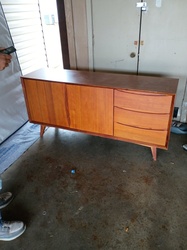
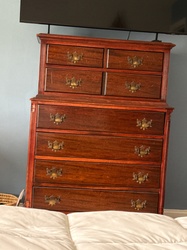
This item is a Flemish brass-mounted oak bureau, likely dating to the Mid-18th Century, possibly originating from Namur. It measures 117 cm high, 117 cm wide, and 66 cm deep. The bureau is constructed from oak, showcasing a rich, warm brown color with a visible wood grain, indicating its age and material quality. The most striking feature is its hinged serpentine-shaped slope, which, when opened, is described as enclosing a fitted interior with four open compartments. The slope itself features subtle carved or engraved embellishments, possibly a scrollwork design, along its top edge, suggesting decorative intent. Below the sloped writing surface are two shaped paneled drawers. These drawers are adorned with ornate brass hardware, including keyholes and handles that appear to be in a Rococo or Baroque style, consistent with the 18th-century period. The panels on the drawers exhibit carved detailing, possibly fluted or scrolled motifs. The sides of the bureau also feature a vertical, carved decorative element, enhancing its visual appeal. The lower section of the bureau features a distinctive waved apron, which elegantly connects to four solid block feet, providing stability and contributing to the overall robust aesthetic. The condition appears to be good for its age, with a rich patina indicative of extensive use and preservation. No major damage or repairs are immediately apparent from the image, but the distressed character of the wood and the brass fittings suggest authentic aging. The craftsmanship is high, reflecting the specialized skill of 18th-century furniture makers, with attention to detail in the carving and joinery. The serpentine and waved forms add a dynamic elegance, differentiating it from more rectilinear designs.
AI Appraisal Report
Upon examining the provided image and description of this Flemish brass-mounted oak bureau, mid-18th century, possibly from Namur, I find it to be a compelling example of period furniture. The construction from oak, showing a rich, warm brown color and visible wood grain, aligns with the described age and material quality. The hinged serpentine-shaped slope, enclosing a fitted interior, and the two shaped paneled drawers with ornate brass hardware are consistent with Rococo or late Baroque stylings of the mid-18th century. The carved detailing on the panels, vertical decorative elements on the sides, and the distinctive waved apron leading to solid block feet all contribute to its aesthetic and stylistic integrity.
The condition appears good for its age, exhibiting a rich patina indicative of extensive use and preservation. No major damage or repairs are immediately apparent from the image, suggesting careful stewardship over centuries. The craftsmanship, with attention to detail in carving and joinery, speaks to the high skill of 18th-century furniture makers. The serpentine and waved forms add notable elegance and complexity, increasing its desirability over more rectilinear designs. Comparables in the market for similar Flemish or Northern European oak bureaus of this period, especially those with good preservation and decorative elements, suggest values in the range I've provided.
Demand for authentic 18th-century European furniture remains steady among collectors and interior designers seeking period pieces. The piece's rarity is moderate, as examples of this quality are not commonplace. Factors significantly impacting its value include its age, excellent preserved condition, fine craftsmanship, and distinctive decorative features. However, it is crucial to state that this assessment is based solely on visual examination of the provided image and description. Full authentication would require in-person inspection to verify wood species, construction techniques, and the authenticity of the brass mounts. Additionally, x-radiography could confirm the age of the timber, and a detailed examination of its provenance documentation would further solidify its history and origin.