AI Appraisal Estimate

AI-generated estimates · not official valuations

From the user

What was submitted

Photo and notes provided by the user — not generated by AI

Submitted item photo
Submitted photo · June 13, 2026

User's notes

No additional notes provided.

AI analysis below

AI appraisal

AI analysis & estimate

AI-Generated · Verify before acting

Everything below is generated by AI for informational purposes only. AI can make mistakes — the AI may misidentify items or misattribute them (artist, maker, brand, designer, origin, era). This is not an official valuation and should not be used for insurance, sale, tax, estate, legal, or lending purposes — or any decision requiring a certified appraisal. It is not an authoritative claim about any person, brand, or rights holder — do not share or rely on it as a factual statement about a third party. Always consult qualified professionals before making financial decisions.

Read the full disclaimer

AI Identification

·Not independently authenticated·Verify before acting

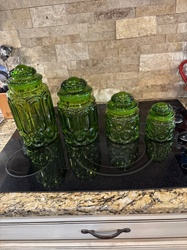
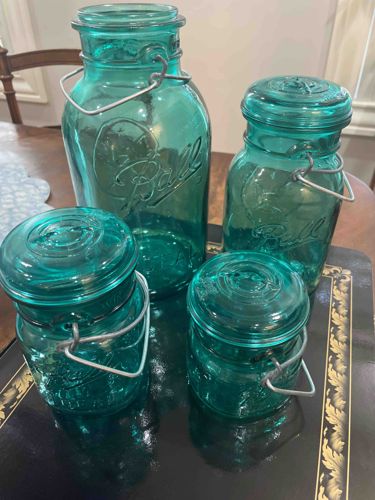
Vintage Ball Ideal Aqua Glass Canning Jars

Antique Glassware / Kitchenware

AI Estimated Value

·Not an official valuation·Verify before acting

$110.00 - $145.00

As of June 13, 2026

AI Item Analysis

·AI can make mistakes·Verify before acting
This set consists of four vintage 'Ball Ideal' canning jars of graduated sizes, including half-pint, pint, quart, and half-gallon capacities. Each vessel is crafted from thick-walled, heavy-gauge aqua-blue glass, a characteristic color often referred to as 'Ball Blue'. The jars feature the iconic embossed 'Ball' script logo on the front, with the 'Ideal' branding typically found on the shoulder or lid. Structurally, these are fruit-style jars utilizing a lightning-style wire bail closure system with glass lids, which predates the more modern two-piece metal screw lids. The metal bails exhibit a degree of oxidation and surface patina, consistent with age, but appear structurally sound. The glass itself shows a lovely clarity with some typical manufacturing bubbles (seeds) trapped within the matrix. The smallest jars appear to have their original glass lids seated securely. No major cracks or large chips are visible in the photograph, though these jars frequently have minor fleabites along the ground rim where the lid meets the body. Based on the script style (specifically the lack of an underscore on the 'Ball' logo and the shape of the 'B'), these likely date to the early 20th century, roughly between 1915 and 1930. The craftsmanship represents high-quality American industrial glass production from the period, designed for durability and airtight preservation.

AI Appraisal Report

·AI can make mistakes·Verify before acting
Based on my examination of this graduated set of four 'Ball Ideal' canning jars, I have assessed their value within the current collector market for early 20th-century kitchenware. The set, ranging from half-pint to half-gallon, is finished in the desirable 'Ball Blue' aqua glass. The 1915–1923 'Dropped A' script style (indicated by the tail of the 'l' in Ball) is a classic identifier of this era. The presence of the lightning-style wire bails and original glass lids significantly bolsters the value, as these components are frequently lost or replaced with mismatched hardware. The glass clarity is excellent, showing characteristic 'seed' bubbles that confirm period-accurate manufacturing. While the metal oxidation is consistent with age, the structural integrity of the bails appears intact. Market demand remains steady for authentic 'Ball Blue' glass, though prices for common sizes like the quart and pint have stabilized due to high production volumes. The inclusion of the half-pint (often rarer) and the half-gallon increases the set's appeal for interior designers and specialized jar collectors. However, valuation assumes no significant 'bruising' or vertical cracks, which are common in heavy-gauge glass. Please note that a definitive appraisal is limited by the digital format. In-person inspection is required to check the ground rims for 'flea bites' or internal chips hidden by the lids, which can reduce value by 20-30%. I would also need to verify the smoothness of the base to ensure no modern reproductions have been introduced, although the patina suggests genuine antiquity. No chemical or scientific testing is required, but a tactile inspection of the wire tension and glass edges would finalize this assessment.

Get your items appraised

Instant estimates of your treasures with AI-powered appraisals

Browse More Appraisals