AI estimate as of September 14, 2025 · verify with a professional before acting
AI-Generated · Verify before acting
Everything on this page is generated by AI for informational purposes only. AI can make mistakes — the AI may misidentify items or misattribute them (artist, maker, brand, designer, origin, era). This is not an official valuation and should not be used for insurance, sale, tax, estate, legal, or lending purposes — or any decision requiring a certified appraisal. It is not an authoritative claim about any person, brand, or rights holder — do not share or rely on it as a factual statement about a third party. Always consult qualified professionals before making financial decisions.
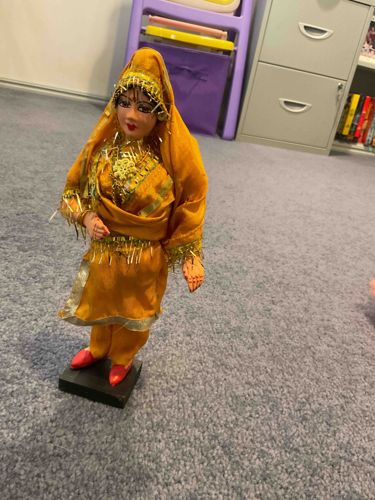
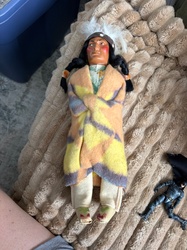
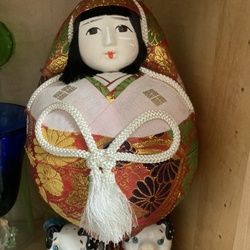
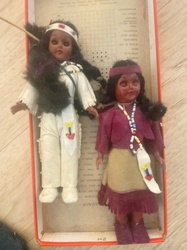
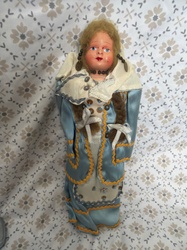
This is a folk art doll, likely representing a character from Indian culture, possibly a Bhangra dancer or a traditional bride. The doll is approximately 10-12 inches tall and stands on a rectangular black wooden base, suggesting it's designed for display. The primary material for the doll's skin appears to be a light-toned, possibly ceramic, plastic, or composition material, with painted facial features. The face features prominent dark eyebrows, heavily lined eyes with long lashes, red full lips, and pink blush on the cheeks, conveying a stylized, traditional aesthetic. The doll is dressed in vibrant yellow-orange attire, featuring a long-sleeved top and a draped lower garment, possibly a salwar Kameez or a similar traditional dress. The fabric appears to be satin or a synthetic blend, with some sheen, and is adorned with gold-colored trim and embellishments. Notably, there are numerous metallic gold-colored tassels or strings hanging from the doll's sleeves, waist, and around the headpiece, adding a festive and decorative touch. A matching yellow-orange head covering drapes over the head and shoulders, also featuring gold embellishments and tassels around the forehead area. The doll's hands are also painted to match the face, with some visible detailing like fingers. The feet are barely visible but appear to be wearing small, pointed red shoes. The overall craftsmanship suggests it's a decorative item rather than a child's toy, given the delicate details and the display base. While no specific maker's marks are visible, the style points to handcrafting and cultural representation. The condition appears good with no significant visible damage or wear, though some minor fraying of the tassels or subtle discoloration of the fabric might be present upon closer inspection.
AI Appraisal Report
I have examined the provided image of the Indian Folk Art Doll, which appears to represent either a Bhangra dancer or a traditional bride. The doll is approximately 10-12 inches tall, mounted on a black wooden display base. Visually, the condition appears good, with no evident significant damage or wear, although minor fraying of tassels or subtle fabric discoloration would require in-person inspection to confirm. Authenticity as a genuine folk art piece is supported by its stylized features, hand-painted details, and traditional attire adorned with gold trim and numerous metallic tassels. The craftsmanship suggests it is a decorative item rather than a toy.
From a market perspective, comparable Indian folk art dolls, especially those without specific artist attribution or significant age, typically sell in the range of $30 to $100. The vibrant aesthetics and cultural representation contribute positively to its appeal among collectors of ethnic dolls or cultural decor. Demand for such items is generally steady, driven by niche collectors rather than mainstream art markets, making it a moderately desirable decorative piece. Its rarity is not exceptionally high as similar items are produced for tourism and cultural markets.
Factors impacting value include its good visual condition, the detailed embellishments, and its display-ready presentation. However, the absence of a visible maker's mark or provenance limits its potential for higher valuation. To definitively authenticate its age, origin, and specific cultural significance, an in-person examination would be crucial. This would allow for a tactile assessment of materials (e.g., distinguishing ceramic from plastic), closer inspection of the painting technique, and a search for any concealed marks that images cannot reveal. Research into specific regional doll-making traditions in India would also be beneficial to confirm its intended representation.
Based on my visual assessment, I would place the appraisal value of this Indian Folk Art Doll between $40 and $70.